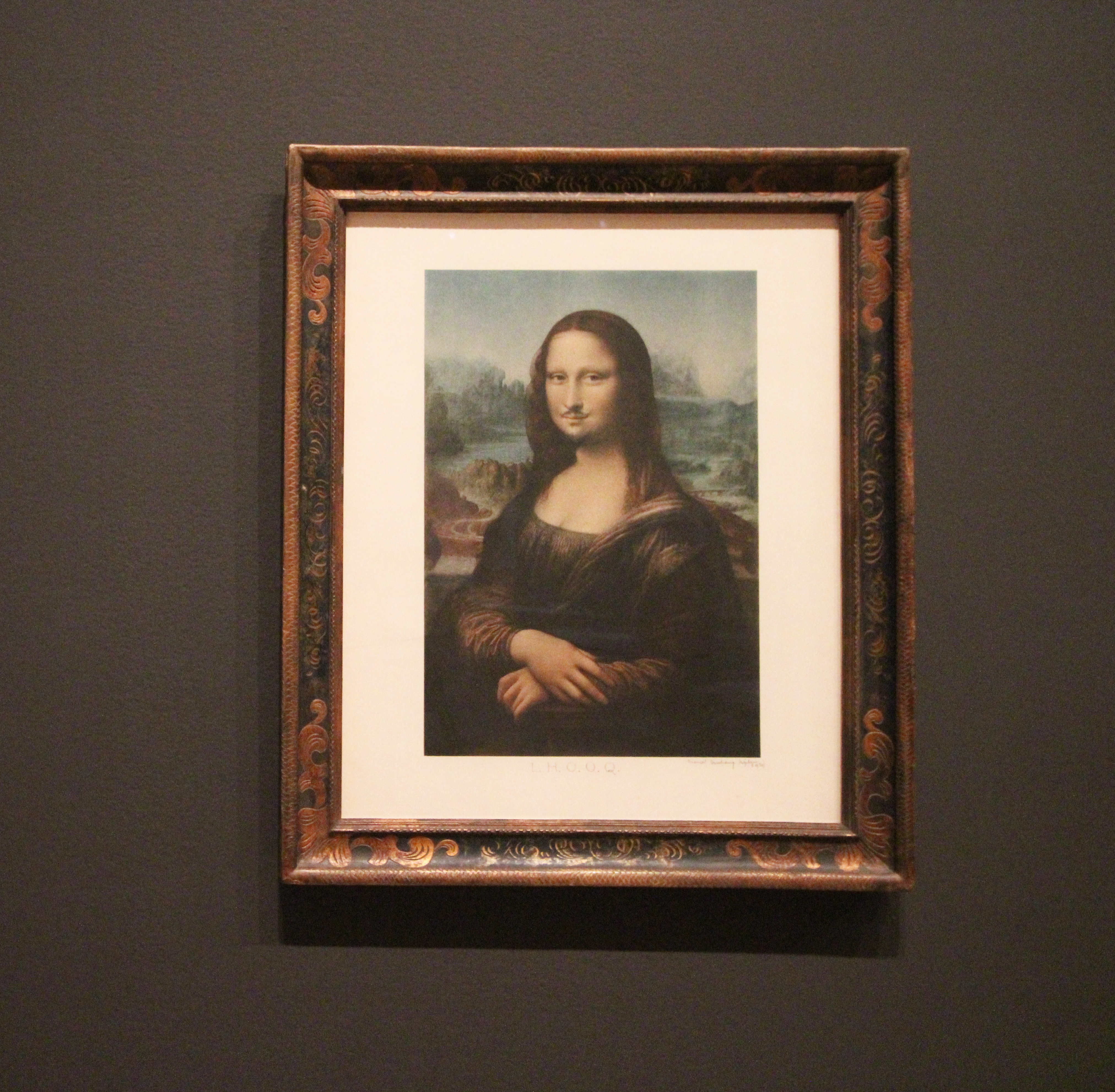
Marcel Duchamp: the artist who signed a urinal and called it a work of art.
Marcel Duchamp: the artist who, while dressed in a suit, played a game of chess with a nude Eve Babitz, the now-famous writer who was a college student at the time that the photograph was shot by photographer Julian Wasser in 1963.
Marcel Duchamp: the artist who quit art to become a chess player.
Above are a few tidbits that, if you don’t know much else about the French-American artist, you do know these to be true. But even these facts are incomplete, if they are true at all.
A new retrospective on Marcel Duchamp’s work, co-curated by the Museum of Modern Art (MoMA) in New York and the Philadelphia Museum of Art (PMA) in Philadelphia, aims to more fully introduce the work of this celebrated artist to a new generation of people and demonstrate how his influence stretches across the current artistic landscape in ways that might not have been previously known to a 21st-century audience. It’s fitting that these two institutions would team up to host this exhibition, given that the last time a retrospective was hosted in North America centered around Duchamp’s work was in 1973 when MoMA and PMA co-organized one.
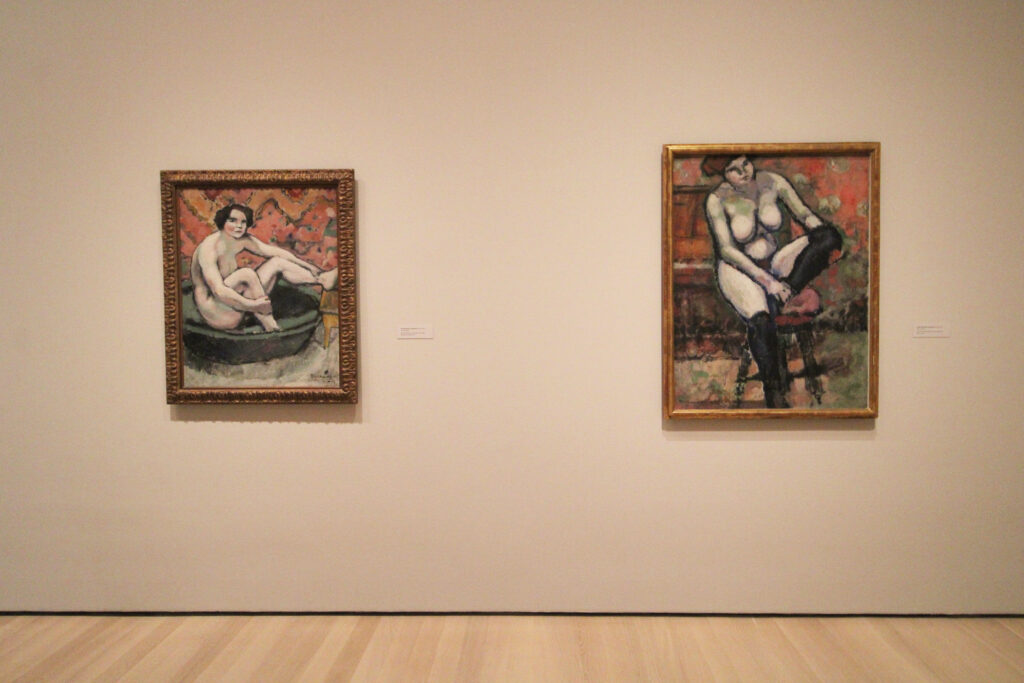
The co-curators chose to take a chronological approach to the roughly 300 works on display, leading visitors through Duchamp’s six-decade career. He started his artistic practice in Paris as a painter, taking inspiration from artists such as Paul Cézanne and Henri Matisse.
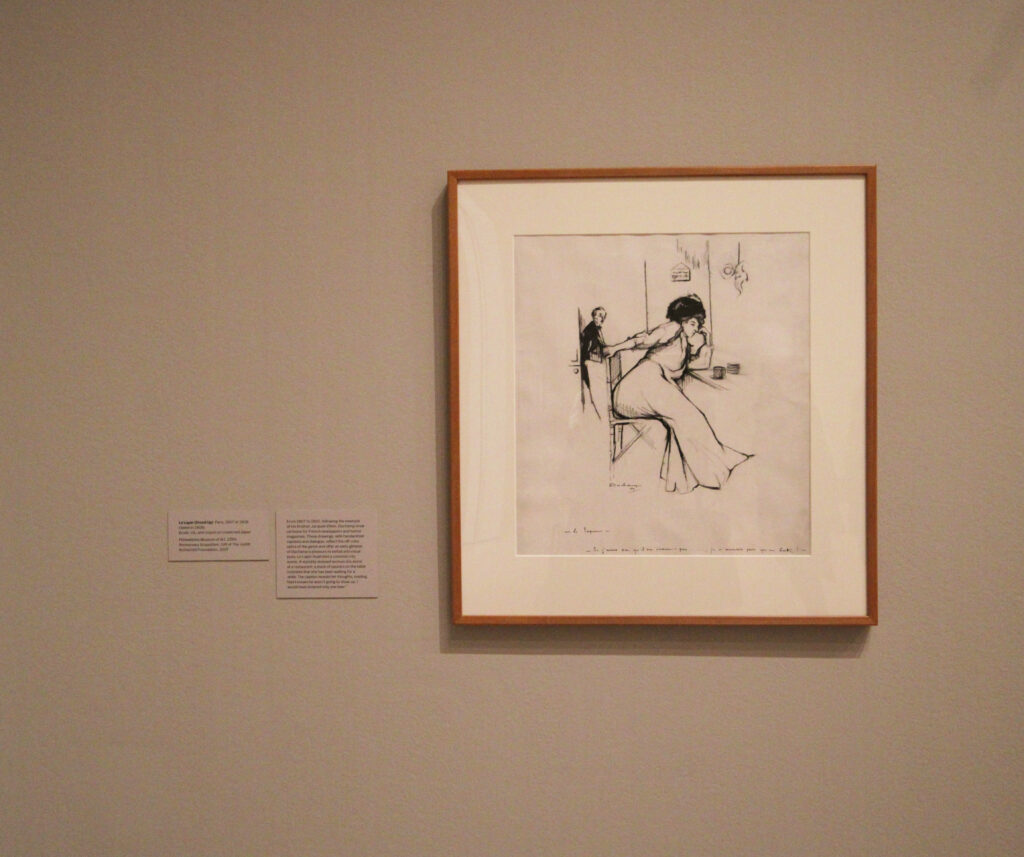
During this time, Duchamp also drew cartoons for French newspapers and humorous magazines, including dialogue with the cartoons.
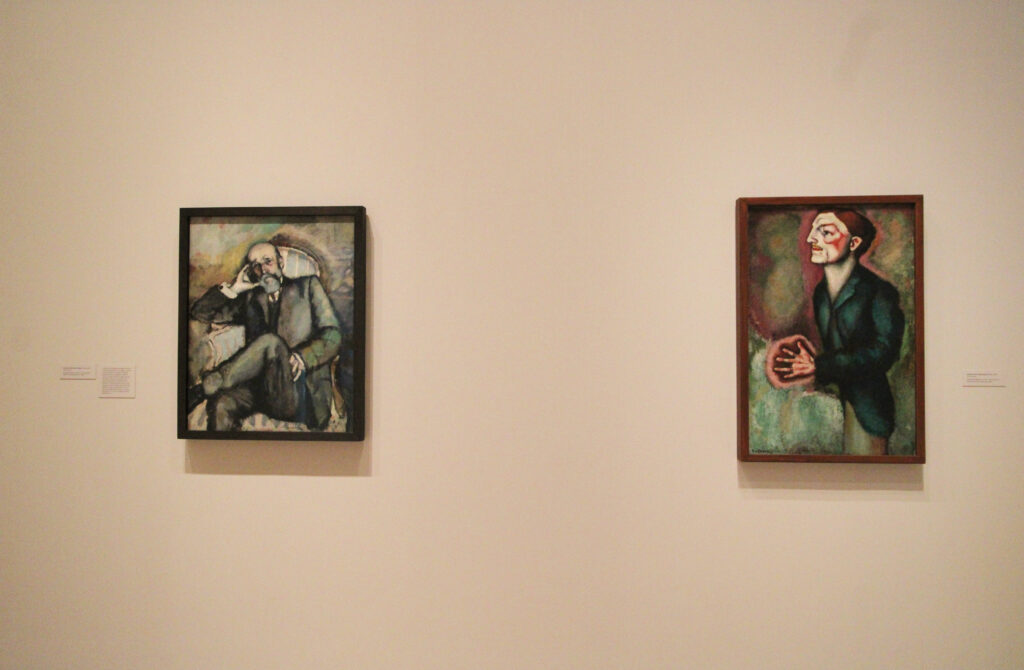
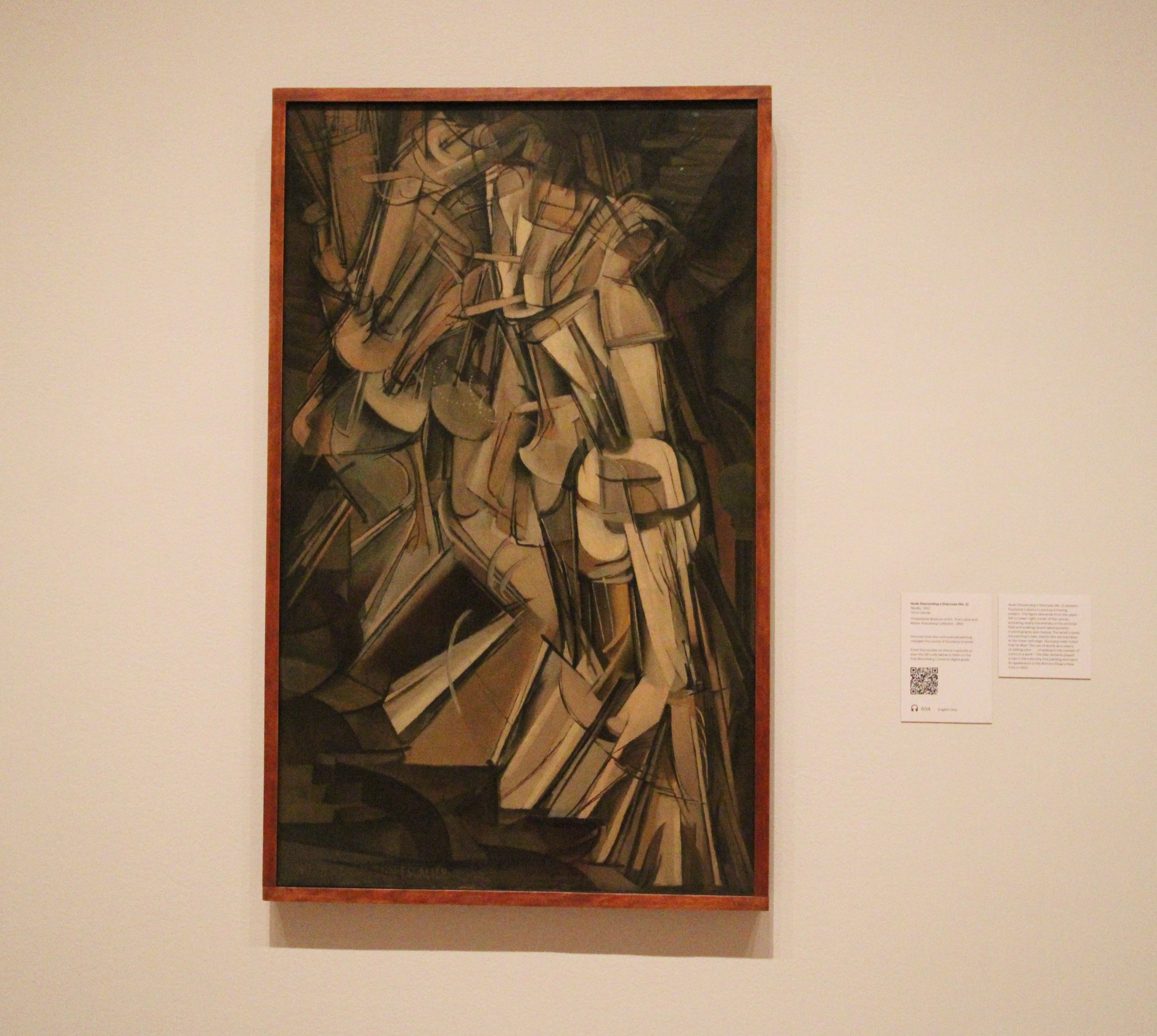
As the 1910s progressed, Duchamp became interested in Cubism and began creating works based on those methods. One of the more notorious works from that phase was “Nude Descending a Staircase”, which caused quite the stir at the Armory Show in New York in 1913, mystifying the American public and becoming a frequently lampooned piece by the illustrated press.
Eventually, Duchamp lost interest in painting altogether, with MoMA curator Ann Temkin mentioning during the press preview that many believed he left painting because he wasn’t good at it. Given the quality of the works included in this article, it is clear that an inability to turn out good paintings did not factor into his decision to switch his artistic media.
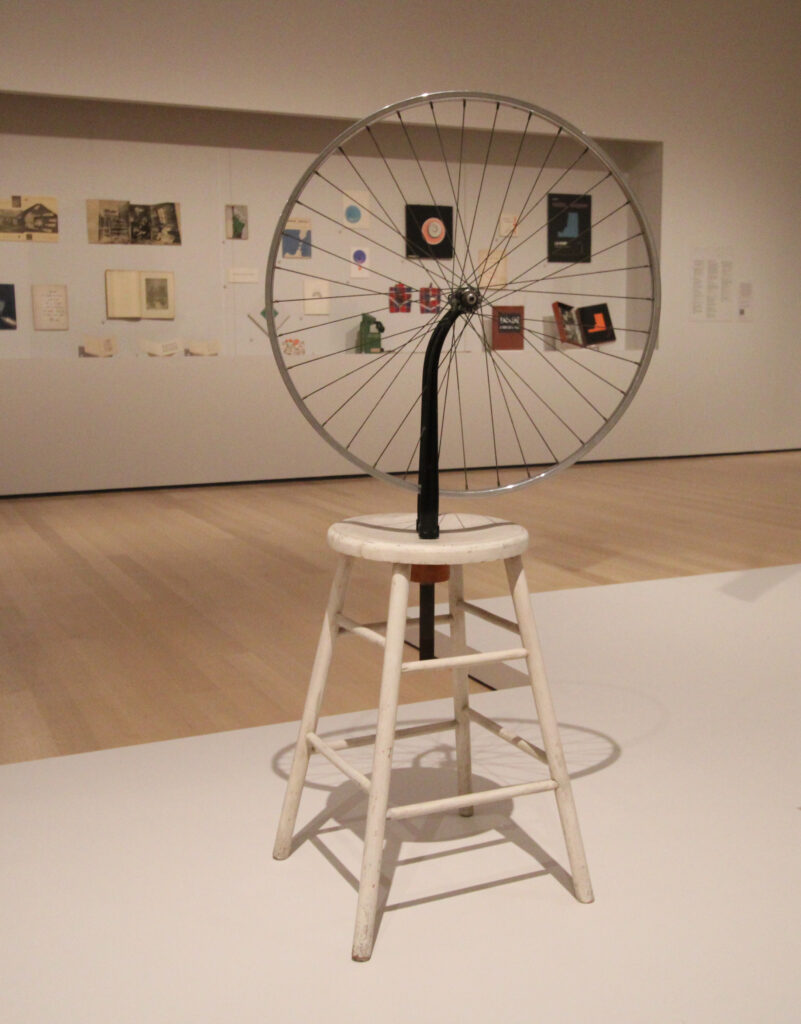
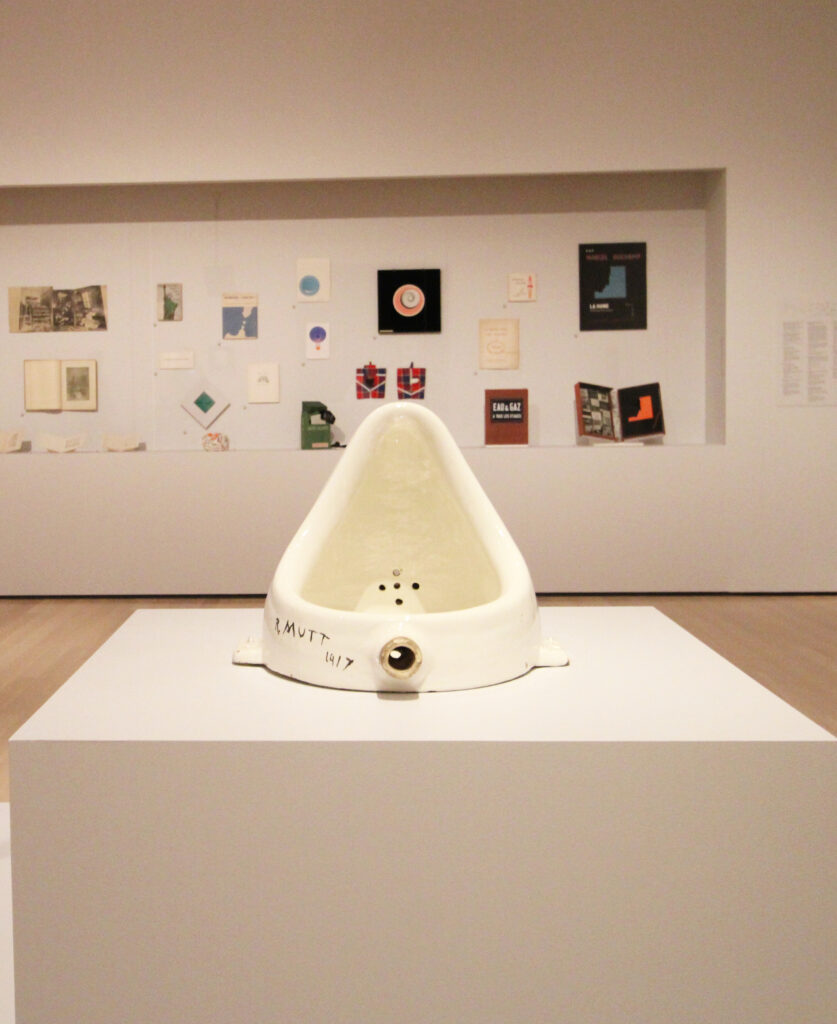
He chose instead to engage with artistic structures such as readymades, which he pioneered by taking works such as bottle racks, shovels, and urinals and modifying them along with leaving his signature on the pieces. With “Fountain”, in particular, he submitted it to a show under the name R. Mutt; this was a reference to the name of the vendor that he originally bought the plumbing fixture from.
There is an entire story behind the origin of “Fountain”, from who submitted it to the Society of Independent Artists exhibition to why it was rejected; it is one on which I’d encourage you to do further research. Suffice it to say that the “Fountain” incident was a watershed moment for the arts, with Marcel Duchamp forcing us to confront the following:
- What we really consider to be worthy pieces of art, and
- Why we consider them to be art, but won’t give other works the same respect or consideration
Many of the original copies of these readymades were lost, so Duchamp created replicas of them later in his career once people began taking interest in his artistry. For reference, you can assume that most anytime you see a Marcel Duchamp readymade in a museum setting, it is a reproduction that Duchamp himself likely would have authorized (although some weren’t approved by the artist).
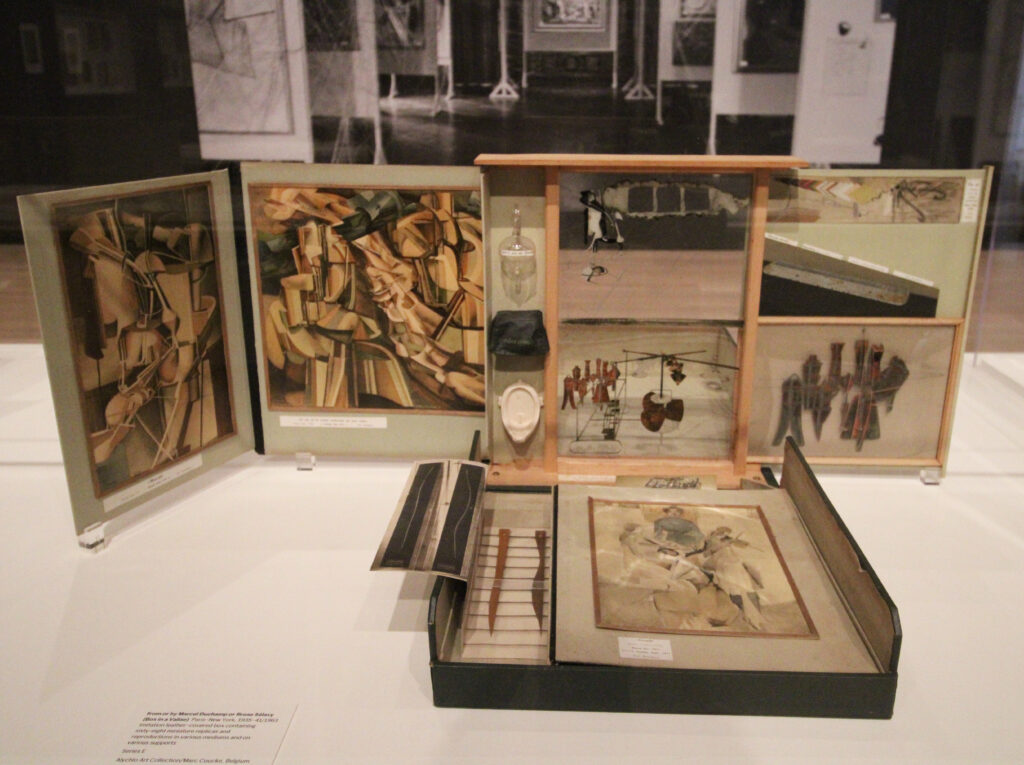
Also worth noting is that Duchamp didn’t quit art to become a chess player, despite what many tend to think (and what the artist might have you believe). He kept up his art practice pretty steadily alongside his chess involvement. His work extended to various mediums such as painting, photography, drawing, printmaking, film, sculpture, graphic design, and exhibition design. When he wasn’t given a retrospective of his own by museums — none of his work had entered into museum collections at that point — he (or his feminine alter ego Rrose Sélavy) gave himself a retrospective, of sorts, with his “Box In A Valise” (1935-41), a miniature collection of sixty-nine miniature reproductions of work that he created from 1910-1936.
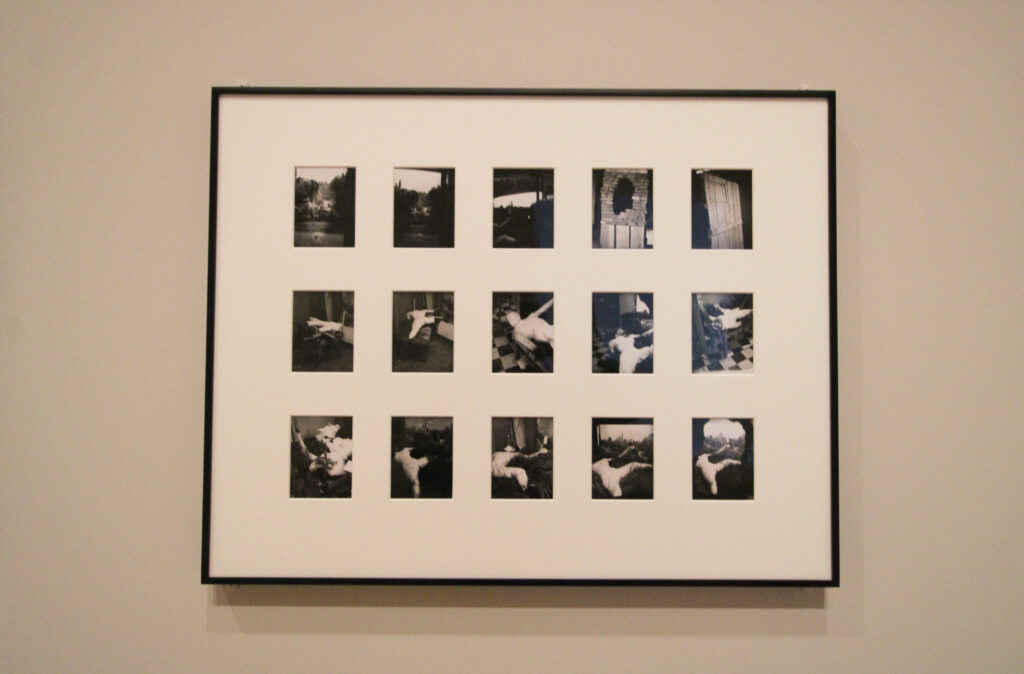
And, in fact, he was working on his last work of art at the time of his death: “Étant donnés”, a two-decade “sculpture-construction” (as Duchamp referenced it) viewed through two peepholes in a wooden door and featuring a naked female figure lying on the ground surrounded by leaves and twigs.
Marcel Duchamp is one of the most relevant artists of the past century. He expanded our definition of what constitutes art, and is the reason that many today can credibly take creative license with whatever they perceive to be an artistic work.
After all, if we consider a urinal or a bottle rack to be art simply because an artist stated his intent that these pieces be seen as such, then why shouldn’t we consider digital works created by AI to be art? Why shouldn’t we consider a banana taped to a wall to be art? Duchamp, who would probably be a modern-day memelord were he alive today, would think that this state of things is more than acceptable.
Art no longer has gods or masters. Capitalism is the final boss.
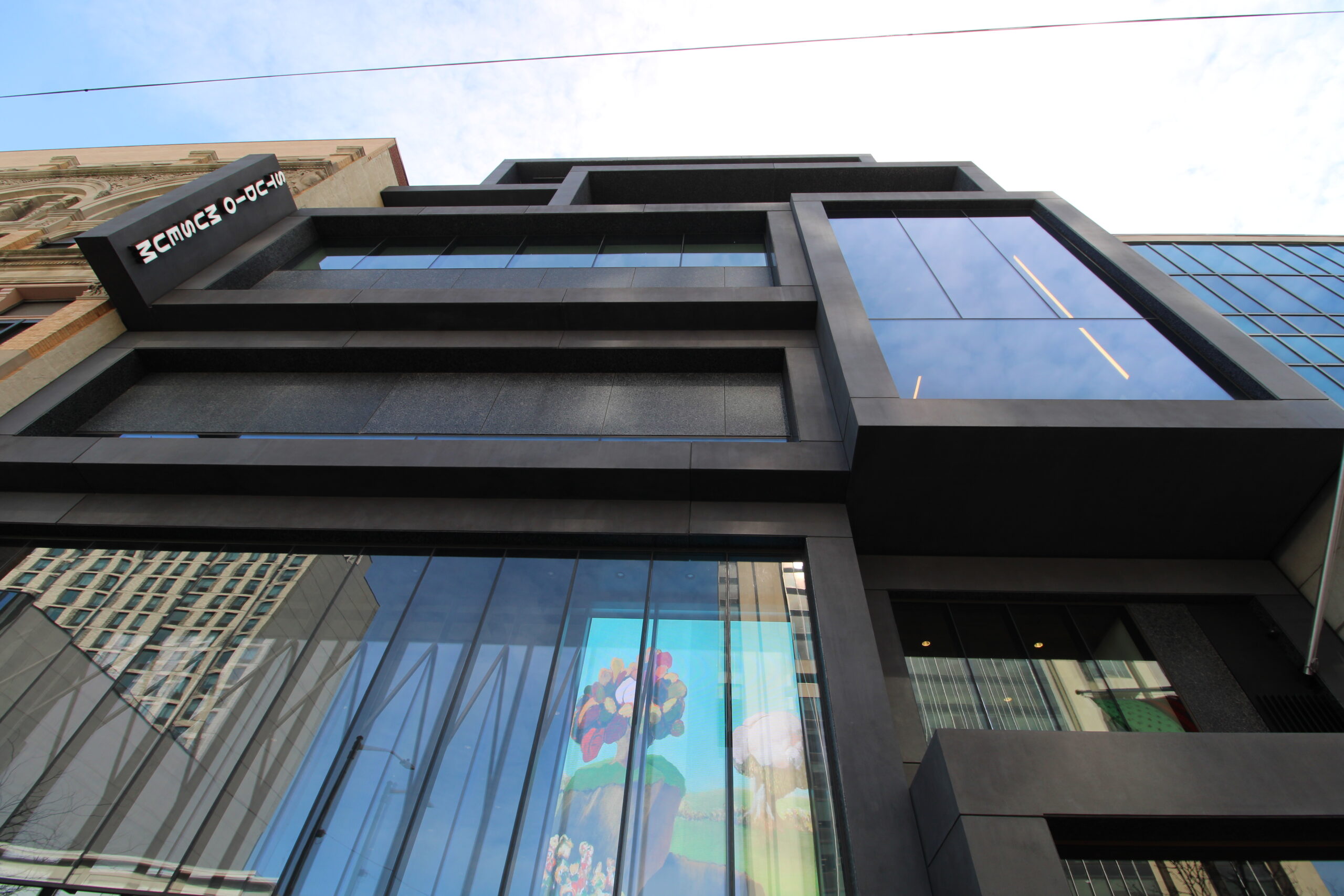
“Marcel Duchamp” will be open to the public for viewing from April 12, 2026 through August 22, 2026 at the Museum of Modern Art in New York City. It will then travel to the Philadelphia Museum of Art in Philadelphia, where it will be on view from October 10, 2026 through January 31, 2027.
To subscribe to Manic Metallic‘s Substack newsletter, click here.