Rocky is arguably the most famous man that Philadelphia has ever produced. But he also never existed.
So what is he, then? A symbol? Is he simply a movie character that legions of people have latched onto for reasons unknown? Is he a mythical creature whose legend has taken on a mind of its own?
If you ask “Rising Up: Rocky and the Making of Monuments” guest curator Paul Farber, Rocky Balboa is the “patron saint of the underdog”. Maybe that’s why almost as many people worship at his altar atop the steps of the Philadelphia Museum of Art (PMA) every year as visit the Statue of Liberty.
And according to Louis Marchesano, the Marion Boulton “Kippy” Stroud Deputy Director of Curatorial Affairs and Conservation at PMA, the driving question behind “Rising Up” is “Why do millions of people visit the statue?”
For any of you who might be skeptics of why a major art museum would choose to turn Rocky Balboa’s existence into an entire show, you should know that the full exhibition narrative turned out to be rather nuanced.
For one, the Rocky statue is used by the exhibit as a lens for broader questions: How are monuments made? How do artists make them, and how do we decide as a culture what gets memorialized? These questions are considered while studying how art, boxing, and civic identity intertwine.
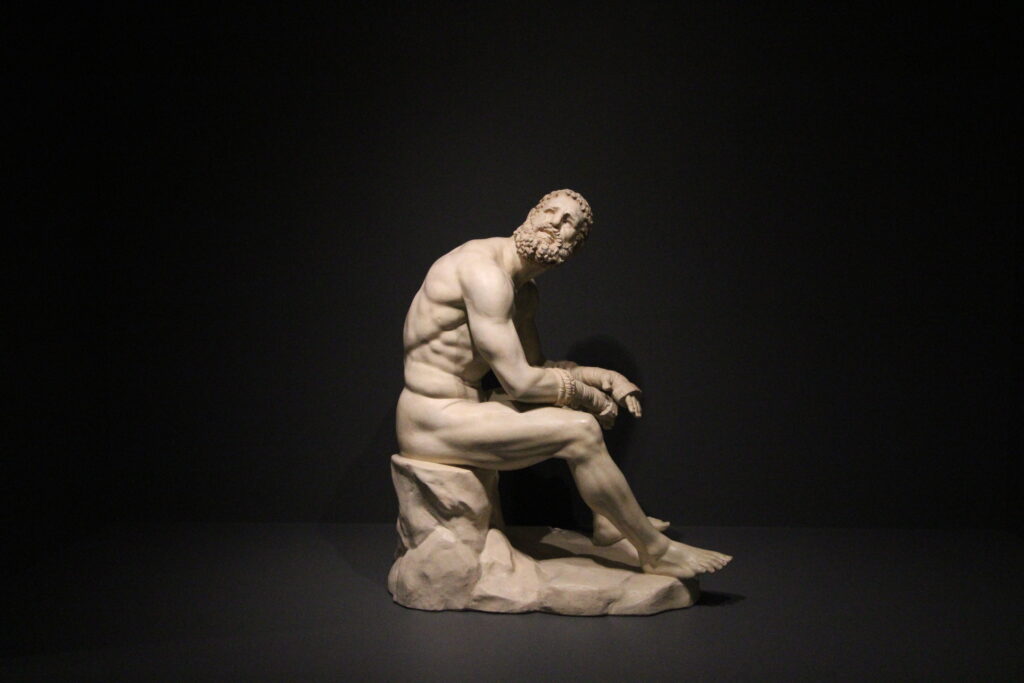
The 150 pieces created by the roughly 50 artists included in “Rising Up: Rocky and the Making of Monuments” span over 2,000 years. The Olympics have included boxing as a sport since 688 BCE. When boxing was represented in ancient times by artists, those representations included scenes of boxers winning as well as those who managed to survive. While it reads like a modern-day self-help book waiting to happen, ancient cultures honored their athletes with the maxim of ‘surviving is winning’. In “Boxer at Rest”, seen below, the figure looks as if he’s fought long and hard. We’re not sure whether he won his match or not, but he lived — not necessarily a guarantee in this sport — so he still earns a victory, of sorts.
Boxing, for all of its rough-and-tumble nature, has historically been an arena in which participants have been willing to use their platforms for political statements. The exhibition tells the story of boxers such as Jack Johnson, Joe Louis, Rocky Marciano, and others who challenged ethnic and racial prejudices during their time. A work toward the middle of the show, “Fallen Boxer”, might catch the attention of eagle-eyed Philadelphians who regularly pass through 30th Street Station. “Fallen Boxer” was created in 1934 by artist Walker Hancock, the same artist that created the “Pennsylvania Railroad War Memorial” statue (aka the “Angel”) that looms over passengers as they make their way to their respective destinations.
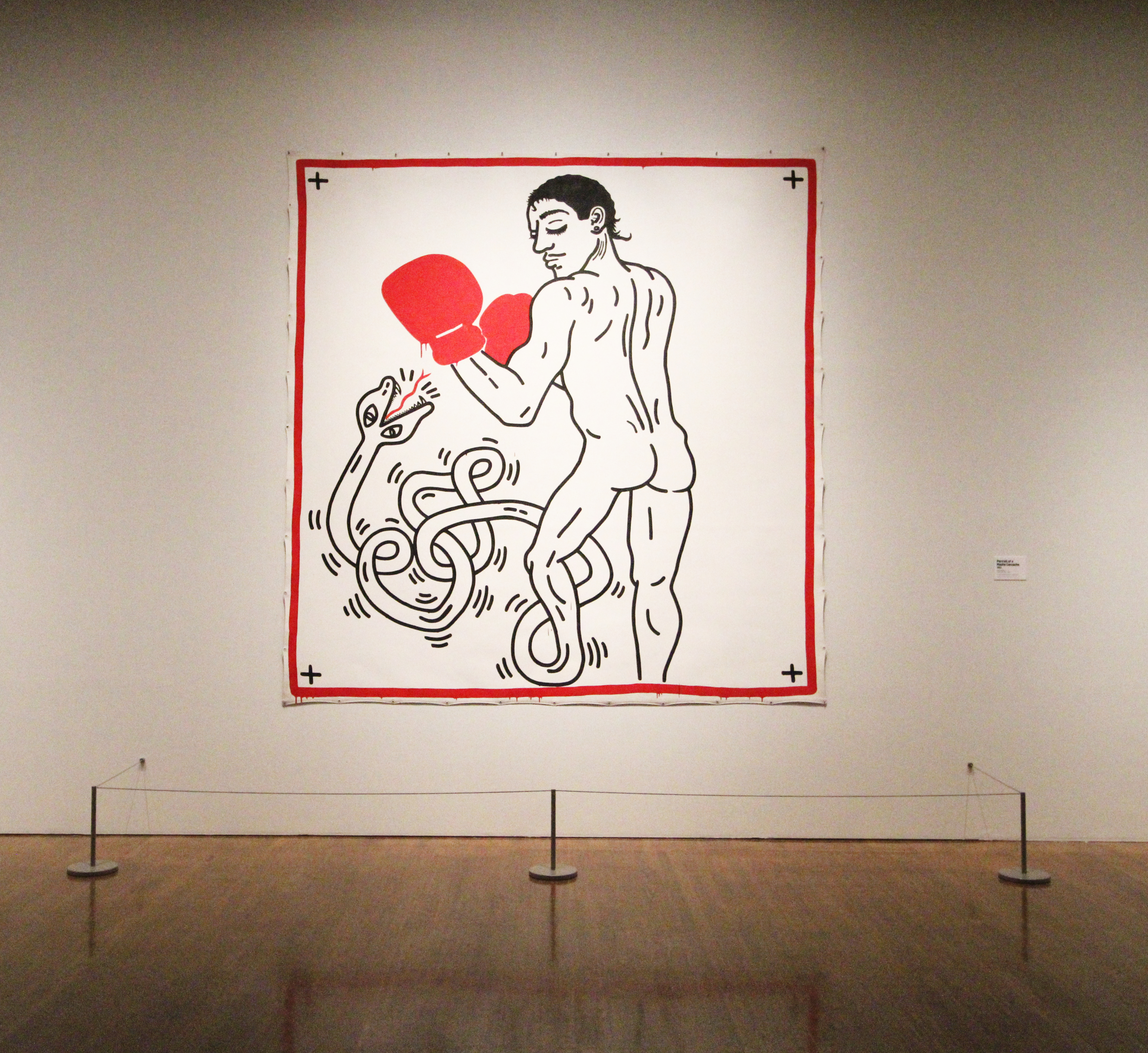
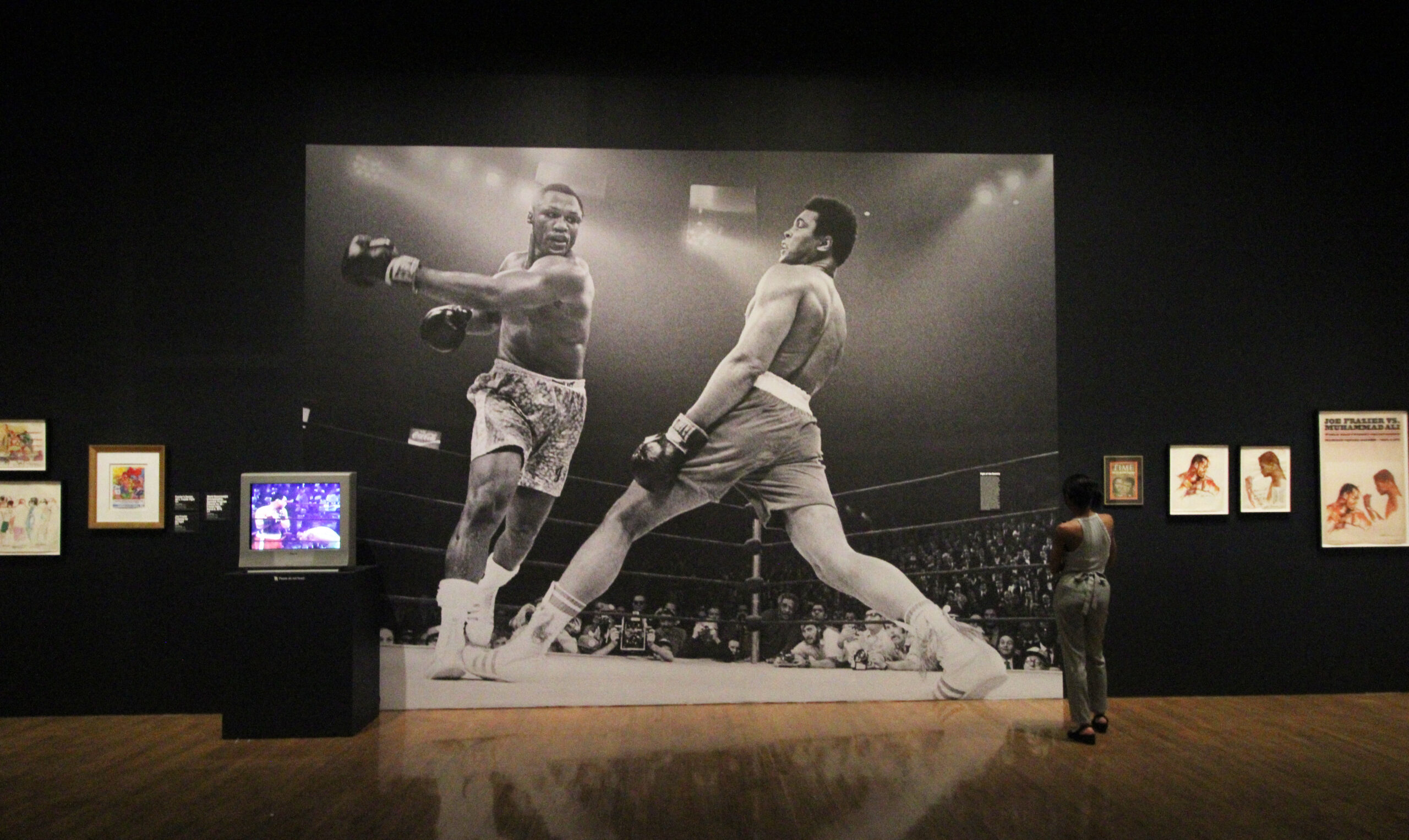
“The Fight of the Century”, which occurred on March 8, 1971, features prominently in “Rising Up”. This makes sense, given that roughly 300 million people worldwide saw the fight between undefeated heavyweights Joe Frazier and Muhammad Ali when accounting for both television figures and in-person numbers at Madison Square Garden. Artists such as Keith Haring, Andy Warhol, LeRoy Neiman, and Jean-Michel Basquiat were members of a population increasingly intrigued by what was happening with boxers becoming as famous as Hollywood stars, leading to a sort of golden age for the sport in the second half of the twentieth century. In “Portrait of a Macho Camacho” (1985), Haring creates a stylized portrait of world champion boxer Héctor “Macho” Camacho. One notable thing about this work is that Haring used canvas tarp as the surface on which to create it — notable because canvas tarp is commonly used as covering for boxing rings.
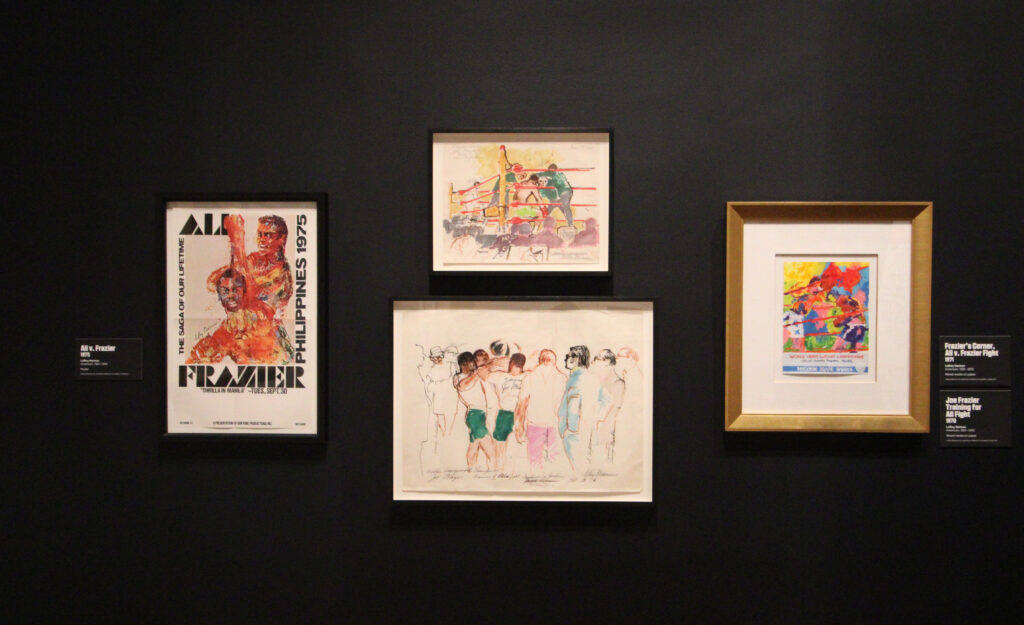
It was encouraging to see the section devoted to Joe Frazier coming just before the section devoted specifically to the Rocky statue, almost as if to say that the legacy of Joe Frazier (a real-life champion boxer) is more important than that of Rocky Balboa (a fictional champion character). It sounds ridiculous to have to state this, but we live in a world where people often put more stock in fiction than they do in what (or who) has existed in the flesh. In a word, many still have to learn to “appreciate the real”, as Frazier’s daughter Jacqui Frazier-Lyde stated in an interview with guest curator Paul Farber during the press preview.
The Philadelphia Museum of Art’s decision to place the space devoted to Joe Frazier before Rocky’s space was presumably an attempt to rewrite the narrative on who gets memorialized and to what extent. This is more apparent when you consider that a statue of Joe Frazier will be coming to the bottom of the PMA steps to replace the Rocky statue after the exhibit is over in August. Residents of the city have been clamoring for years for Frazier to be recognized more prominently, and they will surely be pleased to hear about this. After all, as Farber said, “Joe Frazier ran up the steps before Rocky did.”
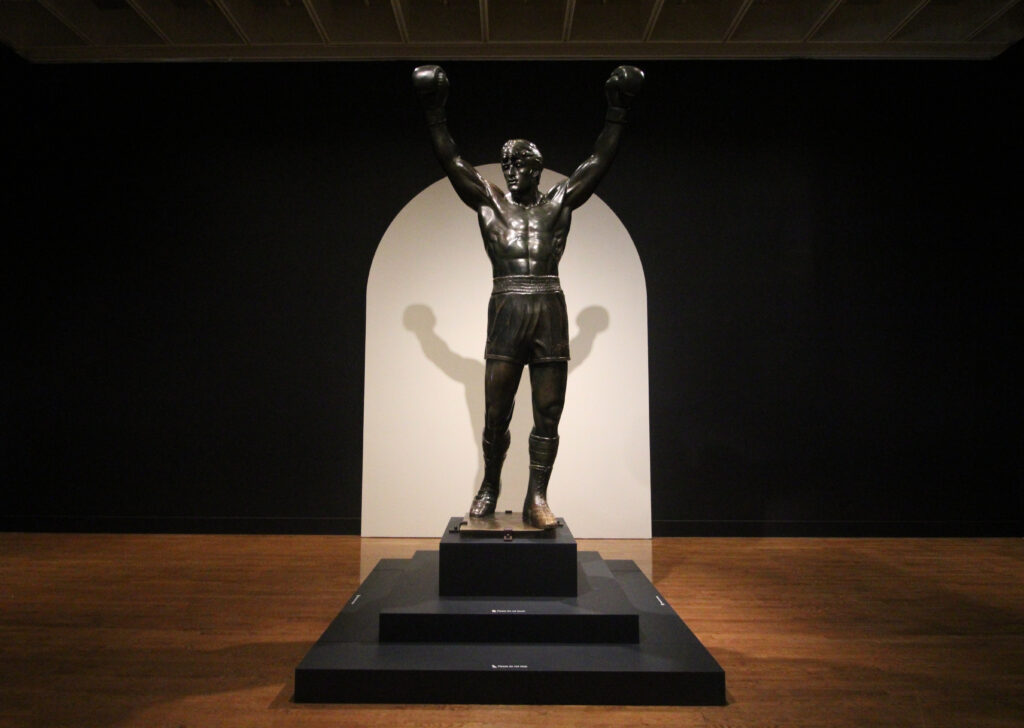
For those excited to see the Rocky statue inside the museum for the first time ever, the exhibition portion devoted to the Rocky statue doesn’t disappoint, with a timeline of the statue as well as a detailed look at how it was made. The show winds down by examining topics such as how monuments interact with social norms, how art helps us to face issues with our internal and external selves, and what it is like to be an underdog.
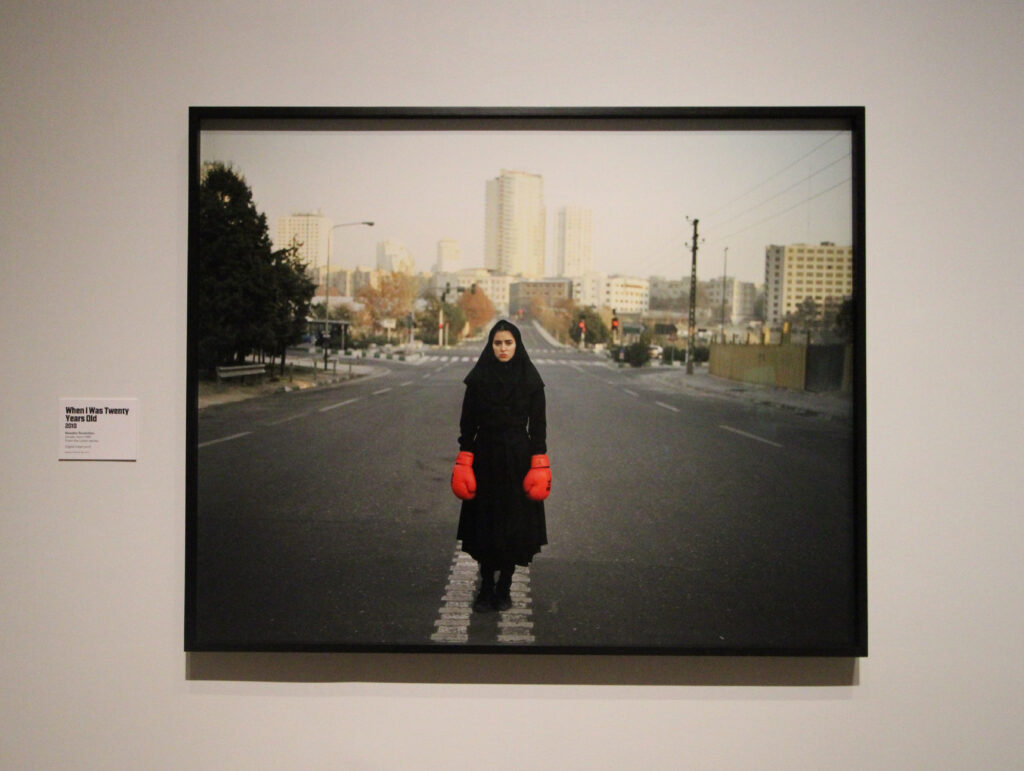
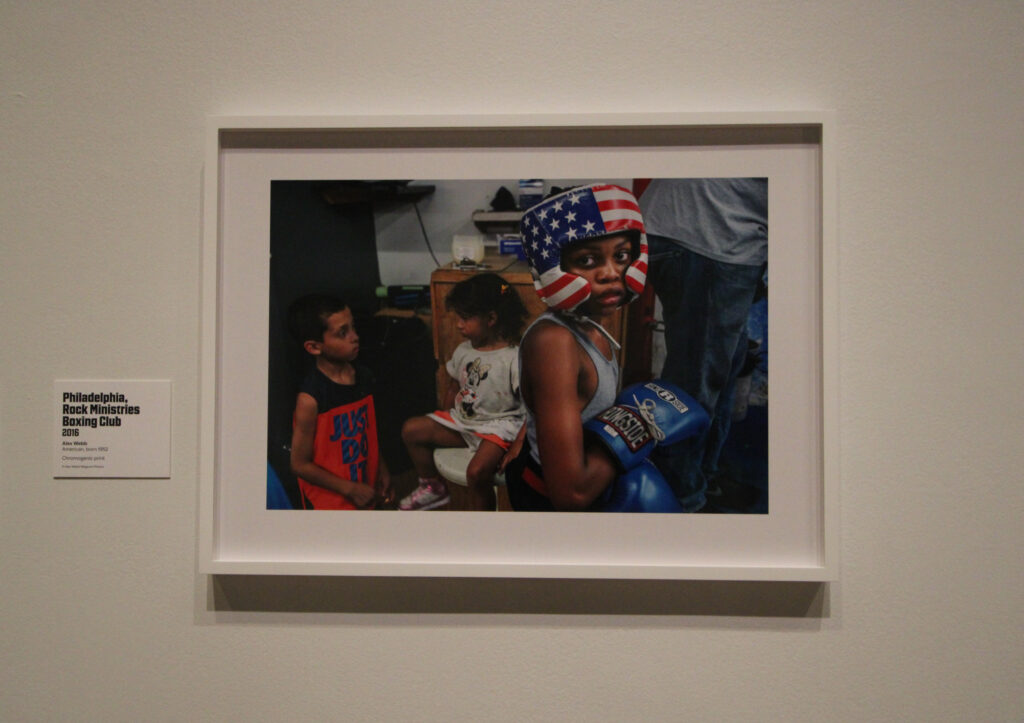
In Newsha Tavakolian’s “When I Was Twenty Years Old” (2010), the artist was protesting a ban in Iran on women singers in public, so she decided to make a fake album cover of herself wearing boxing gloves. Those gloves give her strength in a moment of defiance, showing just how powerful that boxing can be as a symbol and as something for people to reach for in times where they want to summon courage. In Alex Webb’s “Philadelphia, Rock Ministries Boxing Club” (2016), a young boy wears boxing gear at a club located in the heart of the city’s Kensington neighborhood. His gear takes the form of armor, guarding him against an unsafe world and giving him the power to exist within it at the same time.
It is interesting to see the museum, which admits to having a complicated history with the statue, finally getting the idea to use Rocky the way that the Rocky statue has used the museum for years: for exposure. Aside from art lovers near and far, “Rising Up: Rocky and the Making of Monuments” is attempting to bring in two different potential constituencies that might not otherwise visit: the tourists who visit the museum steps just to pose next to the Rocky statue and then leave — and the Philadelphians who are obsessed with sports and feats of athleticism to the exclusion of other topics.
The exhibition willingly panders, then; it seeks to draw a new audience into the museum. It’s a smart tactic, actually, and it will likely lead to increased attendance, especially with the blockbuster exhibit “A Nation of Artists” situated nearby to it. It should be a successful summer for the Philadelphia Museum of Art. Now, the question is, will those new patrons stick around for, say, the Marcel Duchamp retrospective scheduled to make its way through this fall? PMA needs to find a way to convert those new visitors into more frequent ones. Bringing back Pay What You Wish Fridays – being termed “Independent Fridays” – through Labor Day weekend is a good start.
However you feel about the Rocky statue, it is an undeniable part of Philadelphia’s history, and it is fitting that the Philadelphia Museum of Art should examine its meaning and its relationship with both the public and the museum itself. It was also a smart decision by Paul Farber, Louis Marchesano, and the rest of the curatorial team to minimize the extent to which this exhibit zeroed in on the “life” of Rocky Balboa and the statue’s presence. The statue is a piece of art, that piece of art is a part of a society, and a society and its artists decide what receives a monument and what does not. That is what’s more relevant to examine in greater detail.
“Rising Up: Rocky and the Making of Monuments” is open to the public for viewing from April 25, 2026 through August 2, 2026 at the Philadelphia Museum of Art in Philadelphia, PA.
To subscribe to Manic Metallic‘s Substack newsletter, click here.