If there’s one thing that people the world over know about Americans, it is that we are a striving, hardworking, and ambitious bunch.
So why shouldn’t an exhibition aiming to trace the entire timeline of American art hold those same traits — and in the cradle of American democracy, no less?
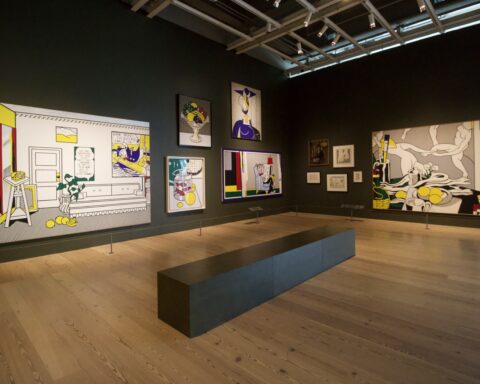
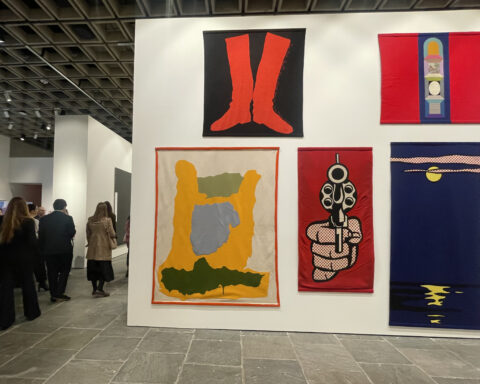
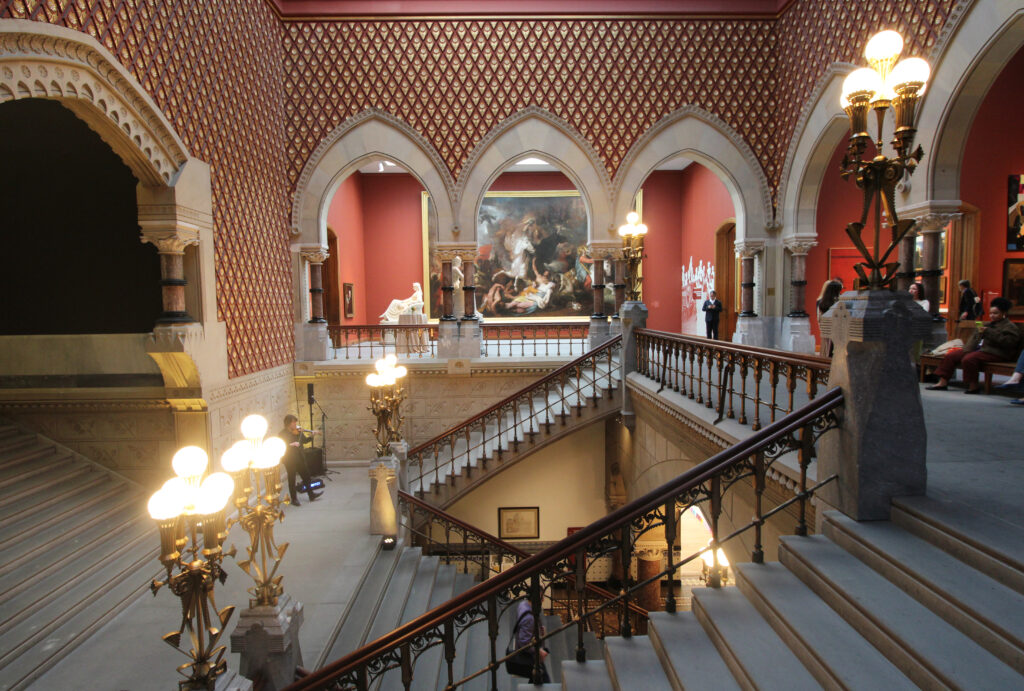
“A Nation of Artists”, a milestone exhibition of American art co-curated by the Philadelphia Museum of Art (PMA) and the Pennsylvania Academy of the Fine Arts (PAFA) in collaboration with the private Middleton Family Collection, displays over 1,000 artworks spanning the disciplines of painting, sculpture, furniture, photography, ceramics, and more. And looking at milestones, there are many to celebrate. PMA is celebrating its 150th anniversary as an institution in 2026. PAFA is celebrating its 150th anniversary of calling the Historic Landmark Building home; the ornately-designed Frank Furness and George W. Hewitt building recently reopened to the public (after two years of renovation work) in conjunction with the opening of “A Nation of Artists”. And, of course, America is celebrating its 250th anniversary as a nation. (Many are calling it the “semiquincentennial”, but I prefer the easier to pronounce “quarter millennium.”)
So both Philadelphia and America have a lot to celebrate. But what about today’s American artists? More on that later.
What you’ll see from “A Nation of Artists” is that Americans have wrestled for ages with the types of questions that we of the contemporary era believe are unique to our time. Creating art alongside a timeline that revels in ostentatious displays of wealth, for example, is as old as the nation itself. So is exploiting those who are poor and marginalized. Artists have always explored those types of themes in their work in the United States.
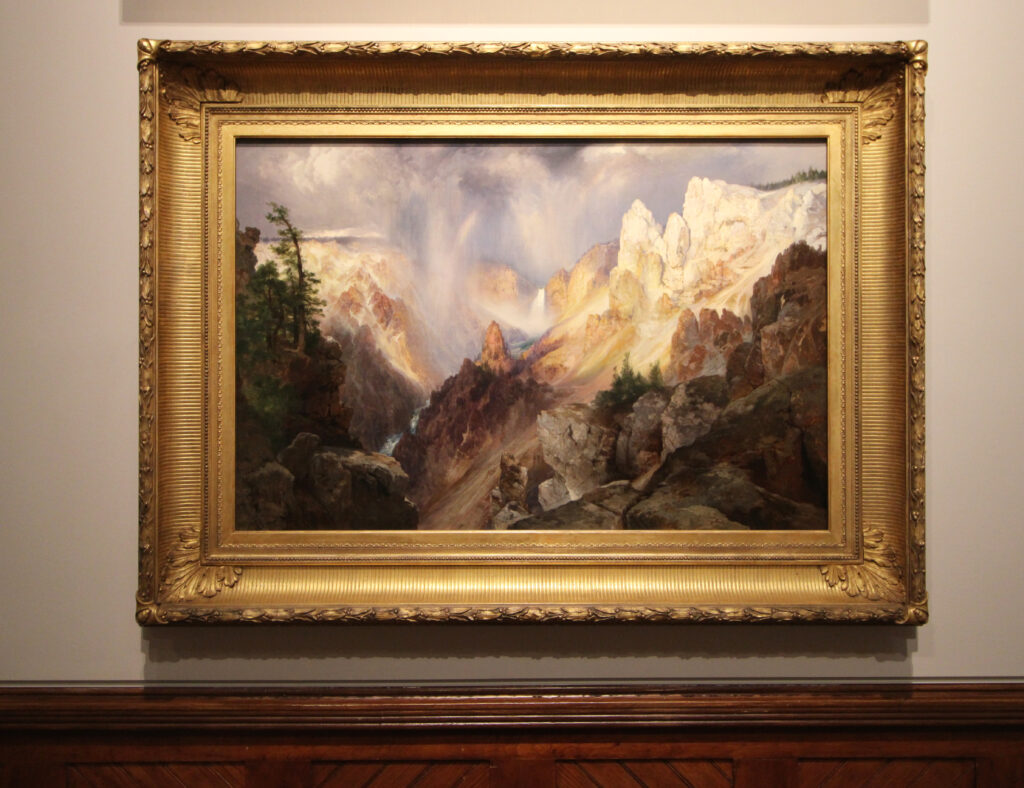
What you’ll also pick up on as you make your way through the galleries at both PAFA and PMA is that Americans have always loved nature and taken creative inspiration from it. The Hudson River School artistic style features prominently in the exhibition; this is one instance of many where the Middleton Family Collection fills in the blanks for both institutions as it relates to the strengths and weaknesses of their respective collections. Below is one of those Hudson River School works lent to “A Nation of Artists” by John and Leigh Middleton.
In a number of nature-related artworks in the show from earlier periods, you’ll notice that there is a lack of recognition for the people native to this land (the Native Americans). Kathleen Foster, the Robert L. McNeil, Jr., Senior Curator of American Art at PMA, acknowledged as much during the press tour of the exhibit. She noted the undercurrents of “manifest destiny” present in many of these works — the notion that land from this colonized environment was free and there for the taking. Where early Americans saw pride, patriotism, and permission from God to partake in the extraordinary natural fruits of the environment, Native Americans saw it as land stolen from them. They were, of course, right.
Thankfully, the curatorial teams from both the Philadelphia Museum of Art and the Pennsylvania Academy of the Fine Arts were intentional about the mixture of artistic voices that they included in “A Nation of Artists”, one of the largest exhibitions of American art ever mounted. Their recognition of Indigenous contributions to American historic and cultural life is important in a nation that has historically been hellbent on erasing them. Works created by numerous Diné (Navajo Nation), Pueblo, and Lenape artists, among other Indigenous people, can be seen in this show at different junctures.
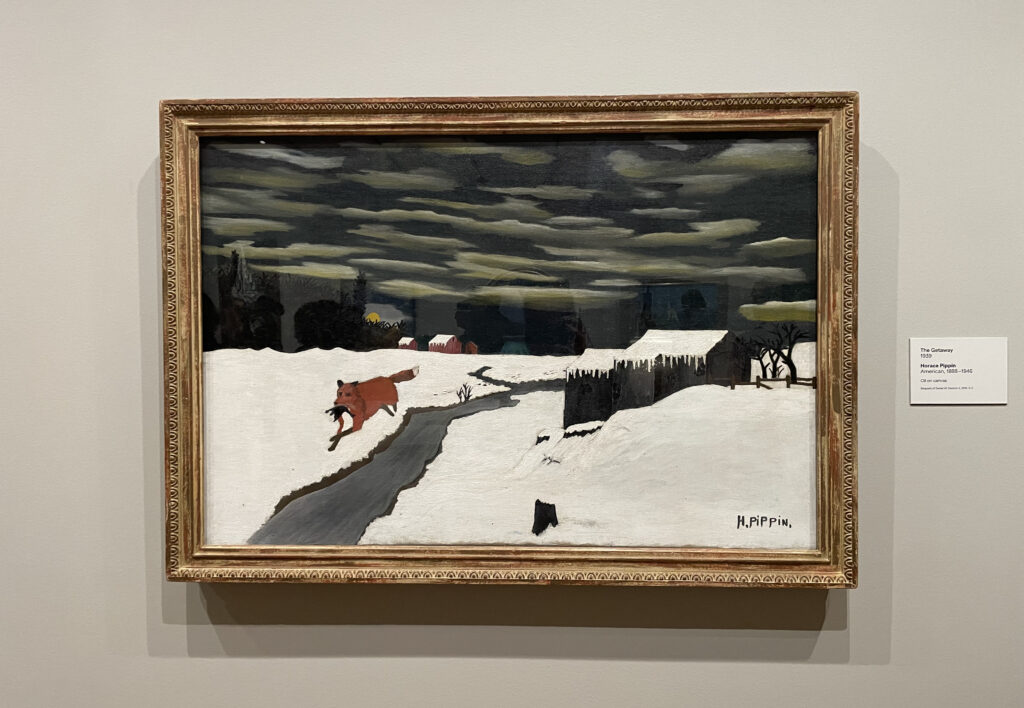
The same intent of erasure can be applied to Black Americans, who have endured the brunt of building this nation’s wealth while getting to partake in very little of it. Slavery, after all, was the backbone of building American affluence. The Black American experience has contributed so much more to the overall American cultural experience than their oppression would want you to believe, to which works included in the show by artists Henry Ossawa Tanner, Njideka Akunyili Crosby, Horace Pippin, Jacob Lawrence, and more can attest.
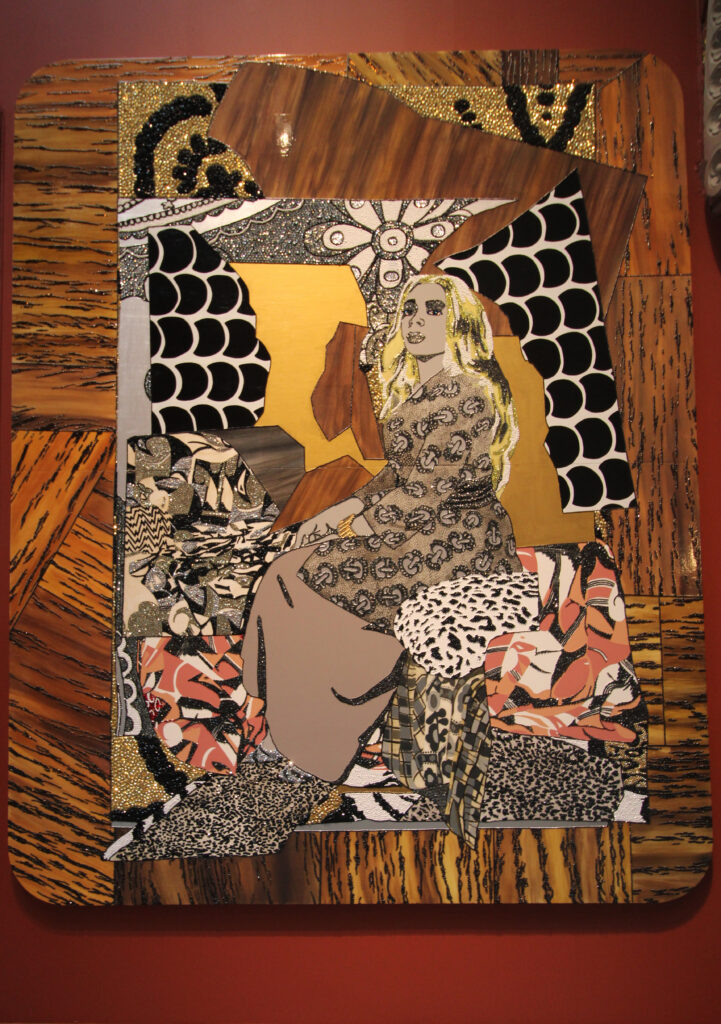
So, too, were women tasked with underpinning America’s rise to international prominence. Women were expected to maintain the home, while also joining the workforce outside the home during the Industrial Revolution. What women were not regarded as widely for was their creative talent; this is not to say that they didn’t have any. One of America’s greatest earlier artists, the Impressionist and native Pennsylvanian Mary Cassatt, is featured multiple times. One of those included works, “Mother and Sara Admiring the Baby” (1901), is from the Middleton Family Collection. Additional women artists included in the show are artists Kara Walker, Georgia O’Keeffe, Lee Krasner, and Joan Mitchell, among others.
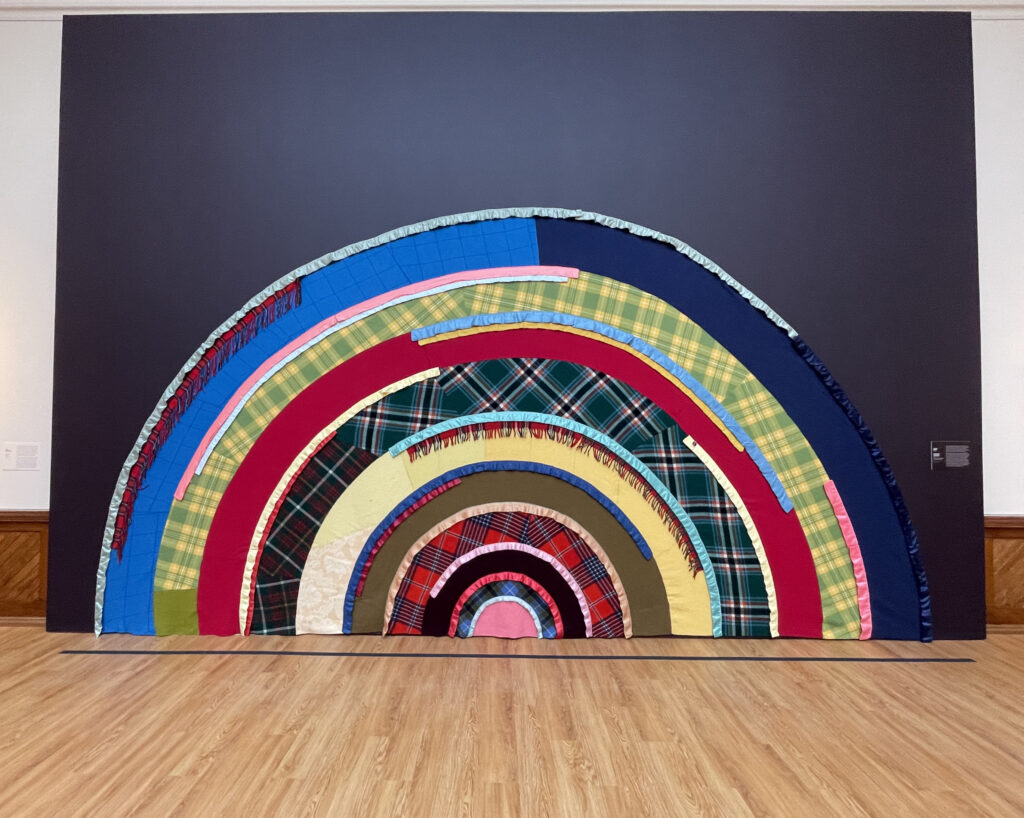
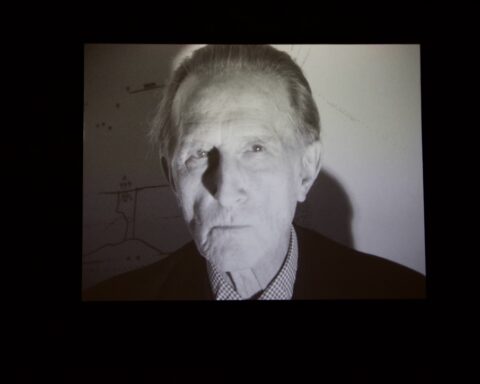
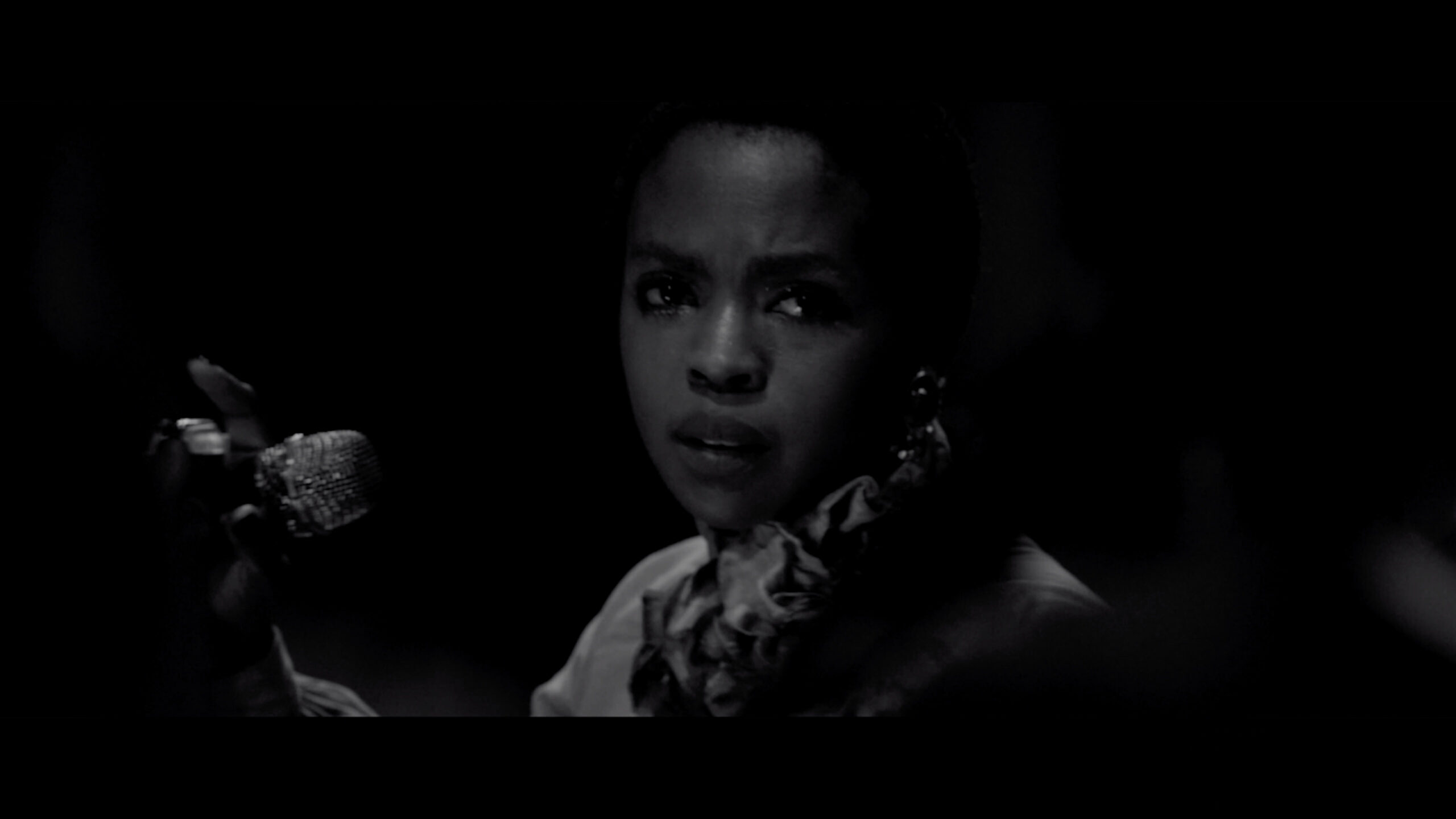
With this largely historical framing of “A Nation of Artists”, moments where the curatorial team include contemporary artists and thinkers in the wider artistic narrative in this nation’s history are crucial. Without those, this sprawling exhibit risks coming off as a comprehensive, but overwhelming, history lesson on American art. When people become overwhelmed with something, they mentally shut down. There is a gallery at the Philadelphia Museum of Art containing a looping video of seven contemporary artists based in Philadelphia talking about their art practice. PMA also included Unscripted: Philly Voices on a Nation of Artists, audio of notable Philadelphians such as chefs, designers, and athletes giving their thoughts on specific works in the exhibition, as an accompaniment to their portion of the exhibit. For their part, the Pennsylvania Academy of the Fine Arts includes artists up to the present day in their portion of the exhibit (PMA’s portion stops at the 1960s), and they also have an audio guide alongside the guest experience. These inclusions bring us back to 2026 and out of 1826.
These contemporary inclusions are also important because today’s artists — and by extension, today’s art world — aren’t exactly having an easy time of things. Why else would artist Josh Kline’s February 2026 essay for October, “New York Real Estate and the Ruin of American Art”, have caused such a firestorm among those in the arts that is still burning months later? Clearly, something about his message resonated with people. Though Kline — himself a Philadelphia native — focused on the New York experience of art, he also expanded at points on the effect that is being had on all artists in this country at present. Though an imperfect assessment of the problem, he was right about how the issues of class, generational wealth, and race come into play to limit opportunities for many artists while advantaging a select few. He was also right about how the current system of galleries, museums, and art fairs can combine to stifle innovative art practices due to risk aversion associated with whatever way that the social and political winds are blowing at the time.
Taking these points into account, if we are to look at the history of artists in the United States of America, we need those roots that ground us to the arts as they exist today in addition to what has come before. Today’s artists are on the backfoot in terms of survival as it relates to finances, social ideology, and politics; the crises of our time are existential for them, and they need all of the help that they can get.
The angle that Daniel H. Weiss, the George D. Widener Director and CEO of the Philadelphia Art Museum, takes of the mission of “A Nation of Artists” is perceptive: to “reach everyone who is inclined to be reachable.” It is an acknowledgment that in a city — and indeed, a country — where the arts don’t get as much natural acceptance as, say, sports or other forms of entertainment, it is more useful to aim outreach efforts at those who are willing to let art move them instead of trying to convince those who are simply not interested to engage with artistic endeavors.
John S. Middleton, the managing partner of the Philadelphia Phillies, takes a slightly different tone, noting that “our aspiration is that this exhibition is for everyone — no prior knowledge of art or history required.” As a lifelong Philadelphian and a lifelong art lover, Middleton is a unique figure that shows an ardent love of both sports and art. He and his wife Leigh are the owners of the Middleton Family Collection, collected over a five-decade period, and they generously lent PMA and PAFA more than 120 works to augment their institutional works.
These viewpoints are complementary: it is fair to acknowledge that not everyone will latch on to art as an interest while also wanting “A Nation of Artists” to be as accessible to as many people willing to see it as possible. It is the only sensible way to approach exhibitions, in general.
Making “A Nation of Artists” the title of this exhibition reads as a declarative reassertion of the value of the arts — and a plea to Americans. We have historically had a lot of art and creativity in this country — and we still do. We have artistic pedigree, and we need to continue to support it.
As we should. We have a lot to be proud of in Philadelphia. We gifted the nation with a democratic government 250 years ago. We are the proud owners of world-class artistic and cultural institutions. Our current arts and culture scene is brimming with talent. And though things aren’t perfect — nothing is — we still have something worth fighting to preserve while continually building a more inclusive future.
“A Nation of Artists”, jointly hosted by the Philadelphia Museum of Art (PMA) and the Pennsylvania Academy of the Fine Arts (PAFA), is open to the public for viewing from April 12, 2026 through July 5, 2027 at PMA and from April 12, 2026 through September 5, 2027 at PAFA. For more information, visit anationofartists.org
To subscribe to Manic Metallic‘s Substack newsletter, click here.