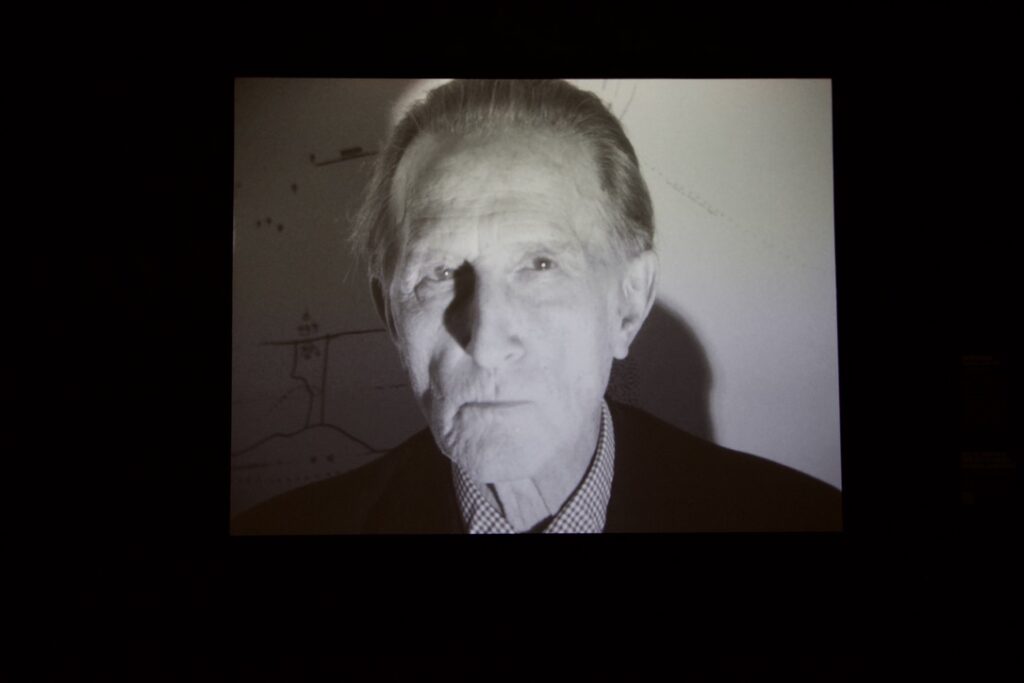
The “Marcel Duchamp” exhibition that showed earlier this year at the Museum of Modern Art (MoMA) is back for round two — this time at the Philadelphia Museum of Art (PMA), which is, according to MoMA curator Ann Temkin, the “Duchamp capital of the world.”
(She would know, as Temkin is the former Muriel and Philip Berman Curator of Modern and Contemporary Art at PMA, the position currently held by Matthew Affron, one of the co-curators of “Marcel Duchamp”.)
The trio of Temkin, Affron, and MoMA Chief Curator at Large Michelle Kuo worked together for over six years to mount this first major US retrospective devoted to Duchamp in over 50 years, with the last one having also been a MoMA and PMA partnership back in 1973-74.
Marcel Duchamp played a role in three of the most consequential movements of 20th century modern art — Cubism, Dada, and Surrealism, and his career stretched across seven decades. Among the 300 works included in the exhibition, you can expect to see many of Duchamp’s well-known works such as “Nude Descending a Staircase (No. 2)” (1912), “Fountain”, “L.H.O.O.Q.” (1919), and “Box in a Valise” (1935-41). But what you’ll also see that you could not see at MoMA are two of his more intriguing works: “The Bride Stripped Bare by her Bachelors, Even (The Large Glass)” (1915-23) and “Étant donnés: 1° la chute d’eau, 2° le gaz d’éclairage . . . (Given: 1. The Waterfall, 2. The Illuminating Gas . . . )” (1946–66). For those two, you’ll have to make sure to not leave the museum after seeing the primary “Duchamp” exhibition galleries (most of the show is held in the Dorrance Galleries), because they are installed in Galleries 281-283. It’s a short 2-3 minute walk across the museum, so it is well worth checking out because they are part of what sets Philadelphia’s “Duchamp” exhibit version apart from MoMA’s.
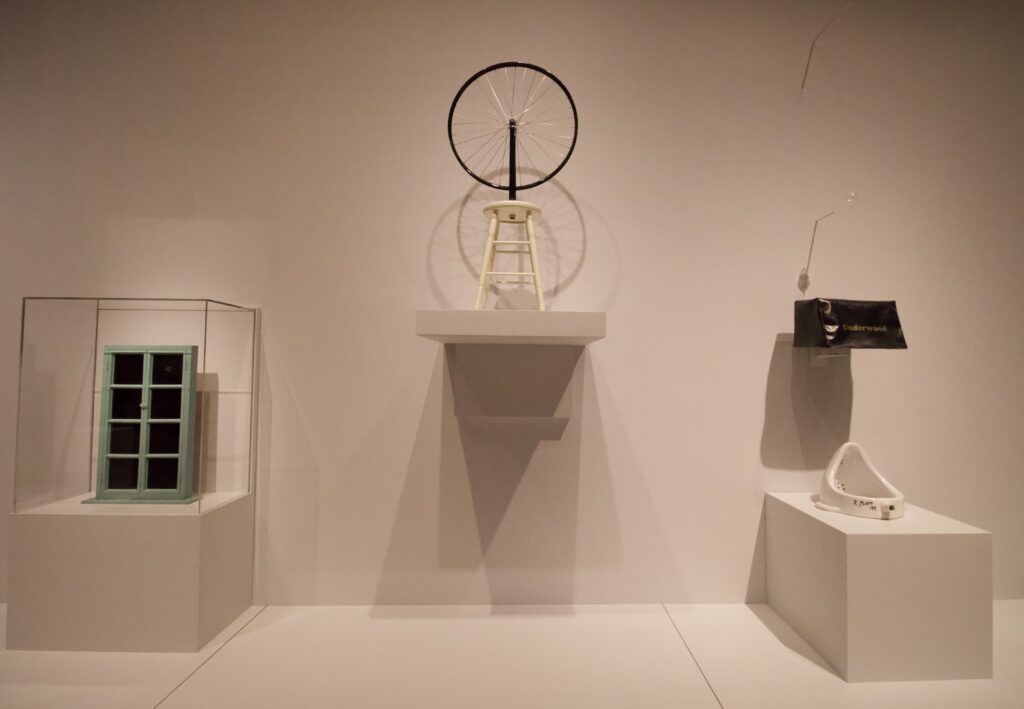
It is a curiosity that Marcel Duchamp, who didn’t put much stock into museums and their motives, would invest so much attention in setting up the Philadelphia Museum of Art with so many of his works. Indeed, Matthew Affron mentioned at the press preview during the curator talk that “He [Duchamp] was suspicious of their authority.” But yet, Duchamp steered his primary patrons, Louise and Walter Arensberg, to gift PMA their art collection in 1950. In the exhibition guide, there is an essay that goes much deeper into the reason that he decided to make PMA the primary place where his work would permanently live on. If that’s something you’re curious about (as I was), I highly recommend getting a copy of the catalog to check it out.
PMA’s programming around the exhibit leans strongly into Duchamp’s affinity for chess. There will be chess boards set up around various parts of the museum so that attendees can take time to play a game. Chess can be a long game, though, so if you’re wanting to play a game, it would probably be a good idea to see the exhibition first. It is a strong idea for the museum to roll out, but one that you’re going to want to leave extra time for in your visitation schedule. On Friday, January 15, 2027 from 6-8pm, there will be a chess tournament where three-time champion Jennifer Shahade will play thirty registered players head-to-head for the prize of a Duchamp-themed gift bag. Both ideas sound like great fun, and are the types of exhibition interactivity that Philadelphia’s primary museum should undertake more often in order to bring more people through the doors.
As you move through the exhibition, it is worth more than a passing thought to ponder the significance that the Philadelphia Museum of Art held to Marcel Duchamp and why he entrusted his legacy to this institution. In this city, we are surrounded by cultural gold. In addition to the Philadelphia Museum of Art, we have the Barnes Foundation — its 2012 iteration designed by architecture firm Tod Williams Billie Tsien Architects, who went on to design the just-opened Barack Obama Presidential Center in Chicago — and the extraordinary works of mostly Impressionism, Post-Impressionism, and Modernism that Dr. Albert Barnes left for the foundation. We’ve got Calder Gardens, an arts organization devoted to the legacy of Alexander Calder that opened last fall, which was spearheaded by the Calder Foundation and designed by the famed architects Herzog & de Meuron. The Philadelphia Museum of Art administers the Rodin Museum, which is home to the largest collection of works by sculptor Auguste Rodin outside of Paris. The list of cultural firsts that we have is endless, and the American history that we hold here is incomparable.
Duchamp, it seems, saw something in us that we have found it hard to see in ourselves.
Maybe Philadelphians should stop wondering “Why us?” and start asking “Why not?”
“Marcel Duchamp” will be open to the public for viewing from October 10, 2026 – January 31, 2027 at the Philadelphia Museum of Art in Philadelphia, PA.
To subscribe to Manic Metallic‘s Substack newsletter, click here.