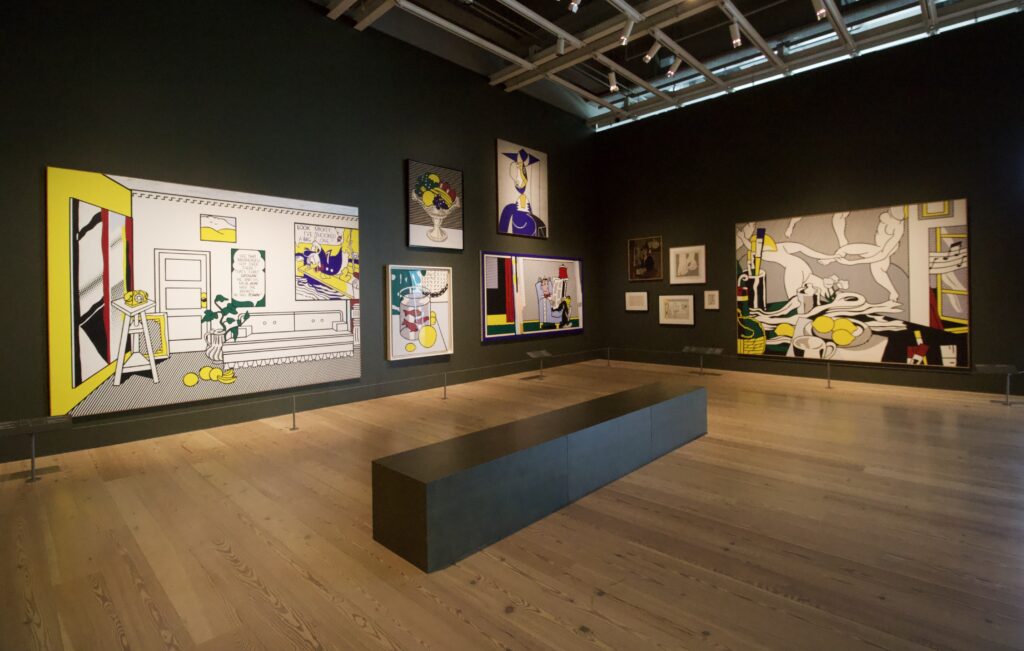
Roy Lichtenstein’s work is the type that, even if you can’t quite put a finger on the point that he is aiming to get across, sticks with you. But the way in which he treats imagery is a lot more in line with today’s line of thinking that you might imagine.
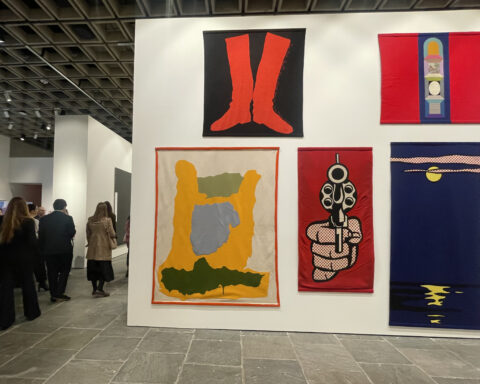
“Roy Lichtenstein: Like New”, which opens on Sunday at the Whitney Museum, is the first retrospective of the artist’s work in a New York institution since 1993, when the Guggenheim hosted “Roy Lichtenstein: A Retrospective”. The show’s curators, Meg Onli and Alex Da Corte, weaved together about 130 works from six decades of his career and included art that spanned painting, drawing, collage, prints, sculpture, and film.
What you’ll find during your visit to the show is that Lichtenstein saw no problem with borrowing images from sources like comic books and newspapers — though some would call this “stealing”, and others would call this “copyright infringement” — and “repurposing” them. This is, of course, a conversation that has not ceased since his day; in fact, it has reached a fever pitch during these Wild West days of LLM dominance from companies such as Anthropic and OpenAI. Today’s artists and other creatives are having to grapple with what it means to put their creations out in the world, knowing that their works can be sucked up by AI and not much is being done about it at the legislative level.
Roy Lichtenstein likely would have had few issues with this prospect. He was an artist interested in the circulation of images, and even engaged with the people who appropriated his own artworks. He was a man who copied, and because he was that, he did not mind being copied. What could be a more contemporary philosophy than that?
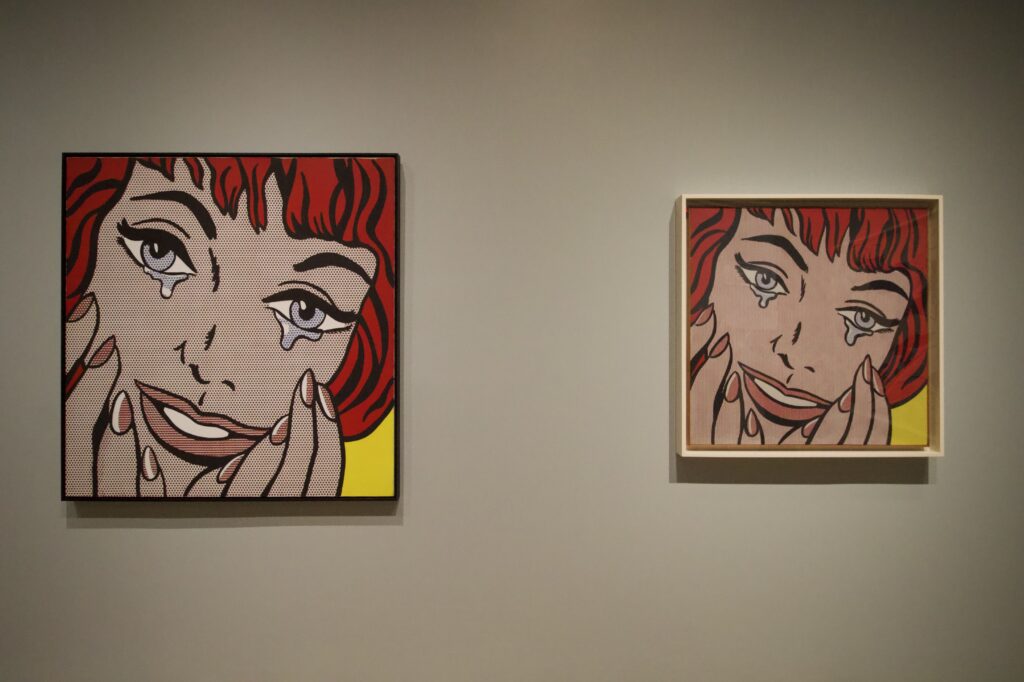
When you begin studying his artwork up close, you realize that, despite what you may have thought before this exhibit, his work is, indeed, handmade. Lichtenstein’s work appears so graphic and precise that you might find yourself suspiciously inspecting it when you learn that it is painstakingly done by hand. His work may appear machine-made, but it is most certainly not. He had different techniques that he used throughout his career to get the dots on his work with which he has become synonymous; one of those ways was to use perforated screens through which he’d then push paint to achieve his desired effect.
One thing that you will perhaps come to wonder as you’re wandering through the exhibition is this: what drove Roy Lichtenstein, with his repurposing of images from different forms of pop culture, to choose the images that he did? Why did he pick the subject matter that he picked? Why did he have these prominent artworks of women crying, for example? And was he simply more driven by the philosophy of duplication and reproduction itself than any particular subject matter? Was there truly no “why”? While it is never necessarily up to the artists themselves to explain every detail of their work to the general public, this exhibition itself would have benefitted from the curators digging deeper into his subject motivations.
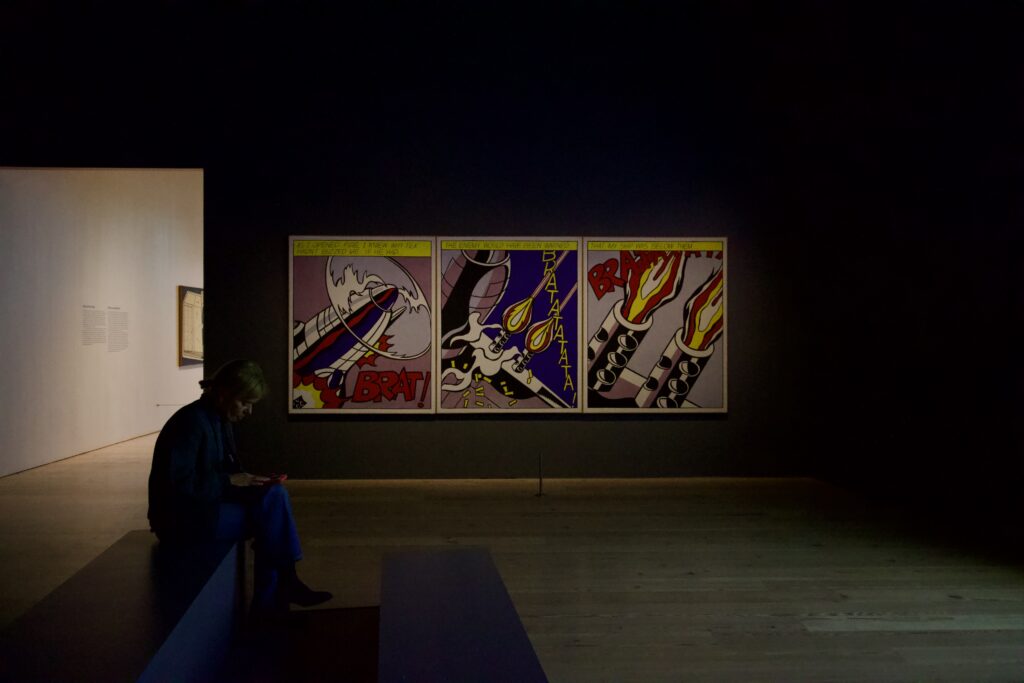
Onli and Da Corte came closest to mining these motivations in the “Flash Lab” section, where the duo examined the influences of Hoyt L. Sherman, one of Lichtenstein’s art professors at Ohio State University. It is here that you start to see some of the wheels turning of both the artist’s subject matter interests and his philosophical underpinnings. Here’s the description given for his work “As I Opened Fire…”(1964):
Lichtenstein was fascinated by what he once called the “visual shorthand” of comic artists, whose stylized depictions of gunfire, muzzle flashes, and mid-air explosions could suggest a “kind of universal language.” Made fifteen years after his studies at OSU, Lichtenstein’s war-themed paintings depict speed and military combat in a manner that echoes Hoyt L. Sherman’s instruction: “Seeing must be developed as an aggressive act.”
What that description reveals is a fascinating artistic mind able to extract sophisticated levels of meaning from seemingly surface-level cultural artifacts. It happens frequently enough that when people inquire about the meaning and motivation of artwork, you’ll either get some overly technical and wordy description from curators eager to show that they made it past the seventh grade — or you’ll get a description from an artist who wants to sound like the greatest creative mind this side of the galaxy, so they write up an artist statement so ethereal that it’ll disintegrate if you touch it.
“Roy Lichtenstein: Like New” needs more of the type of insight into the way that Lichtenstein thinks and what inspires him (as with “As I Opened Fire”), less of…..simply describing what he did and how.
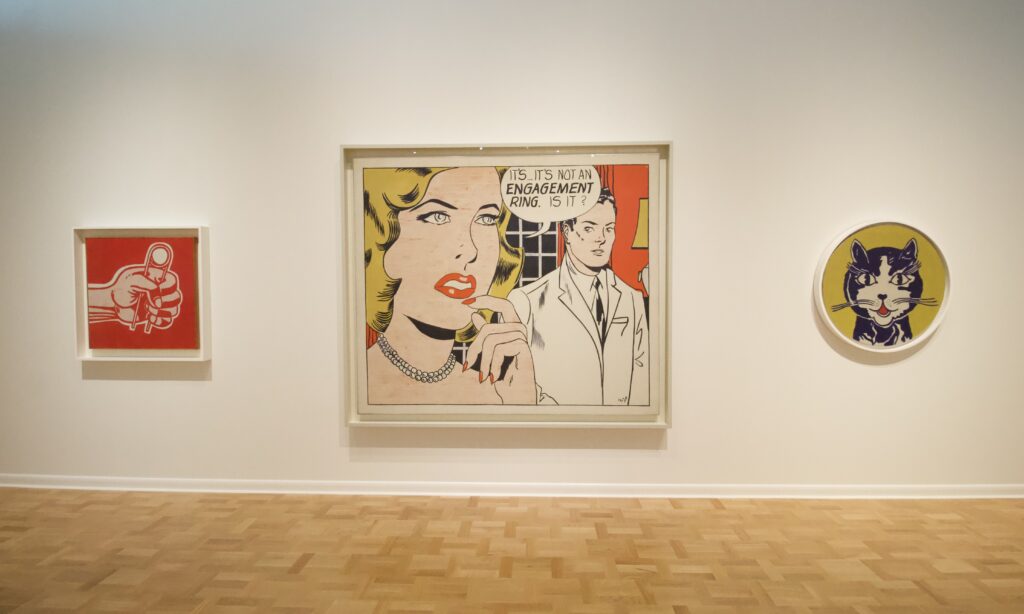
Another high point worth mentioning is the Castelli Gallery recreation. For those of us not alive in 1962, it was illuminating seeing the same exhibition recreated in its entirety by the Whitney staff. When you go inside to view the artworks that would have been on display, it is easy to wonder why there were people revolted at Lichtenstein’s art. Would it have been different from what was being produced during that time? Well, sure. But if people could take the work of artists like Jackson Pollock and other Abstract Expressionists, what is so offensive about the works of Roy Lichtenstein? The only point that they would have really had with respect to a valid argument is the issue of copying. But then, this is a society that didn’t even have legal abortion yet, so the level of conservative taste shouldn’t be surprising.
One last point to leave you with before you go to see “Roy Lichtenstein: Like New”: look very closely at the “Hoyt Sherman Flash Lab Tutorial” film when you reach it. You’re in for a real trip.
“Roy Lichtenstein: Like New” will be open to the public for viewing from Oct 11, 2026–May 10, 2027 at the Whitney Museum of American Art in New York City.
To subscribe to Manic Metallic‘s Substack newsletter, click here.