America tends to conveniently forget things that don’t align with its vision of American exceptionalism.
Like the fact that it has played host to concentration camps in its past.
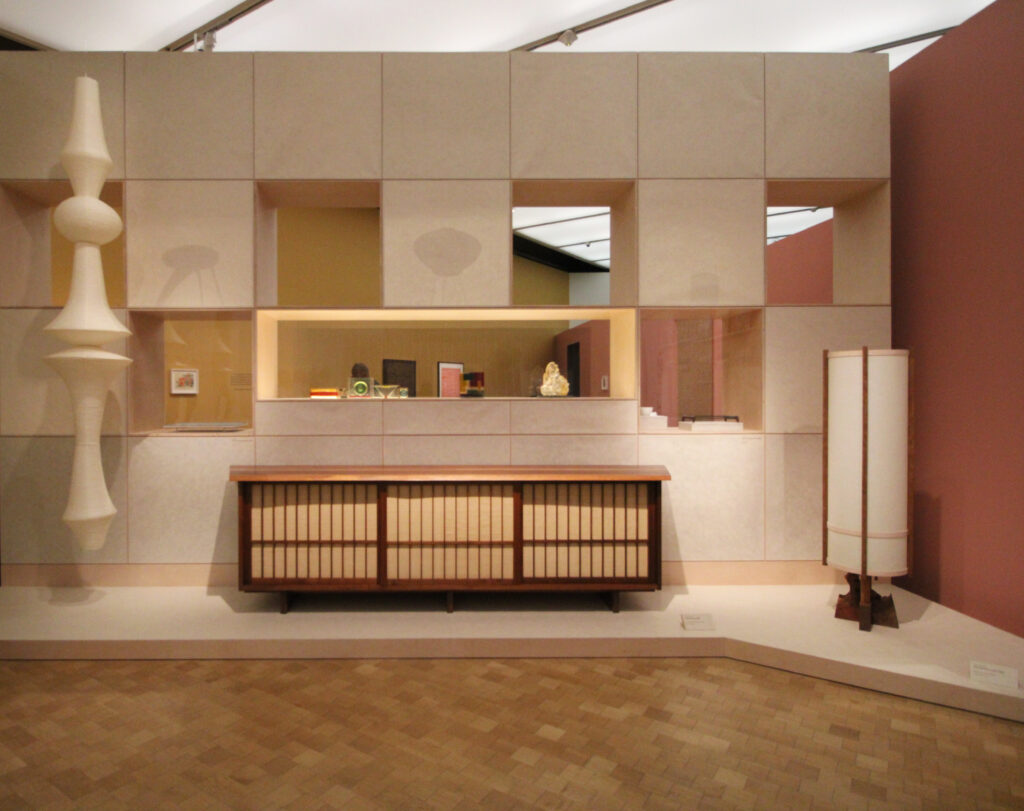
In its latest exhibition, “Noguchi to Asawa: Designing Postwar America”, Barnes Foundation curator Cindy Kang asks attendees to remember this painful truth and to acknowledge the role that Japanese American artists played in designing America’s midcentury.
The exhibit showcases the work of six Japanese American artists who either endured time themselves in these World War II-era concentration camps or were allied with those who did. It takes that work and situates it within the context of America’s thriving midcentury design era, while showing how the artists included transmuted their grief caused by forced relocation and incarceration into work that reached the heights of splendor and craftsmanship.
The artists included span two generations, with sculptor and designer Isamu Noguchi, sculptor Leo Amino, and architect and furniture designer George Nakashima having already established their careers before President Franklin Delano Roosevelt committed an act in 1942 that would become his most shameful: signing Executive Order 9066, which authorized the relocation and incarceration of over 120,000 people of Japanese heritage located on the American West Coast. The younger of the artists — sculptor Ruth Asawa, graphic designer S. Neil Fujita, and fiber artist and weaver Kay Sekimachi — took artistic classes that would influence their respective career directions after they exited the camps.
As you walk into “Noguchi to Asawa”, you’ll notice the black coverings on the wall secured with nails. That is meant to recall the tar paper used in building the concentration camps in the 1940s, according to Japanese American architect Stephanie Goto, the exhibition’s designer. Goto also pointed out that the nails used in the exhibit are construction nails, furthering the feel that you get when you walk through that one of the designer’s goals was likely to have visitors feel the cramped and uncomfortable quarters that camp residents would have felt.
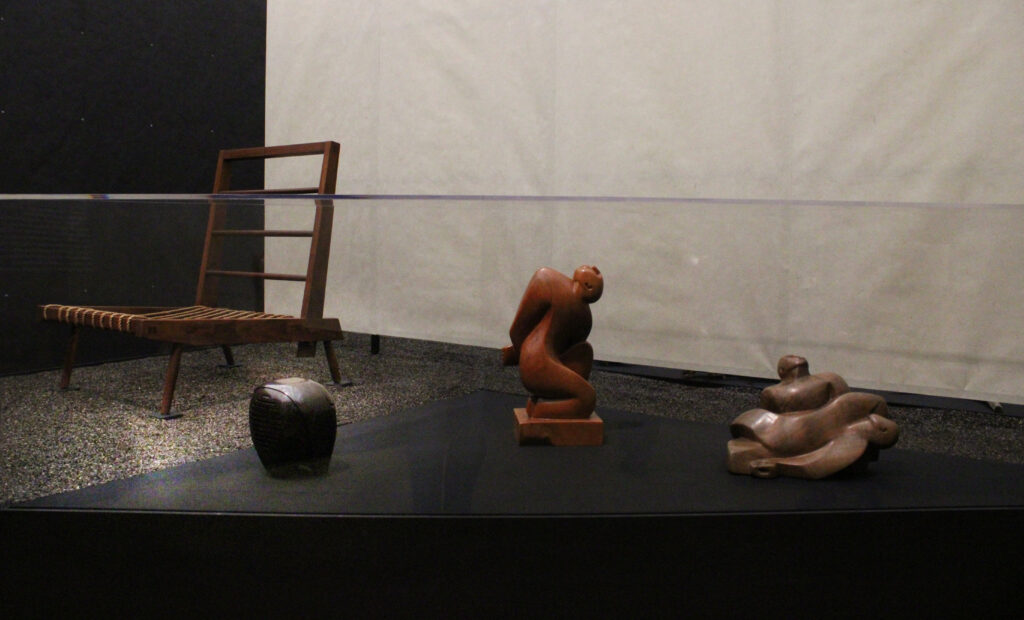
The artwork contained in the exhibit’s first portion is from both the days preceding the camps’ existence and the time spent in the camps. Below, you’ll see examples of works from (left-right) George Nakashima, Isamu Noguchi, and Leo Amino. The Noguchi work below, titled “Radio Nurse” (1937), is a baby monitor created during his early interest in industrial design and combines American and Japanese design influences.
As the artists left the concentration camps at various points before the end of WWII, they set about the task of rebuilding their lives and getting into the swing of being an artist in American society. Many of them began to engage in the “minor arts” — furniture, ceramics, textiles, and so on — as a way to reject the art world’s obsession with large works. These pieces were often scaled to fit inside of people’s homes. It makes sense, in a way, that the artists would zero in on objects that contribute to building a home when they had just gone through an excruciating period of being forced out of their private spaces. This sense of rebuilding and interiority-focused design would align with a desire to reconstruct one’s personal world after a devastating time.
You also have to consider that in creating amazing designs for the postwar American home, these artists were giving so much back to a country whose government saw them as the enemy. It must have been difficult. But there is another heartbreaking element to this narrative as well, which I’ll discuss a bit later.
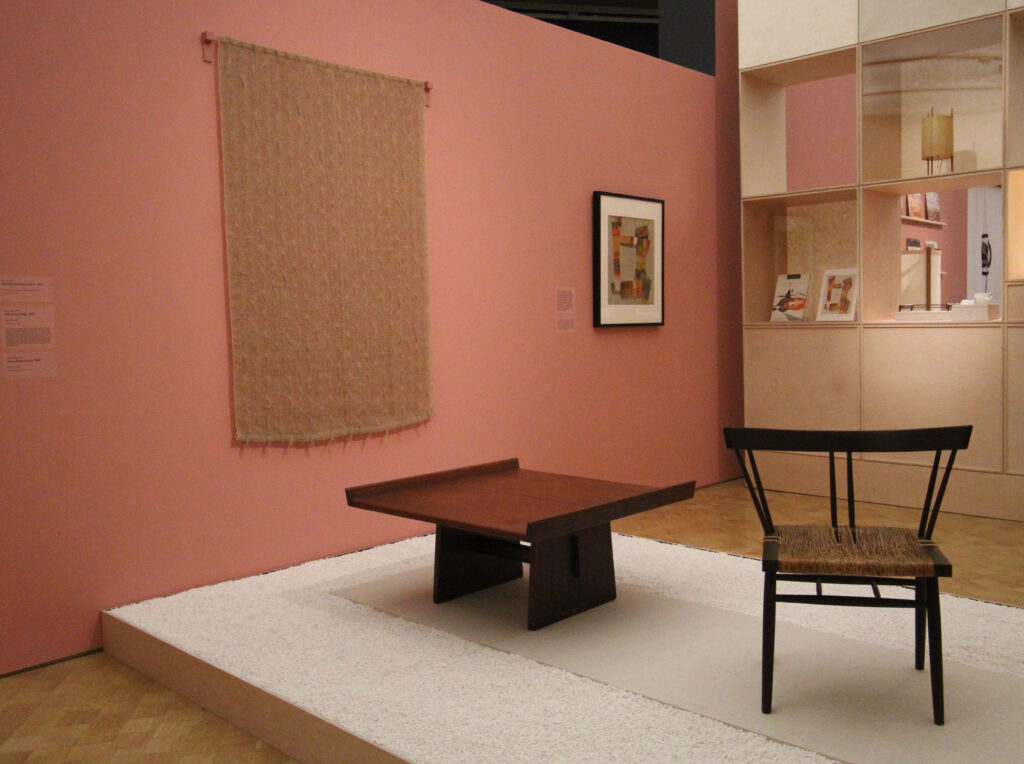
Below, you’ll see a photo with works by Kay Sekimachi, George Nakashima, Isamu Noguchi, and S. Neil Fujita. Nakashima’s “Milk House Table” (1944) was one of the first major works that he made after being released from his concentration camp; he made it at his employer’s farm in New Hope, Pennsylvania in (where else?) the milk house.
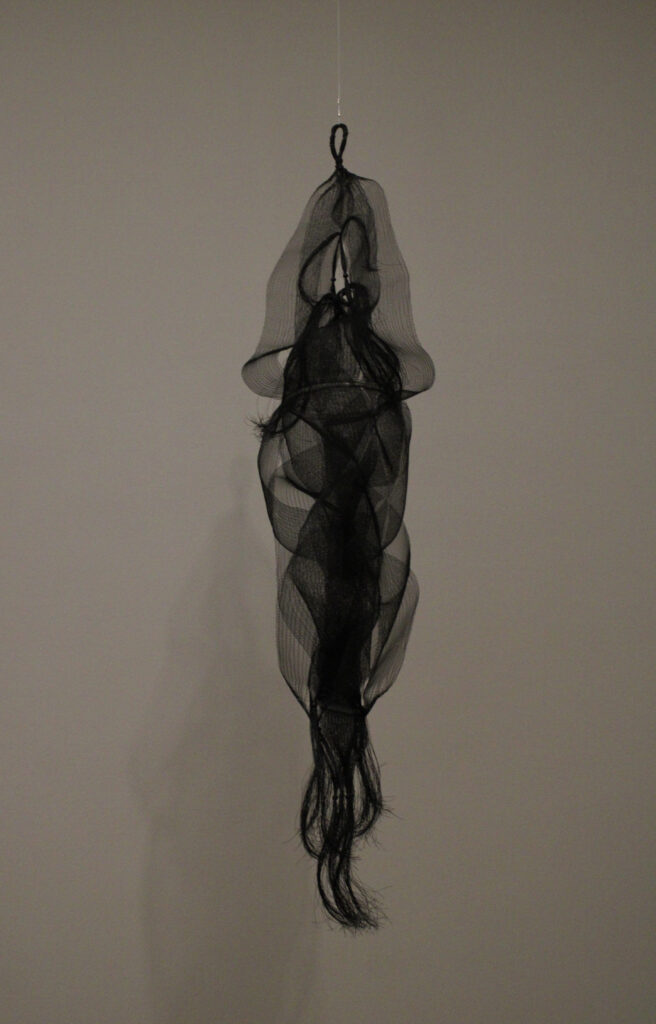
A lot of these artists became fascinated with the idea of transparency as a design concept, which was in line with some European artists who associated it with modernism. But Japanese Americans had another reason for becoming preoccupied with it: the desire to recede from view in order to not take up space from others. As artist Ruth Asawa said, “I am able to take a wire line…and define the air without stealing it from anyone…You can see right through most of my sculpture.” In the years following the war, Japanese Americans were making an effort to assimilate into mainstream society, and they didn’t want to cause too much trouble to anyone. The transparent works that they created would have also had to negotiate that same problem of existing without being to selfish in claiming its own space. Below, you’ll see a work by Kay Sekimachi demonstrating this concept of transparency.
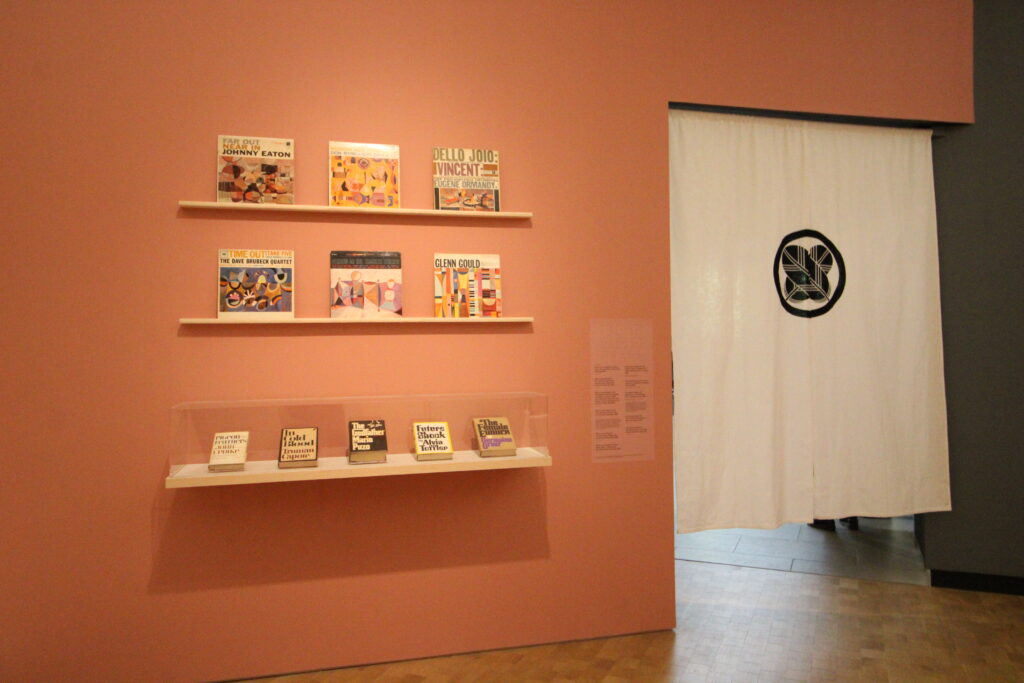
The intentionality of the exhibition design for “Noguchi to Asawa: Designing Postwar America”, in addition to getting a fantastic opportunity to get a fuller grasp around the artists responsible for designing the furniture, book covers, album covers, lighting fixtures, and sculptures that populated what many still think of as America’s golden age of design, is worthy of its own writeup. Visitors should certainly consider purchasing the accompanying exhibition guide, an important work in its own right that offers a wealth of information to add to an exhibit that is already experiantially rich. Curator Cindy Kang and exhibition designer Stephanie Goto combined to create an exhibit that is subtly powerful.
“Noguchi to Asawa: Designing Postwar America” will be open to the public for viewing from September 20, 2026 through January 10, 2027 at the Barnes Foundation in Philadelphia, PA.
To subscribe to Manic Metallic‘s Substack newsletter, click here.