Have you ever felt like we’re reaching the end of the Internet?
Do you remember rock and roll radio?
And did you know that video killed the radio star?
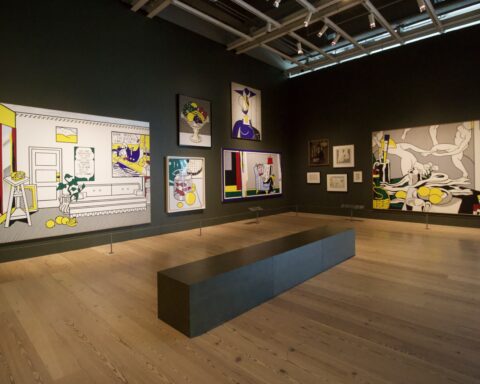
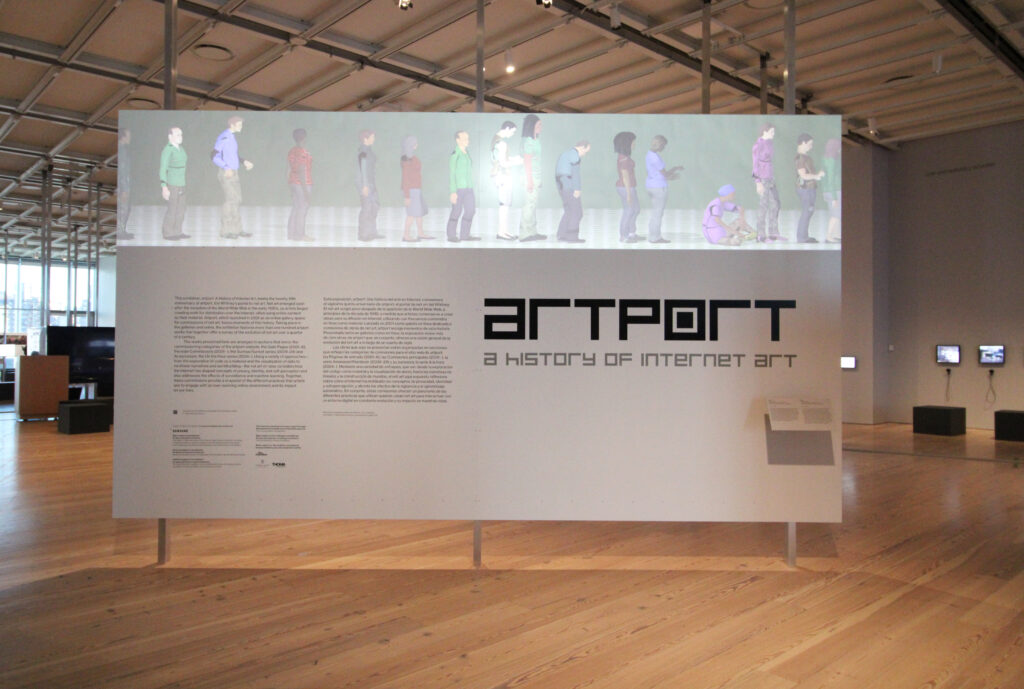
“artport: A History of Internet Art”, the Whitney Museum’s latest exhibition, celebrates the past 25 years of Internet art (or “net art”) by displaying works commissioned specifically for artport. The online gallery space began its work in 2001 by publishing “Gate Pages”, which were splash pages that led to artists’ websites, and published those until 2006. The “Sunrise/Sunset” series, which popped up on the Whitney’s website twice daily at sunrise and sunset, ran from 2009-2024. “On the Hour”, the successor to “Sunrise/Sunset”, shows artwork that pops up at the top of every hour on the museum’s website, no matter where you happen to be (except for the ticketing page). Primary commissions have been ongoing since 2001. Curator Christiane Paul, who specializes in digital art, and her team divided the exhibition into three sections that included the above categories: “Gate Pages”, “Sunrise/Sunset” and “On the Hour” (featured in the same section), and primary commissions.
What you realize walking through this exhibition is that “artport: A History of Internet Art” is playing a role of which it might have no idea: it is leading visitors along a path from the Internet’s early, more hopeful days to a time that many have begun to lose faith in the medium and its potential for creative self-actualization.
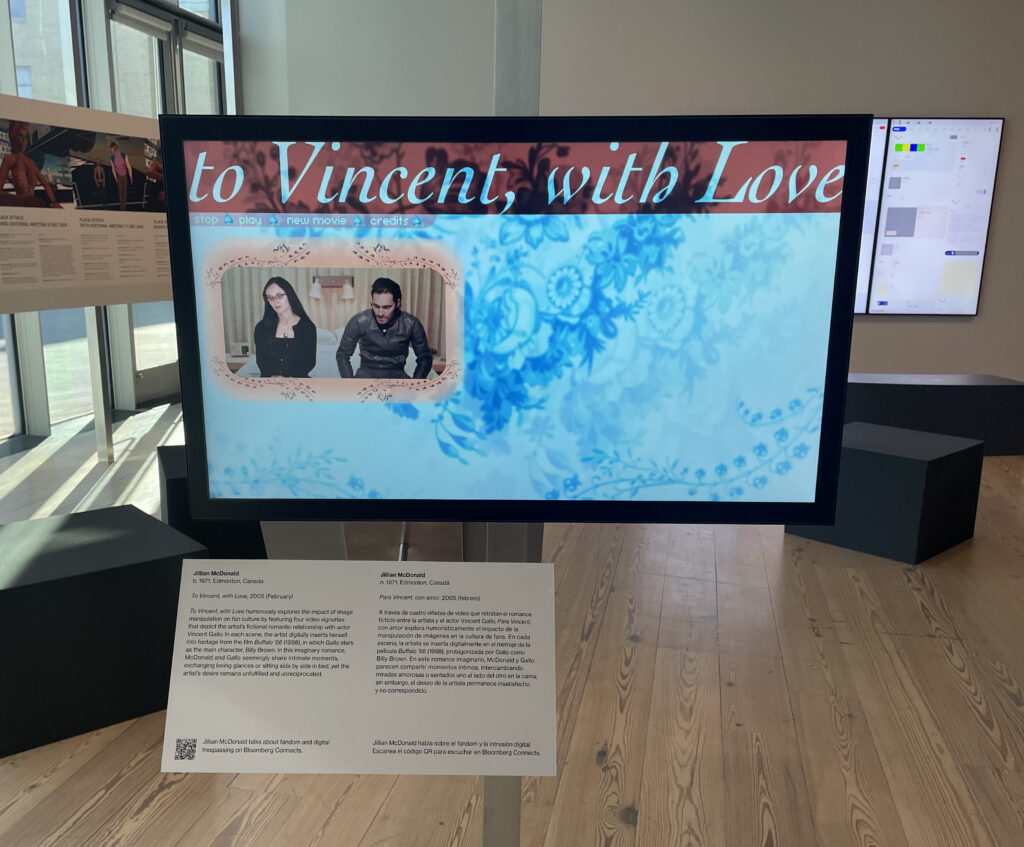
In the beginning days of the web, artwork like “To Vincent, with Love” (2005), by artist Jillian McDonald, proliferated the online world. McDonald’s piece is weird in the best possible way: it explores image manipulation as it relates to fan culture by creating four video vignettes of a (nonexistent) relationship between the artist and an actor over which she is romantically obsessed. It is delightfully cringey, and it also manages to make a statement. If a piece like this were created today, it would likely be panned by the online “talkerati”. Humor is also a casualty of the current era, as many are fixated on appearing as intellectually put together as they can possibly be, despite what they might say otherwise. That doesn’t exactly make for a fun Internet atmosphere.
This exhibit reminds visitors of a time when the Internet was a simpler place — one where we could still be quite primitive with our designs. But what the older Internet inspired in its users was optimism and room to dream. With this exhibit tracing the last 25 years of ‘net art’ (art meant to circulate on the internet, which is different from the definition of digital art), it marches us down a road that shows the Internet becoming a more data-driven and clinical place, setting the stage for the artificial intelligence-enhanced Internet that many believe de-emphasizes innate human creativity. This is an especially poignant thing to point out – especially a day after Anthropic’s IPO made almost all of its employees millionaires by using a system which has cannibalized human creativity.
Many of the artists in “artport: A History of Internet Art” have managed to create great art in spite of where we have landed creatively as a society. Kudos to them, because if there are two things that artists will do, it is
1. Survive, and
2. Make art
And perhaps that is the legacy that artport has built over the years: no matter what happens, there is artwork to be made — even on the Internet. And goodness knows that the Internet needs something unique, strange, and interesting to happen for it. Because the Internet is supposed to be weird.
These days, it has just become more expensive – in money, time, and mental health.
“artport: A History of Internet Art” will be open to the public for viewing from November 21, 2026–March 28, 2027 at the Whitney Museum of American Art in New York City.
To subscribe to Manic Metallic‘s Substack newsletter, click here.