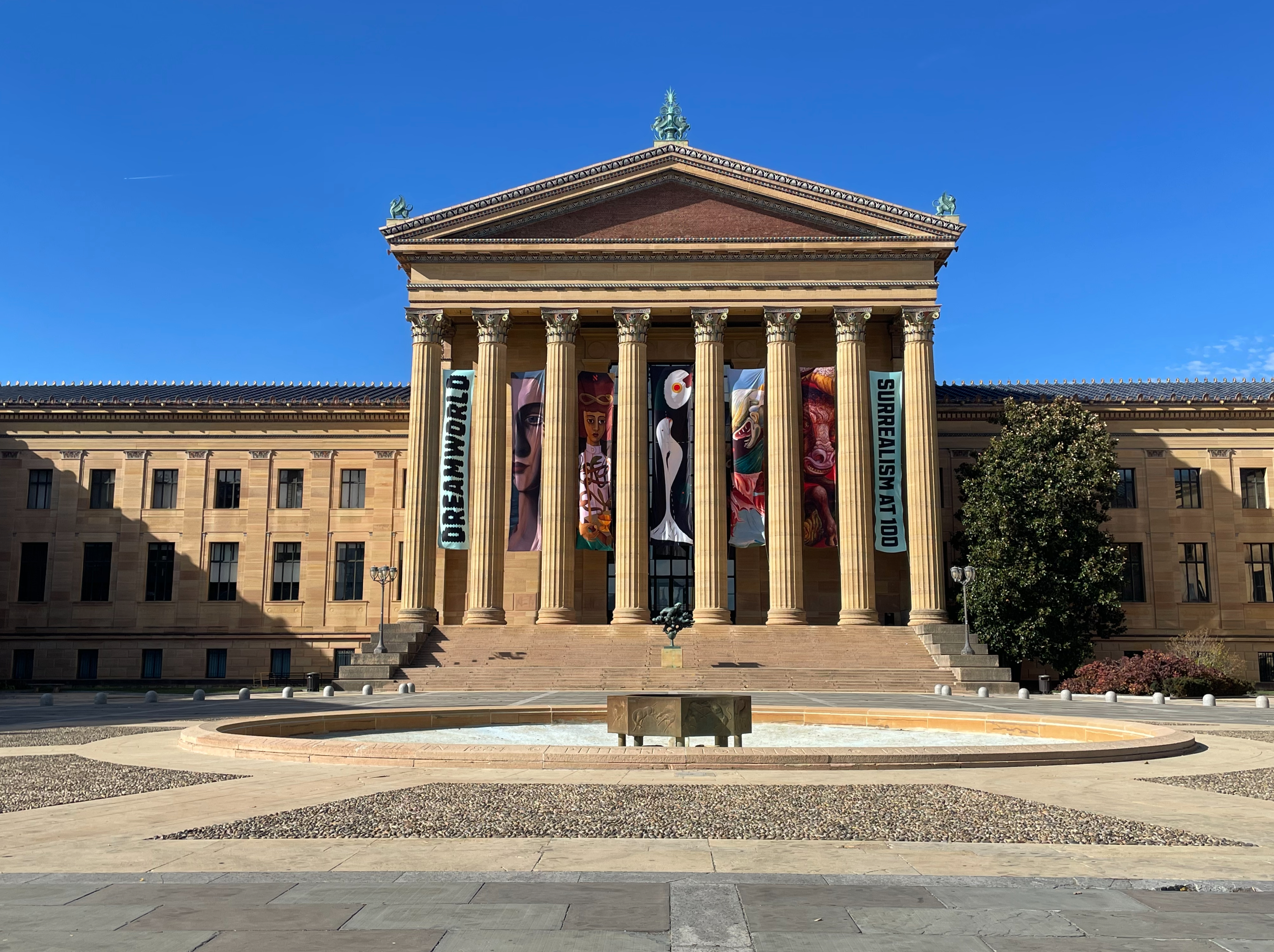
Surrealism might have turned 100 last year, but the art movement’s impact is still being celebrated at the Philadelphia Art Museum.
Part of a five-stop tour across the United States and Europe, Philadelphia is the only US city in which the Surrealist retrospective can be viewed. The first exhibition, shown at the Musées Royaux des Beaux Arts de Belgique, took place in Belgium in early 2024, with subsequent stops at the Centre Pompidou in Paris, France, the Fundación MAPFRE in Madrid, Spain, and the Hamburger Kunsthalle in Hamburg, Germany. It concludes in Philadelphia, reincarnated as the show discussed below – “Dreamworld: Surrealism at 100”.
“Dreamworld: Surrealism at 100” contains 180 works of art from roughly 70 artists; 35% of those works originate from the Philadelphia Art Museum. Contrary to what many might think, Surrealism was not just a movement solely consisting of paintings. It was a movement that spanned the length of artistic thought. It was inclusive of painting, film, sculpture, caricature, and literary works, to mention a few relevant forms that it took.
After all, as Matthew Affron – the Muriel and Philip Berman Curator of Modern Art for the Philadelphia Art Museum – mentioned in the curator talk, surrealism was seen as a “philosophy of life”. And if surrealism is more of a life philosophy than a discipline-specific movement, what concern is it of anyone whether it is a photograph, a painting, or a book?
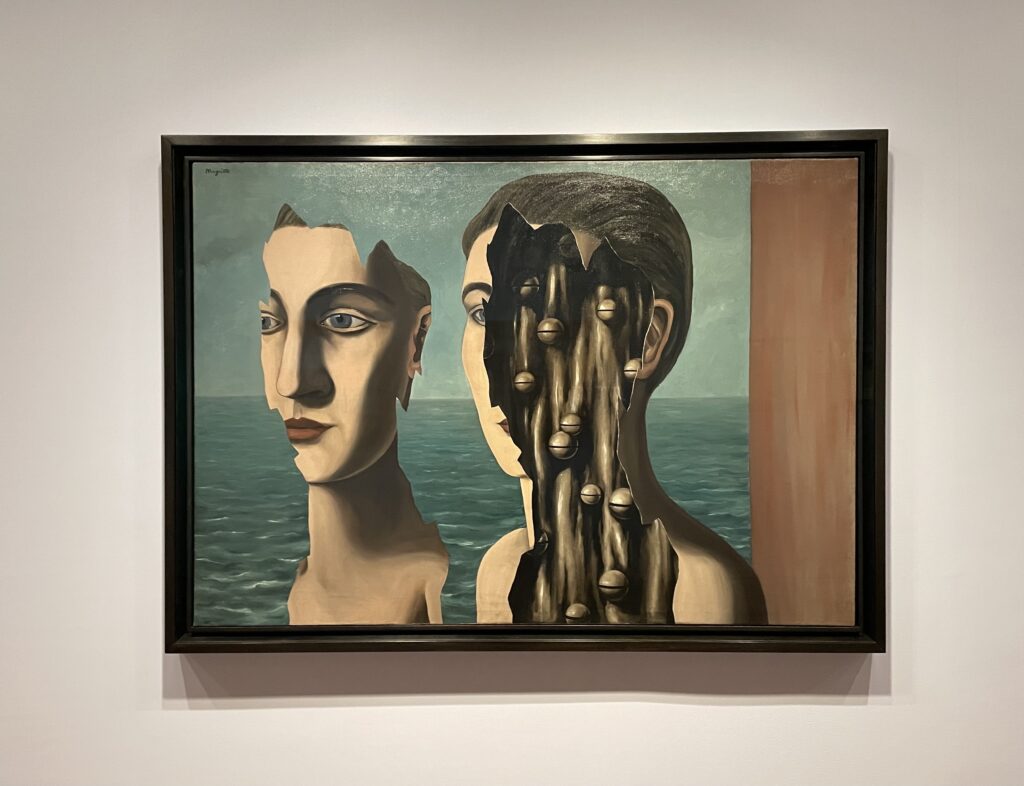
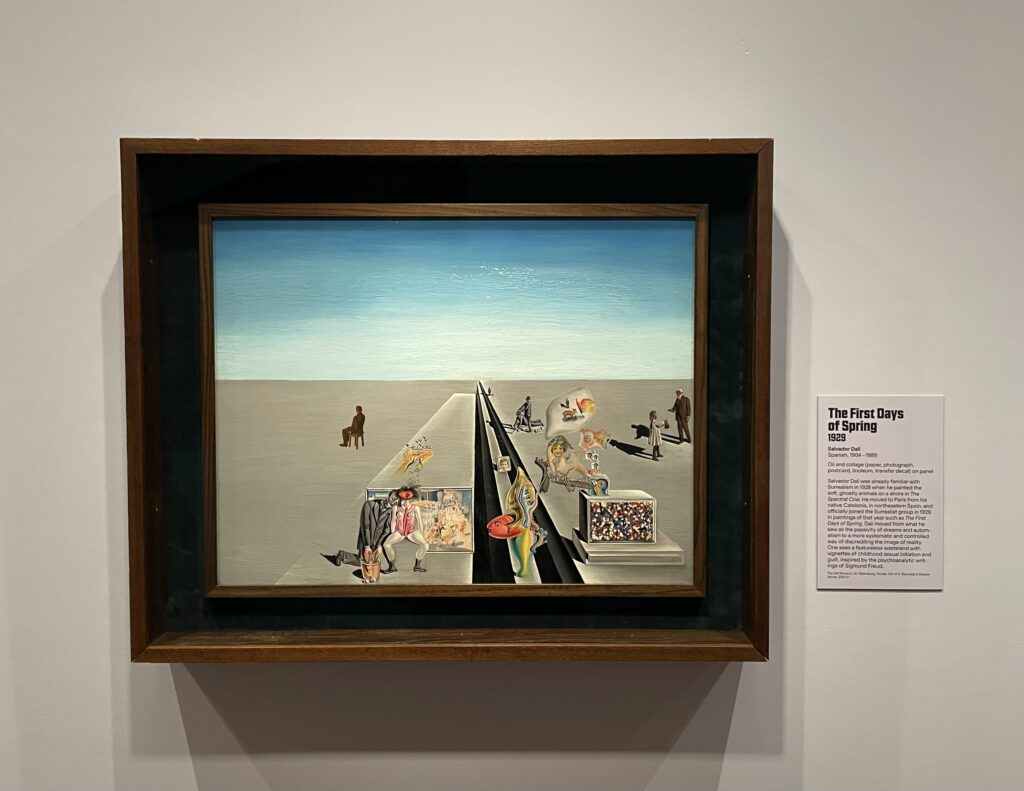
“Dreamworld: Surrealism at 100″ starts off in the “Waking Dreams” section, which gives visitors an artistic basis of what the Surrealist movement was and how it began. Surrealism was beginning to find its footing and fashion its philosophy into something cohesive in the 1920s.
In 1924’s Manifesto of Surrealism, the poet and artist André Breton – the official founder of the movement (although many artists had started working on Surrealist-type work in the years before that – spoke of humans dispensing of their imaginations in order to move fully into adulthood. Surrealism, then, was an attempt to regain that imagination in order to get to a state of freedom.
René Magritte’s “Le Double Secret” and Salvador Dalí’s “The First Days of Spring” juxtapose unassuming landscapes against complicated inquiries into the subconscious. What you see is not what you get.
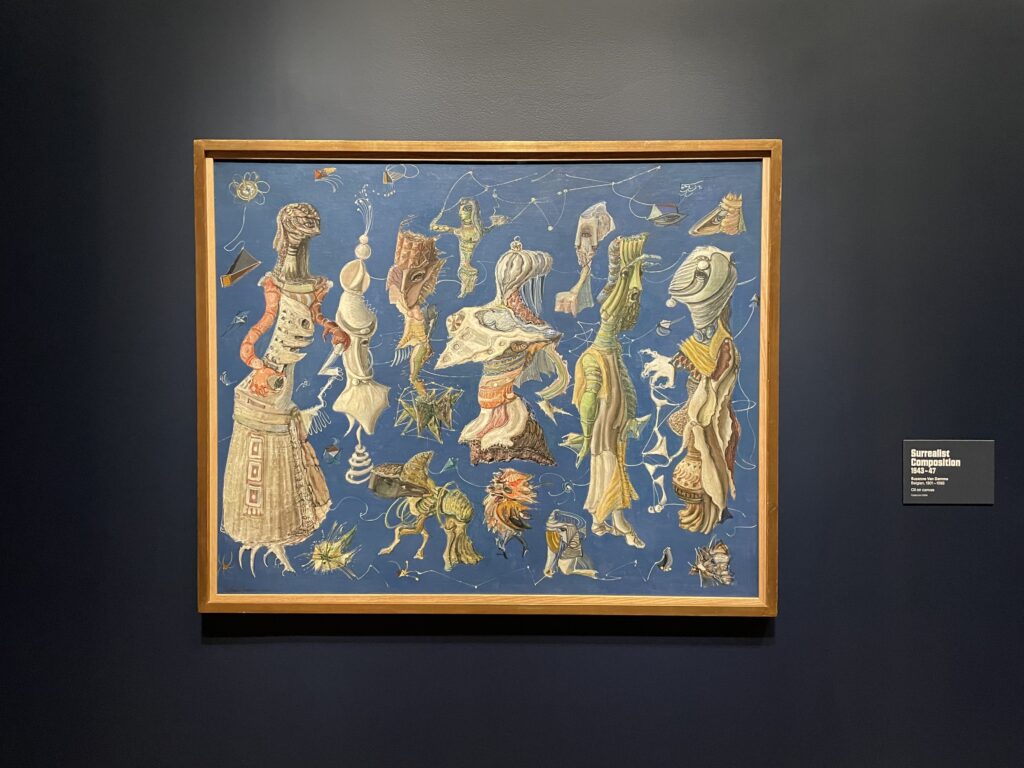
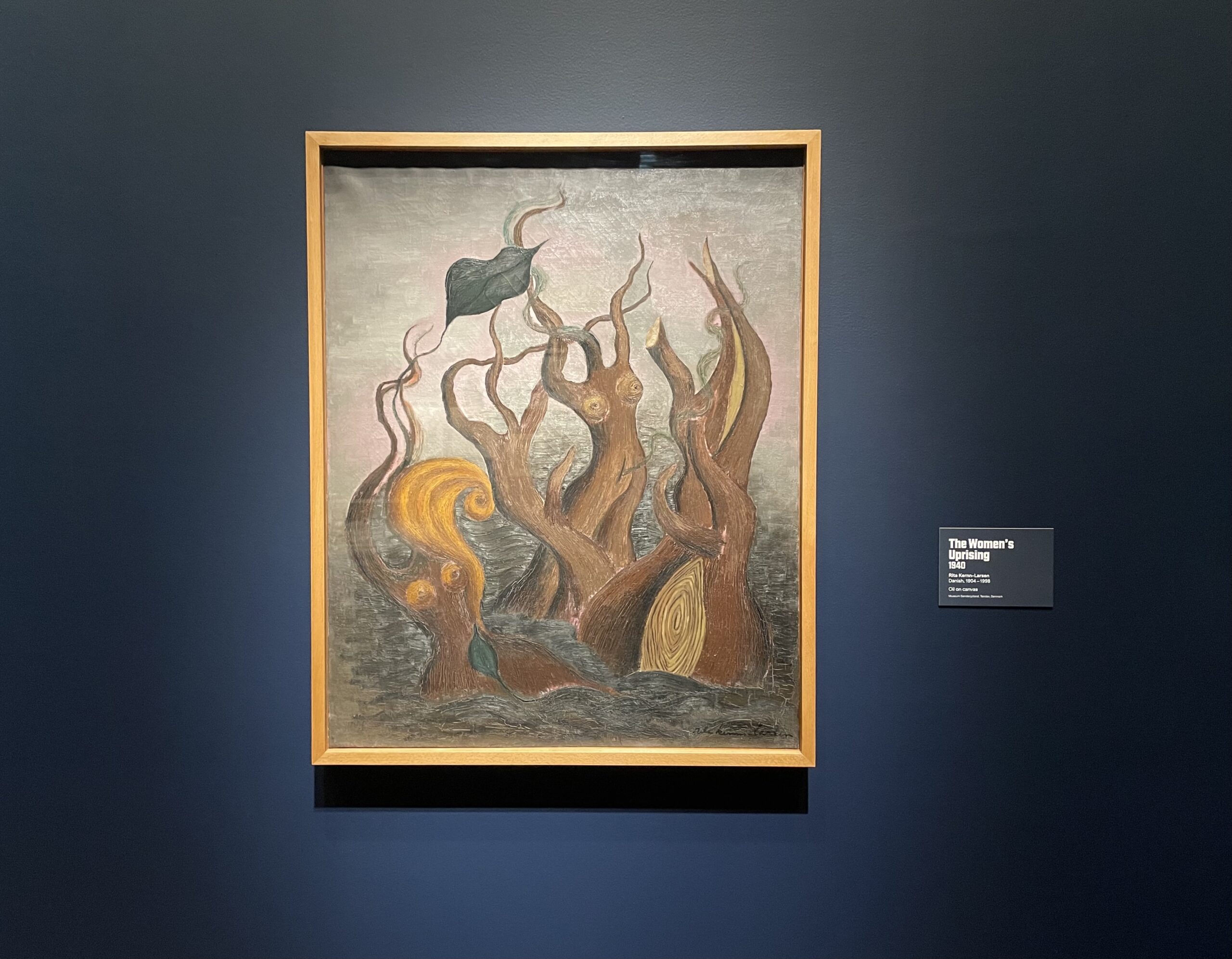
“Natural History” brings you to a section that sees Surrealist artists wanting to connect more with nature, as they believed that rationalism broke the bond that people have with themselves. Nature became an artery, if you will, for the rekindling of that relationship, and it could be a vehicle for tapping into that wild part of yourself. To that end, monsters were a part of this scenario – and would continue to be a symbol that Surrealists would return to in various forms throughout the length of the movement.
Suzanne van Damme’s “Surrealist Composition” contains figures who look like an assortment of specimens – almost alien in their appearance – and Rita Kernn-Larsen’s “The Women’s Uprising” poetically nods to the relationship that women have been associated by many as having with the natural world.
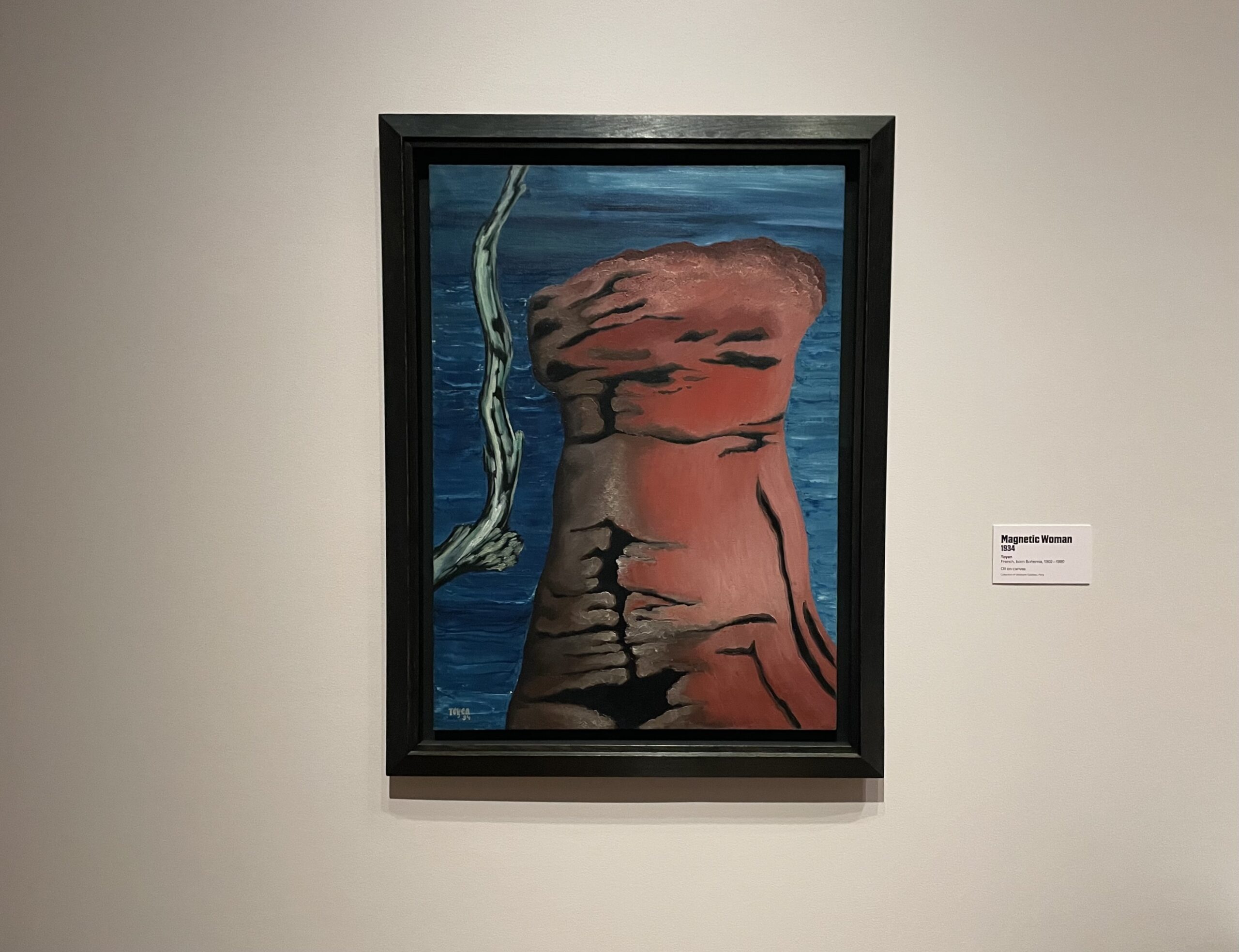
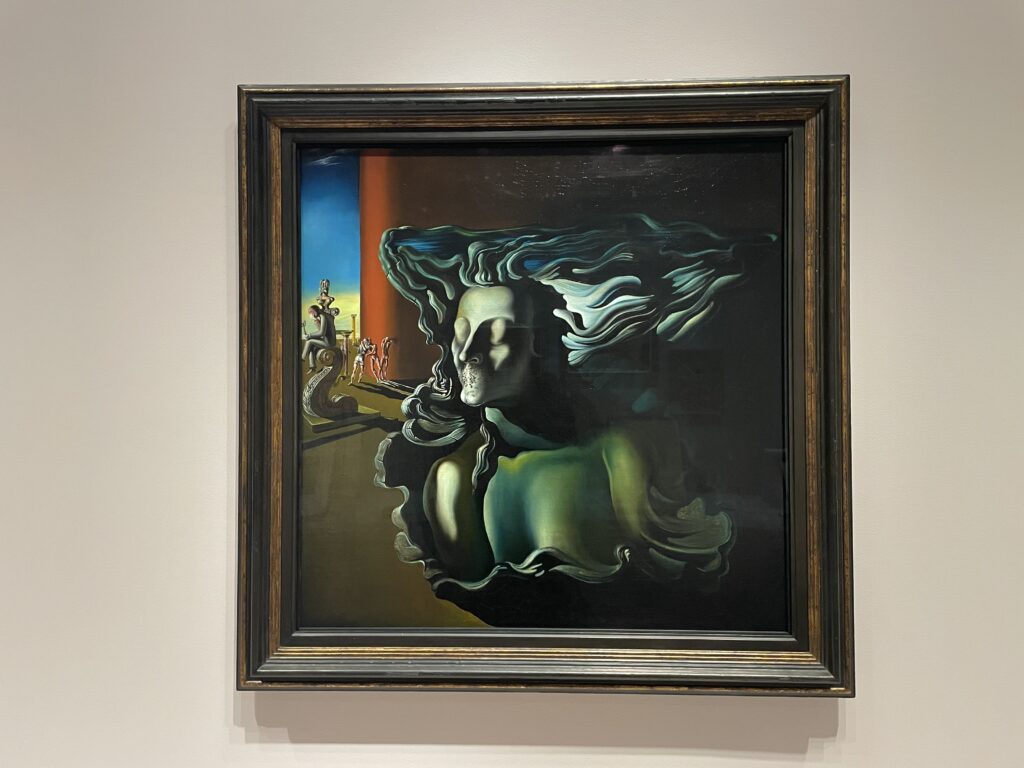
The Surrealists were compelled by eroticism and desire as a means of liberation for humanity. The next section, “Desire”, explored this in detail. Surrealist art exploring this theme was, obviously, quite physical – especially so for the bodies of women – and often ran counter to traditional narratives of sexuality and gender of the day. This portion of the exhibit was particularly varied, including numerous works of photography, painting, film, and sculpture.
The artist Toyen, in “Magnetic Woman” (seen above), created a work that is ostensibly a woman’s naked torso placed against a background of a stormy blue sky and a sea starting to become choppy. Upon looking at it for any longer than a couple of minutes, it starts to bring a sense of unease to the viewer; the work starts to border on the grotesque.
Salvador Dalí’s “The Dream” shows a female figure who appears to be emerging from a clamshell. Her eyes are sealed shut, as is her mouth, but the feelings of sexuality emanating from her are still fairly evident to the viewer.
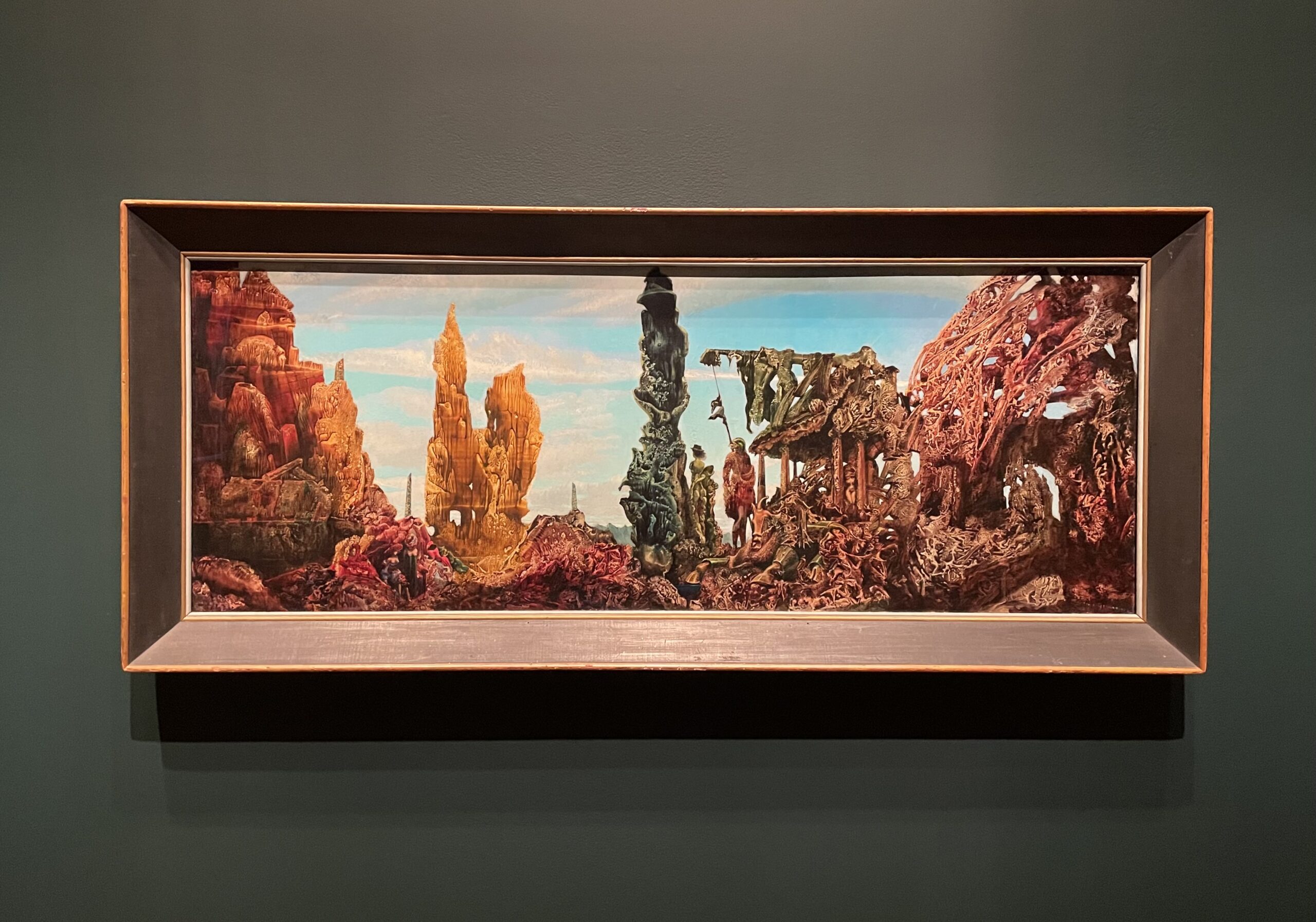
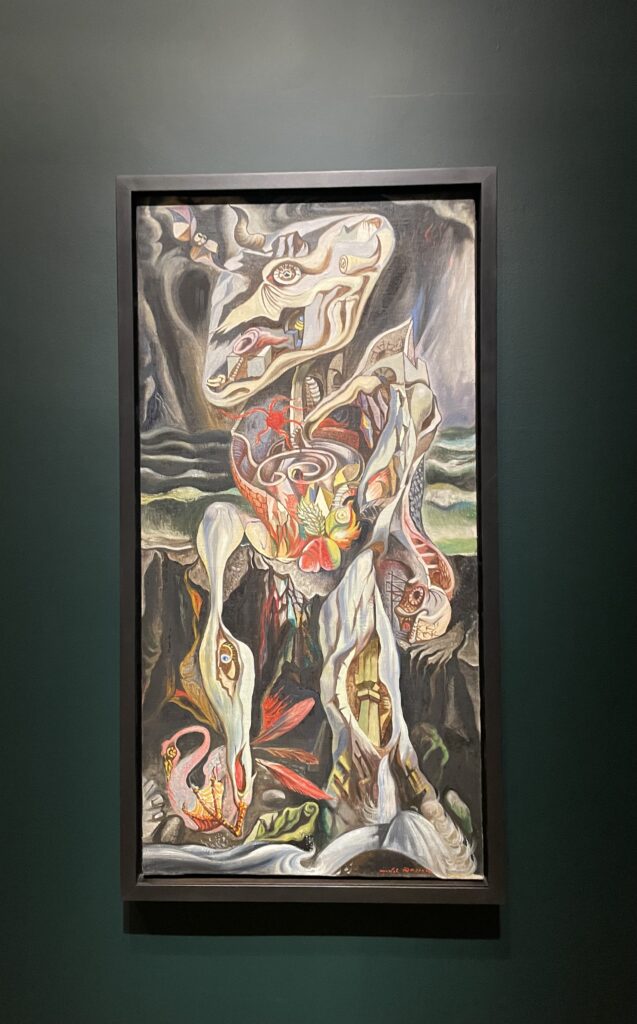
The fourth section, “Premonition of War”, saw the Surrealist symbol of the monster – chimeras and minotaurs among them – morph from being only a symbol of Surrealist consciousness to being a symbol of the fascistic forces to which they were opposed in the 1930s. Fascism was on the rise across the European continent, with Benito Mussolini’s Italian government, Francisco Franco’s Spanish government, and Adolf Hitler’s German government all taking part in this abhorrent philosophy. The monsters of Surrealism became the artists’ form of resistance. It was their way of shining a light on what was going on in the world during that time.
“Europe After The Rain II” by Max Ernst shows a post-apocalyptic Europe that, despite the destruction that it has endured, will endure – evidenced by the sunny blue sky in the background.
André Masson’s “The Labyrinth” shows a labyrinth inside of a minotaur. It looks like a cross-section of the monster, and nothing about it appears optimistic. Not that it would, considering that World War II was at Europe’s doorstep – one year away, as it would turn out.
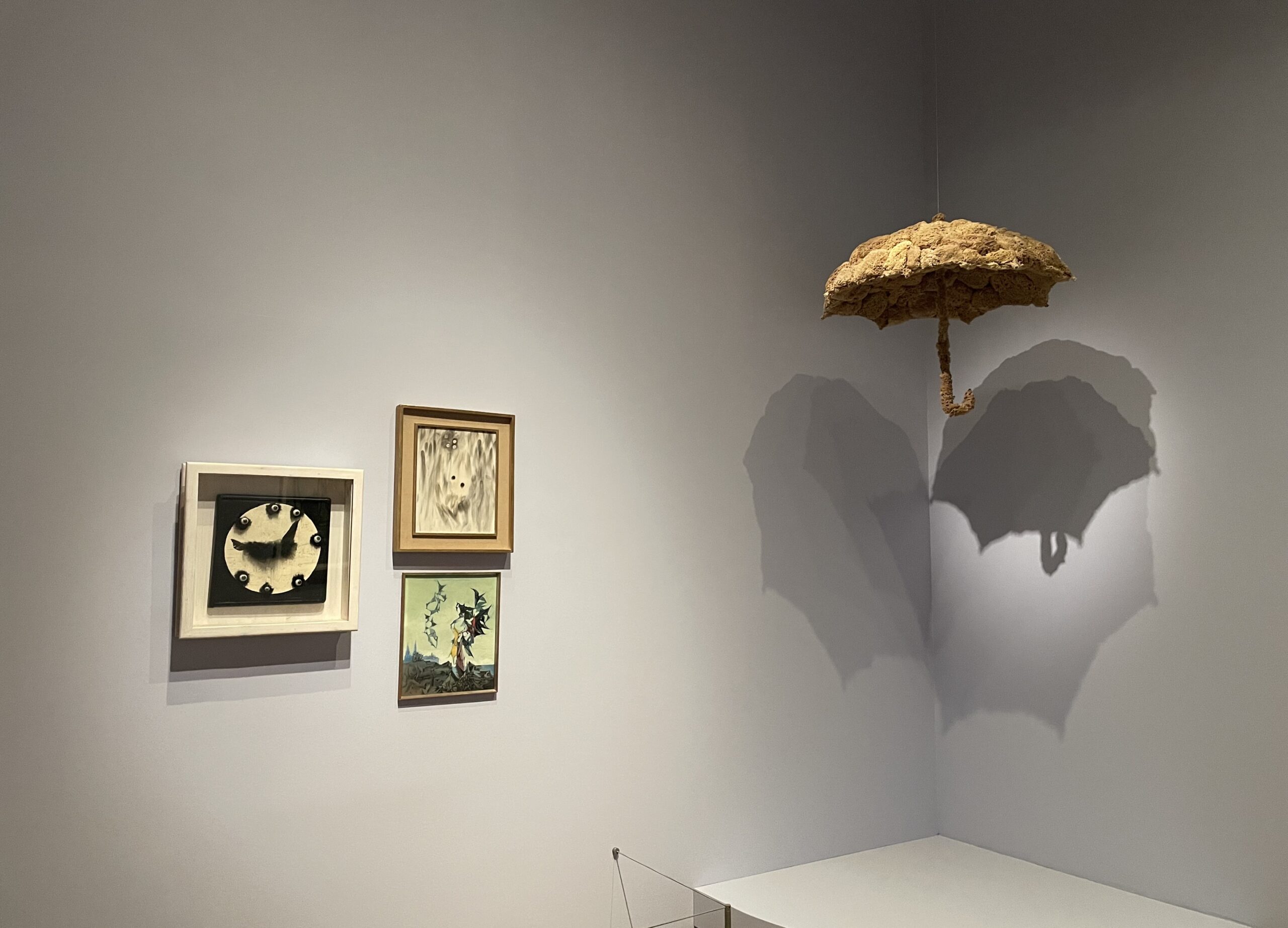
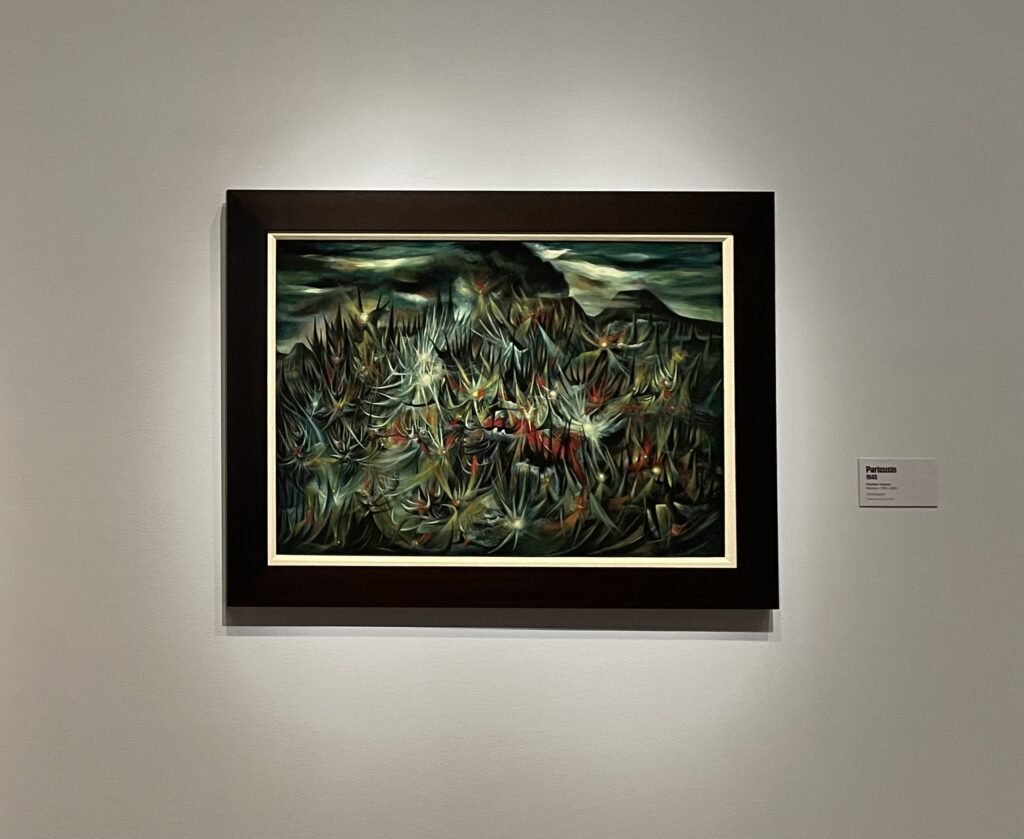
At this point, World War II has arrived, and artists are scattering to the winds to escape Europe. They generally chose one of two locations: Mexico or the United States – specifically, Mexico City and New York. “Exiles” is the fifth section of “Dreamworld: Surrealism at 100”, and it is the Philadelphia Art Museum’s unique contribution to this worldwide traveling surrealism exhibition.
Shown in this section is work from both of those scenes: on one wall is work by émigrés and Mexican artists doing Surrealist-associated work, and on the other is work done by Surrealist-associated artists in New York.
Above is a grouping of works by artist Wolfgang Paalen, who’d taken up residence in Mexico City, two of which include “Articulated Cloud” (right) and “The Exact Time II” (left). Mexican artist Gunther Gerzso’s “Paricutín” shows an environment that looks destroyed and wholly uninviting. An environment that would surely be uninhabitable to most living beings – likely how the world in the WWII era felt to some.
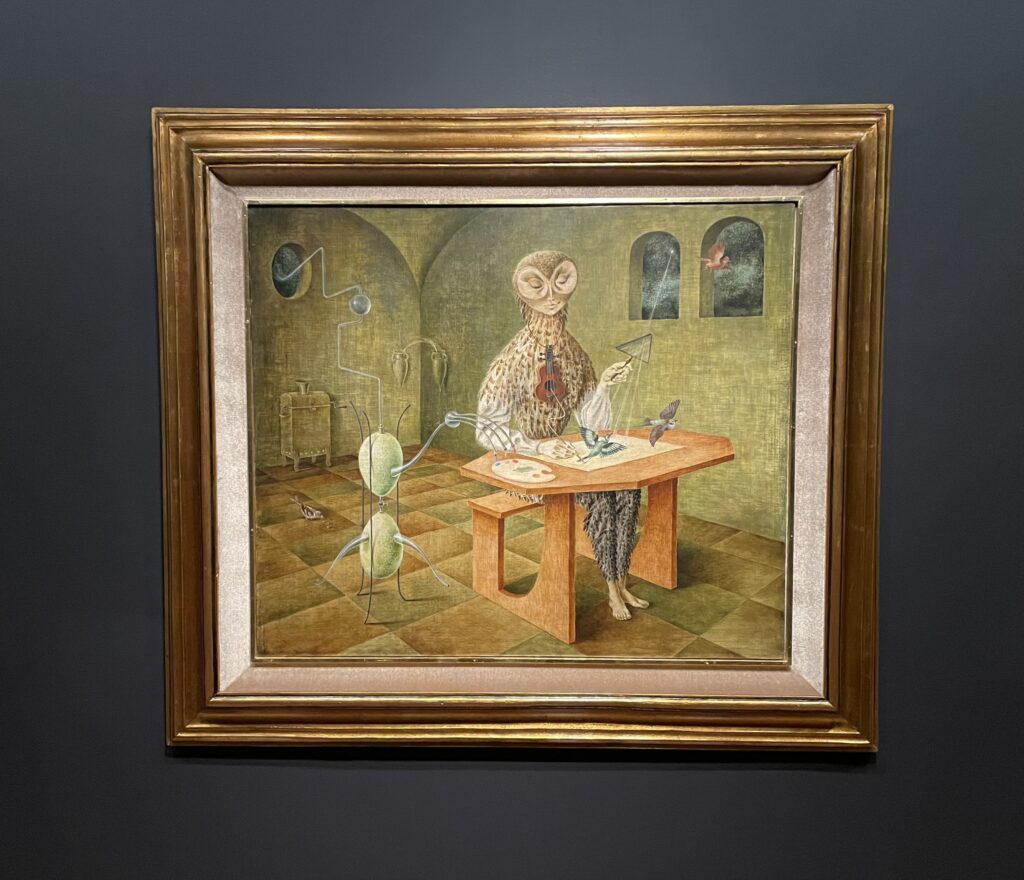
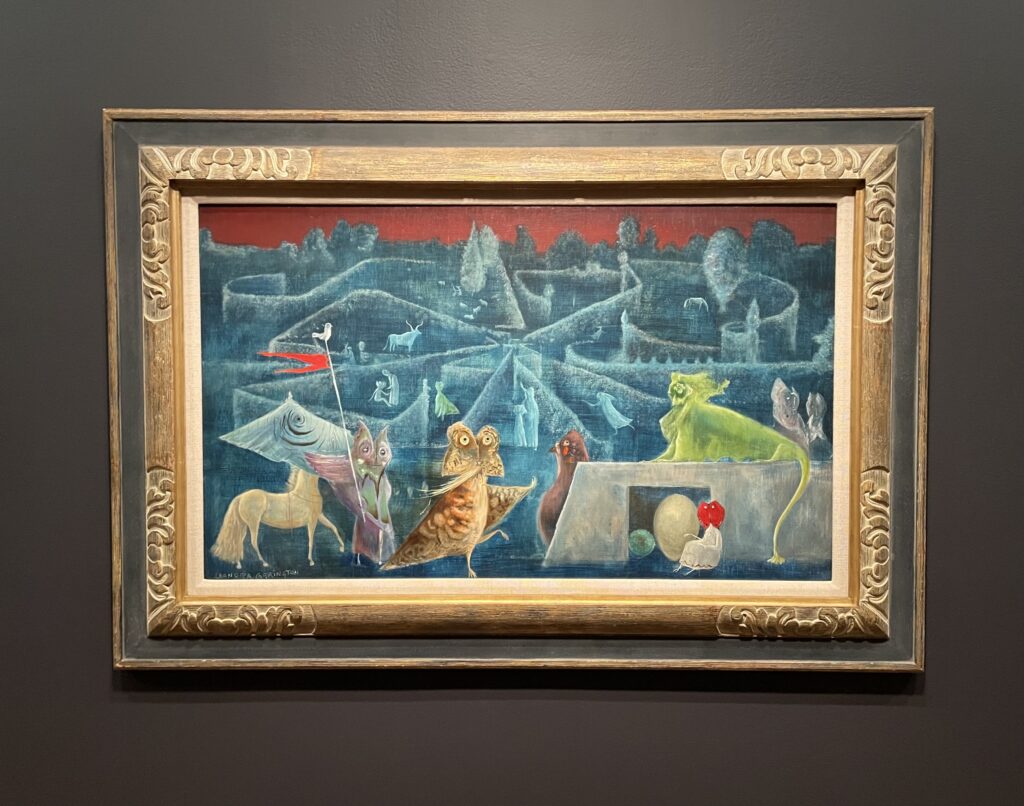
The last section, “Magic Art”, displays art embodying the Surrealist desire to use magic to embed symbols and esotericism into their work. The world was at war, and it needed a way to begin stitching itself back together again. Surrealists believed that magic could be a great means of mending what has been broken while adding new energy to their artistic movement. If grasping freedom of the mind was originally one of the primary goals of the movement, so it would again be resurrected as a driving force.
Owls, long a symbol of the occult throughout history, made many an appearance in this section (along with the unsettling “Voice of the Forest I” featured in the “Natural History” section). Specifically, in the “Carrington and Varo” subsection of “Magic Art”, there are two particularly eyecatching pieces. “Creation of the Birds”, a work by Spanish artist Remedios Varo, displays a figure with an owl’s head painting birds using refracted starlight. British artist Leonora Carrington’s “Ulu’s Pants” shows owls in a ghostly scene approaching a cave entrance. In both cases, the owls exude wisdom – a self-assured knowing of what is to come.
For any Twin Peaks fans out there, you might recall the phrase “The owls are not what they seem” being repeated throughout the show’s second season. In David Lynch and Mark Frost’s television masterpiece, many viewers came to see the owls as a foreboding symbol of the connection to the Black Lodge, a powerful supernatural force.
The energy of the owl, then, became a perfect symbol of what the Surrealists were trying to achieve by bringing the esoteric into their work during this time – supernatural energy forcing a reckoning with the unconscious.
What you’ll realize as you make your way through the exhibit is that surrealism was not simply this Freud-like movement that focused on dreams, symbols, and what was unconscious, though many have come to see it that way. Though Surrealism was those things, it was also very much influenced by the world around it; it was not fully of another land, detached from reality.
In fact, it was very much of the world. The Surrealists began creating art in this style as a reaction against the constraints that the world places on us as adult citizens, but they were actually quite astute at clearly seeing and acknowledging what was going on around them.
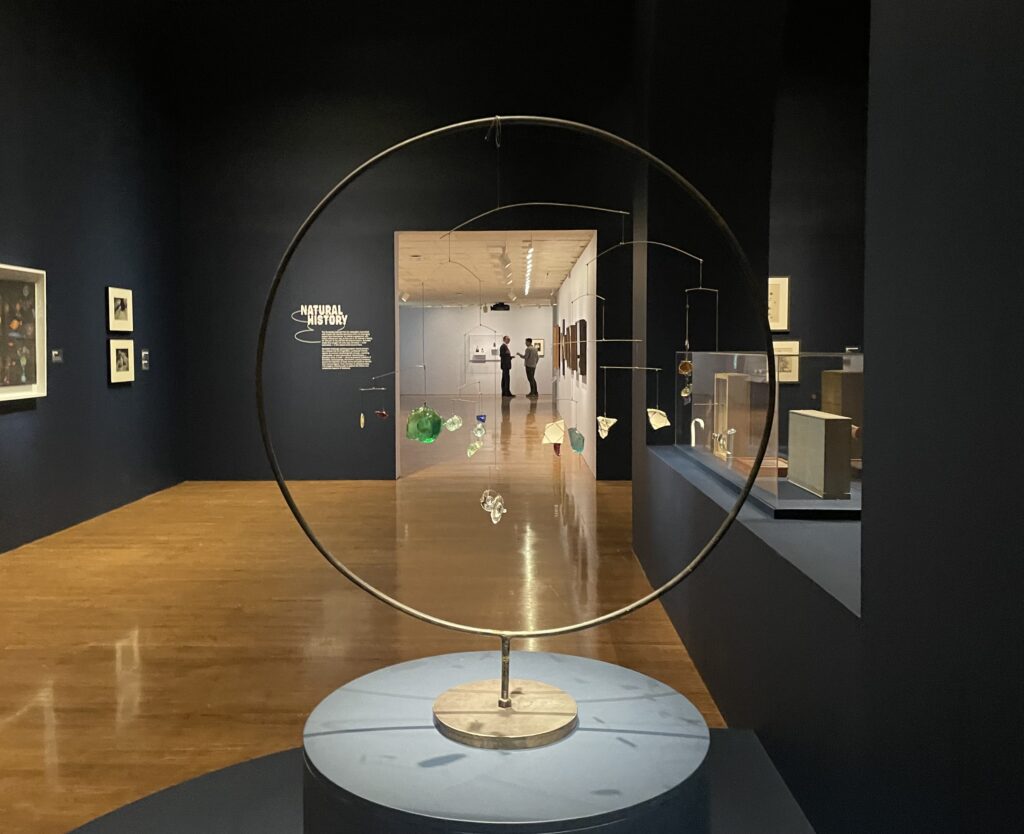
Something to point out: There are a couple of instances in which artists that you would not expect to see in a Surrealist context are included in “Dreamworld: Surrealism at 100.” Who, after all, would expect to see an early Mobile by Alexander Calder? Or works by Jackson Pollock and Mark Rothko?
Though these artists are typically seen as belonging more to the space of abstract expressionism (or kinetic art, in Calder’s case), Surrealist figures were known for adopting any artist into their movement that they saw as practicing the movement’s principles. This was done with Alexander Calder, Man Ray, and Frida Kahlo – none of whom identified as Surrealist artists.
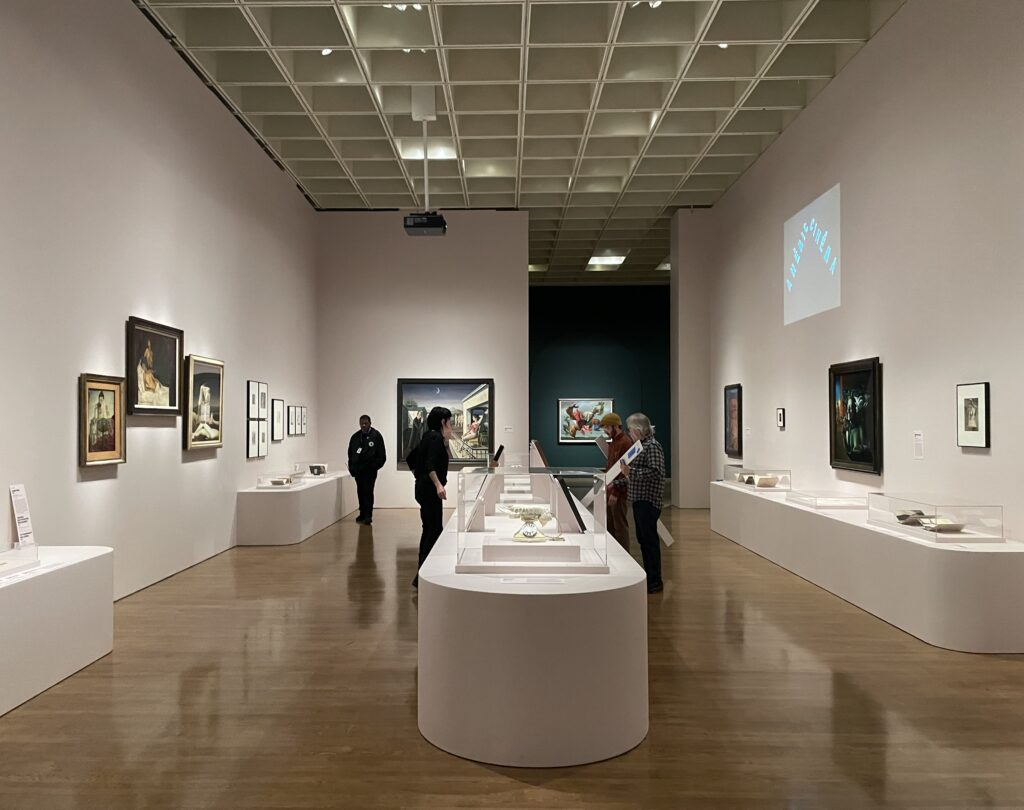
Also worthy of note, Surrealists saw the curved line as a way to release the mind and allow the imagination to reappear. Taking notice of the exhibition’s design, those same curves showed up throughout in the form of display table construction and the arches built into the walls to frame certain artworks. That close attention to detail and adherence to the Surrealist style seeped down to the experiential level for visitors was appropriate; surely, the museum wants to promote that very ability in its visitors to let their minds run loose for a spell and imagine.
And “Dreamworld: Surrealism at 100” contains so many deep layers of meaning that it might require more than one trip to fully absorb what is being displayed. You’ve got a couple of months to make your trips there.
Imagine that.
“Dreamworld: Surrealism at 100” will be open to the public for viewing from November 8, 2025 through February 16, 2026 at the Philadelphia Art Museum in Philadelphia, PA.
For more insight and discussion on the topic of Surrealist art, see our earlier reviews of “Sixties Surreal”, on view at the Whitney Museum of American Art in New York, and “Man Ray: When Objects Dream”, on view at the Metropolitan Museum of Art in New York.
To subscribe to Manic Metallic‘s Substack newsletter, click here.