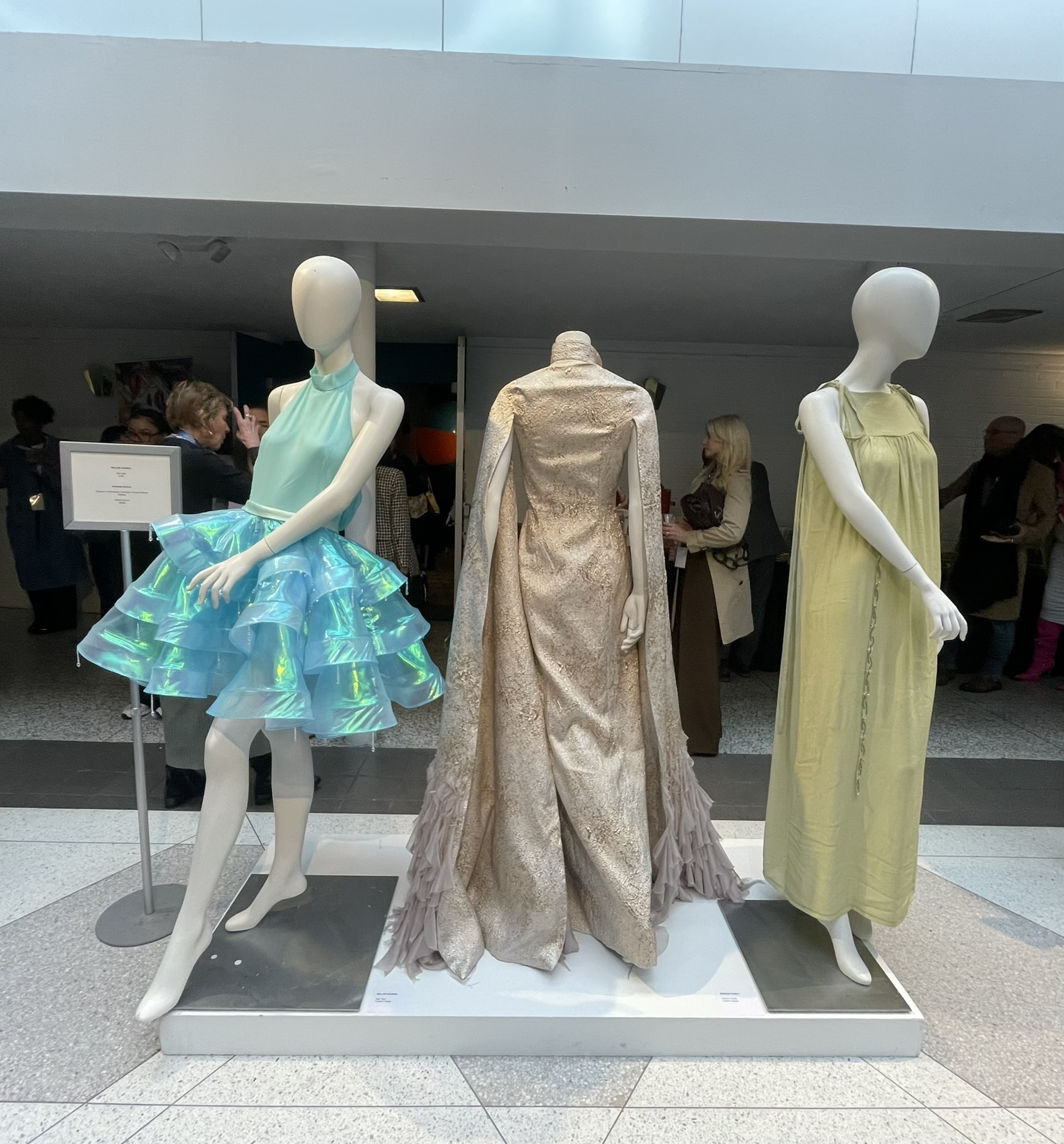
The first in-person annual Jefferson Fashion Design Show since 2019 was held yesterday at the 23rd Street Armory in Philadelphia. Select guests enjoyed a VIP reception beforehand, getting to chat with both fashion design students and those currently in the profession ahead of being seated to view the night’s proceedings.
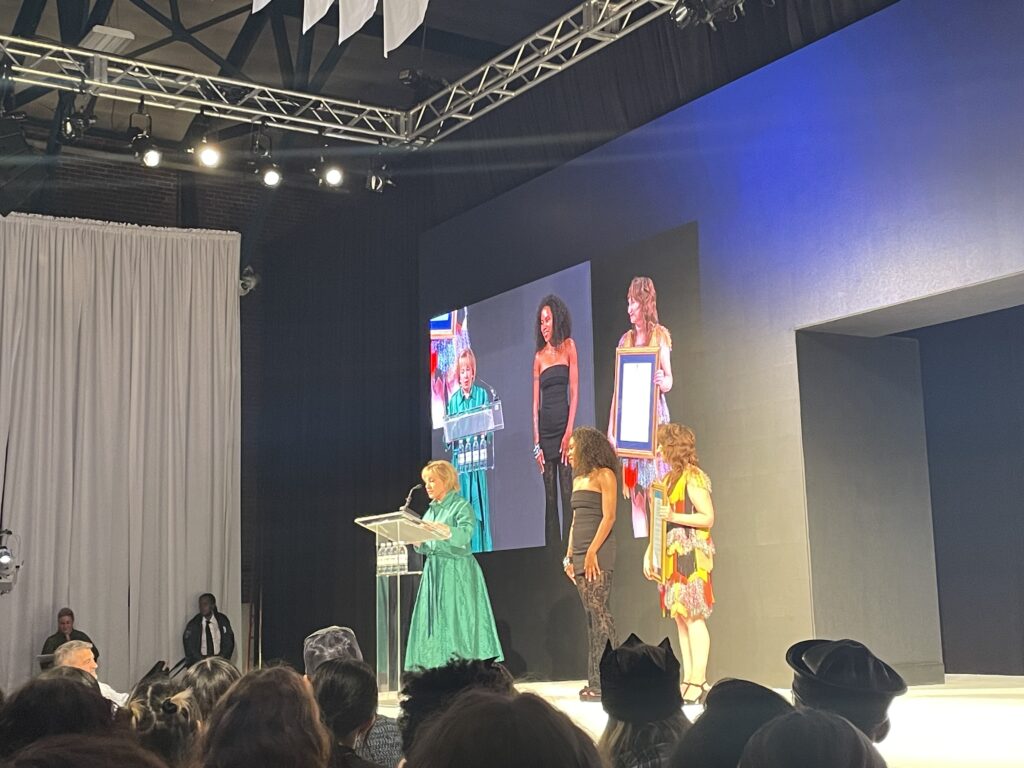
To kick off the night, emcee Bill Henley of NBC10 welcomed in attendees before University President Dr. Susan C. Aldridge stepped onto the stage to give remarks and to give out two separate awards to fashion alumni: one, the Fashion Design Alumna of the Year, went to Alicia Pinckney (c/o 2013) — a Jordan Global senior apparel designer for Nike — and the other, the Spirit of Design Award went to Peruvian fashion designer Jorge Luis (c/o 1994). Katy Zachry, also of NBC10, provided commentary throughout the show.
The Designers
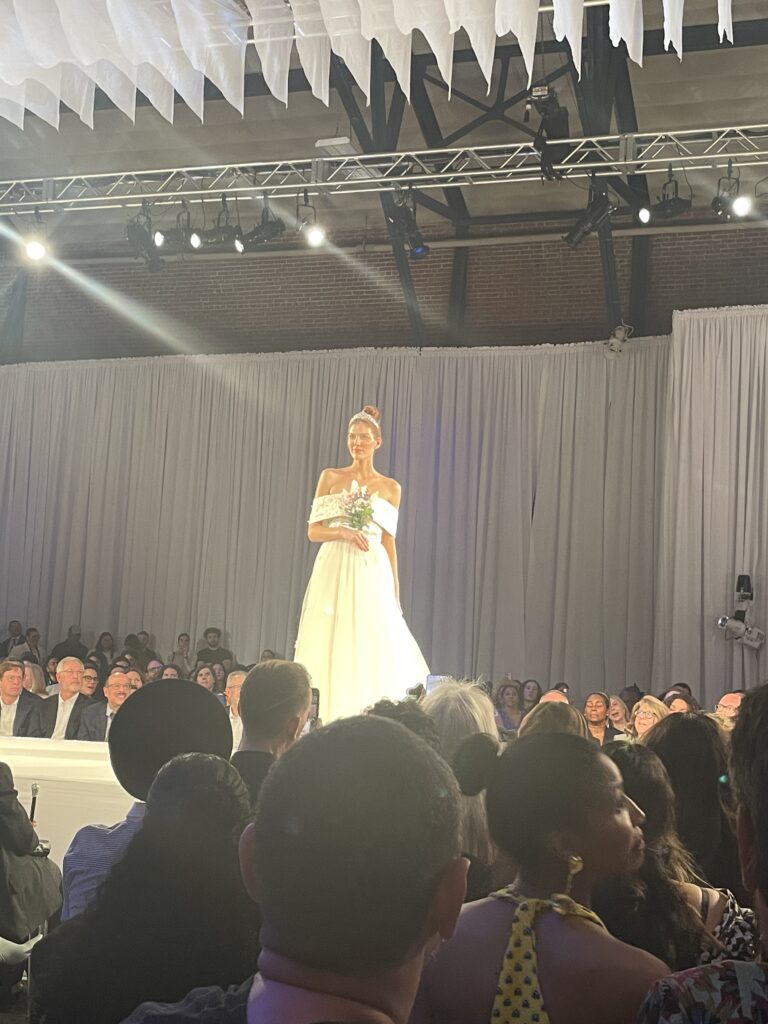
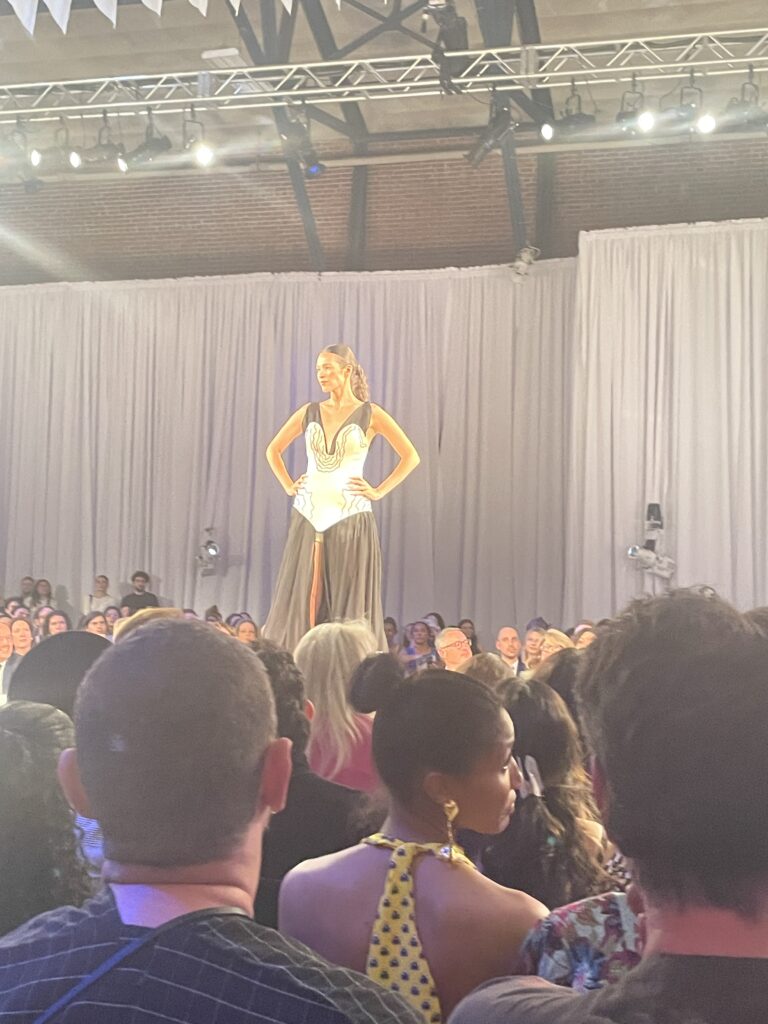
Eighteen senior fashion design students got to show looks on the runway, with Emily Nguyen leading off with her sustainability-tinged gender neutral garments. Next up was Diamond Porter, who weaved an Afrofuturistic world devoted to sustainability; her uniform of crop tops and upcycled denim maintained a youthful flair about them, and are certainly worth a second look.
The next design student was McKayla Bugbee. Following the upcycling trend of her predecessors, Bugbee’s show Lucky Bride displayed four beautifully done nontraditional wedding dresses. Her work was outstanding and, of the students who showed their work during the night, she is likely one of the primary designers ready to work in the fashion industry tomorrow.
Philadelphian Ta’Ron Jackson’s four ensembles provided a combination of streetwear and high design; the concepts and design skill that he showed, while seemingly simple, have the potential to be scaled up to a dressier level or left casual and relaxed.
Marina Classen’s three gender neutral pieces left me wanting to see more; I would have liked to see one or two more looks from her in order to get a more complete look at the scope of her capabilities, which seem to be considerable.
Gabrielle Smith produced a conceptual collection inspired by artist Gustav Klimt. What I noticed about her work as the models went down the runway is that each of her designs moved in an almost fluid manner. Having natural movement is an important quality for garments to have, and it is a quality that some designers who have been in the industry for years have still not properly learned to build into their creations. Kudos to Smith for having gotten a handle around it early.
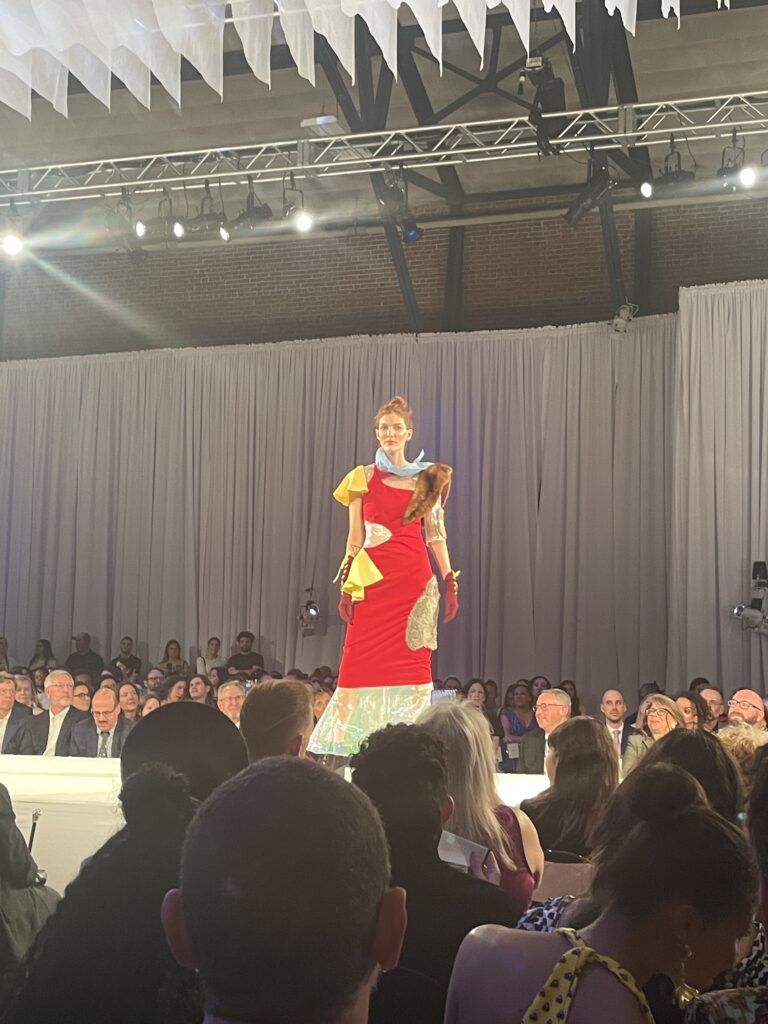
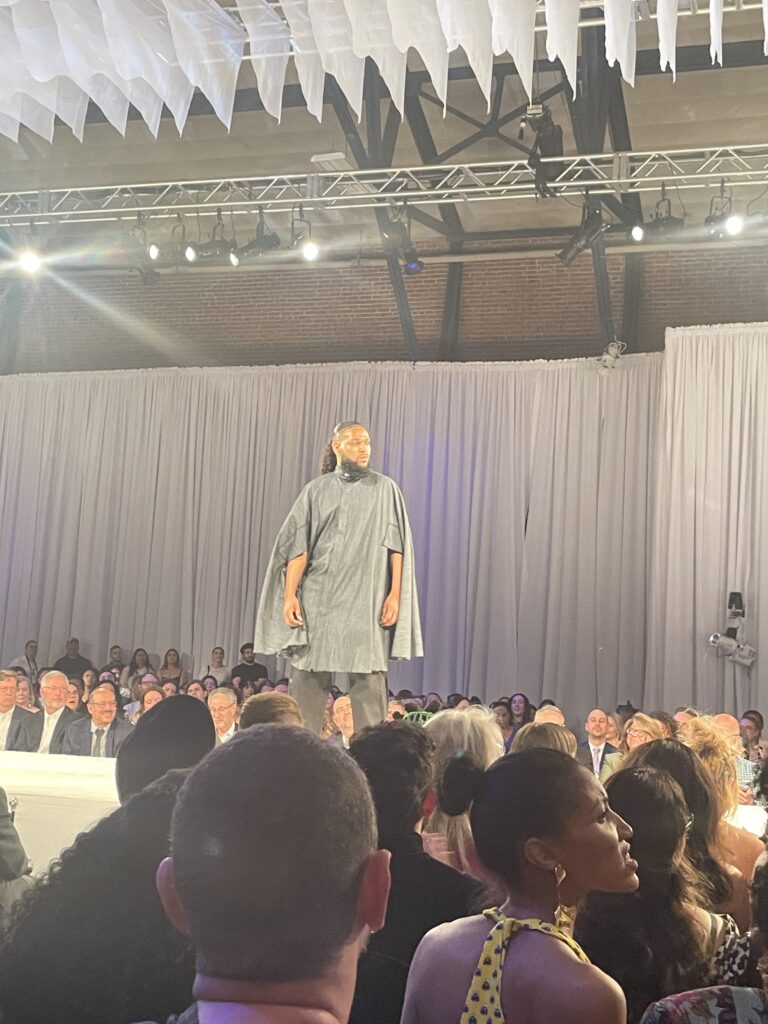
Erin Keefe’s collection was inspired by scrapbooking and had a homey feel about it. Now here’s the thing: her vintage fabrics looked very vintage and came across as dated; the vibe came close to “tradwife”. If Keefe modernizes this concept even slightly, the idea of a collection being inspired by scrapbooking could be interesting.
Paola Palomeque Jara’s looks of stylish maximalist zombies had an intriguing story behind it; the result is a collection that puts forth a better version of Hillary Taymour’s Collina Strada. Mimi Palmer’s work centered around queerness, sexuality and the influence of fetish & queer folks on fashion. Palmer should truly keep developing her work because it is off to a promising start.
Rachel Bender’s collection Safe Space makes a statement about the quarantine era of Covid, but the collection itself isn’t quite there. I’m sure that the detailing and embroidery took a considerable amount of effort to complete, but the collection doesn’t seem to have a strong message. A look at her portfolio shows that she can do better work, and I’m sure that she will in the future.
If you’ve ever seen Harajuku fashion, then you will understand the spirit through which Jade Burriss’s collection was completed. Her four looks traded on fun, kitsch nostalgia — and won. Fashion used to be fun, and it still is sometimes. If we had more designers like Burriss who were willing to challenge fashion industry convention, then we could create a more light-hearted industry.
Kate Kaufmann’s work was no-frills and utilitarian — but she proved that utilitarian doesn’t have to mean boring. Her vintage-inspired jumpsuits and separates came in blues and earth tones; her jumpsuits are of particular note. The oversized looks and knitwear pieces from Jayson Streets carry a sort of energetic heaviness with them, but some of the most compelling designs out there do. If Streets is able to keep honing the ability to direct that type of moody energy into his work, then he has a great future ahead of him in fashion.
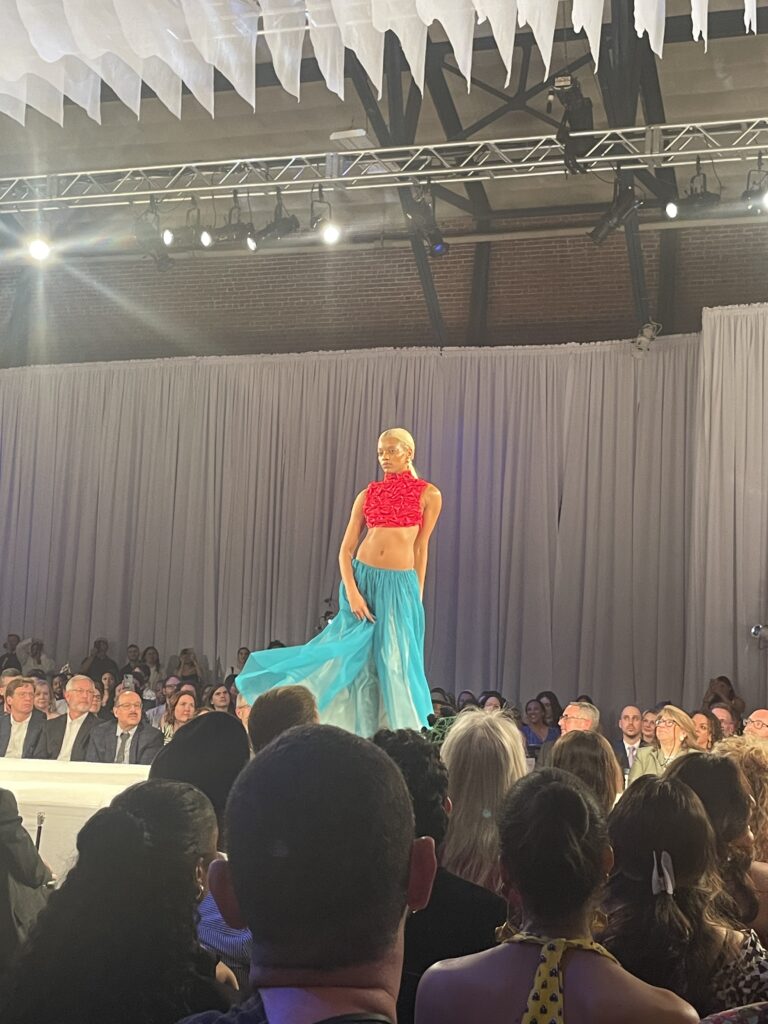
Darrelle Zavala’s show Ghosts of Eros & Us embodied the clashing emotions and inner conflicts that have always been part and parcel of being a woman. The silk, satin, and lace-filled looks — which are cut pretty precisely through the bodice and underline Zavala’s talent with a pair of scissors — recall the sensuality of lingerie, and dare you to touch them.
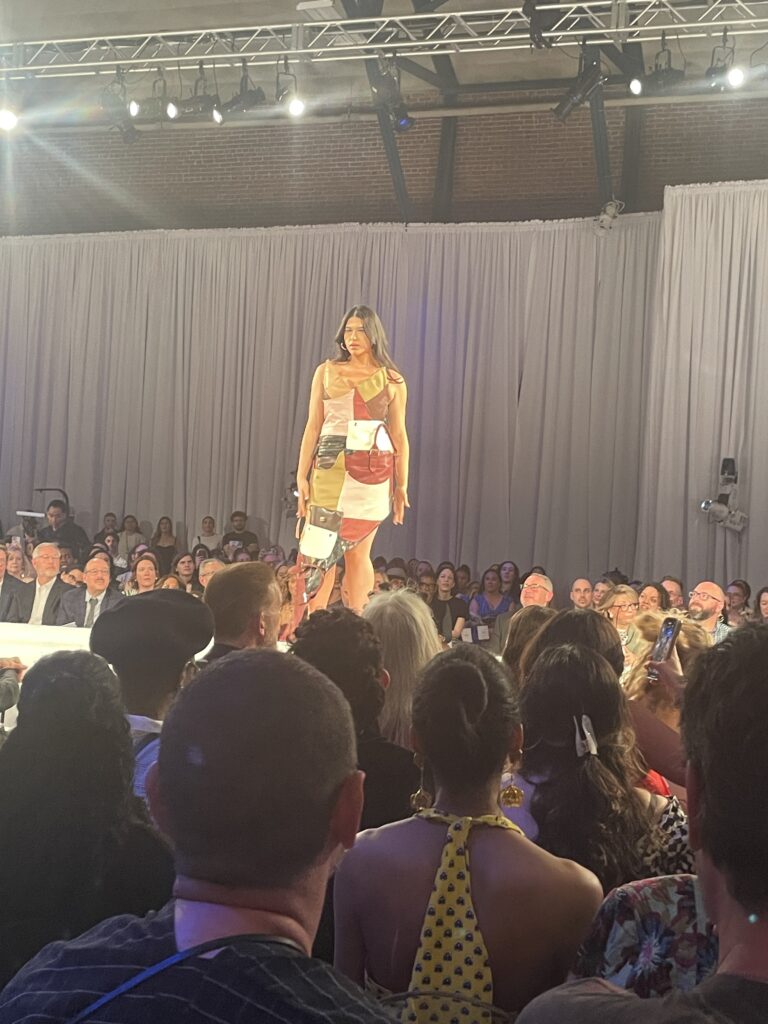
Marissa Saylor’s design inventiveness is to be commended, particularly her dress made from an assortment of handbags. Her combination of feminism and sustainability was done well. It is not, after all, easy to do a cohesive (and good) collection made primarily of deadstock fabrics, but Saylor succeeded at this task.
Gvantsa Narimanidze’s work was inspired by her Georgian (the country) roots, and for those familiar with Georgia’s traditional clothing, the embroidery here will be familiar. It was a good move for Narimanidze to modernize the design, as it would have been easy for the collection to fall into cliches otherwise. It would be good to see her continue to evolve this wing of her design lineage.
Natalia Maldonado presented one of the night’s most vibrant and well-concepted collections. The Puerto Rican designer’s resortwear was well cut and lively, and she should have no trouble finding work quickly after graduation. Rounding out the night was Amy Brito, designing a collection whose shoulder lines and overall silhouettes conveyed the power and authority of someone looking to take over whatever space that they inhabit — with grace.
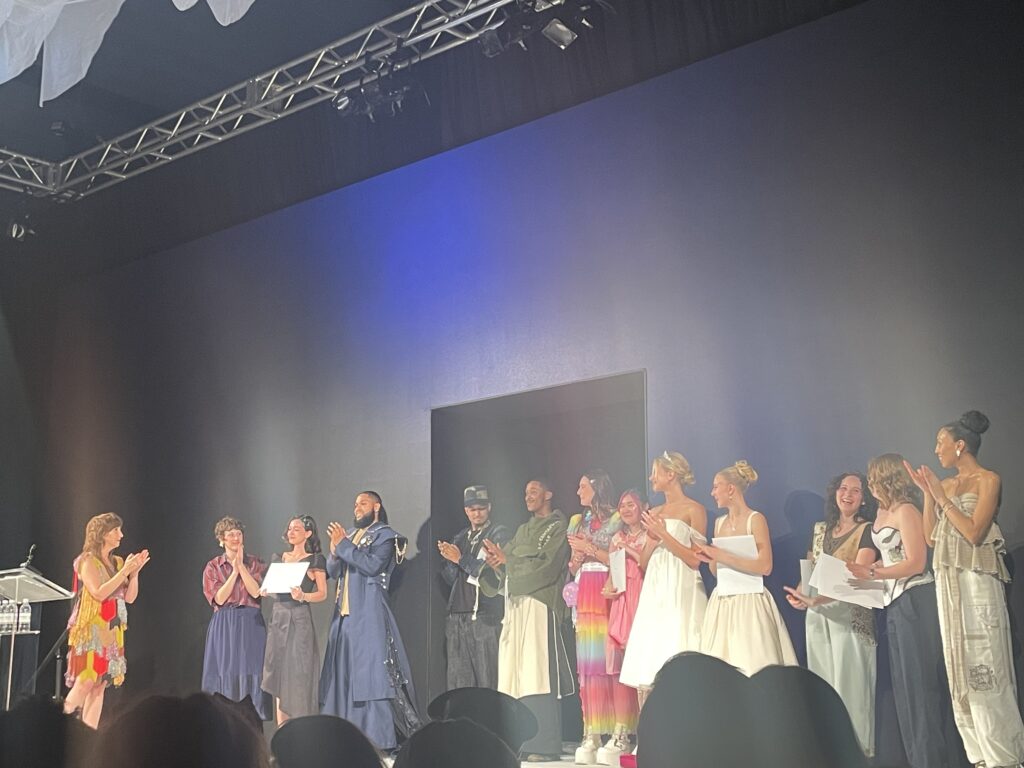
The show underlined, once again, the talent of the student designer population in the city of Philadelphia. The city has a deep design bench, and though many of these worthy young Jefferson graduates will likely end up leaving in search of career opportunities, the city’s design scene should still try to make use of their skills.
To purchase a subscription to Manic Metallic’s website, click here. To subscribe to Manic Metallic’s Substack newsletter, click here.