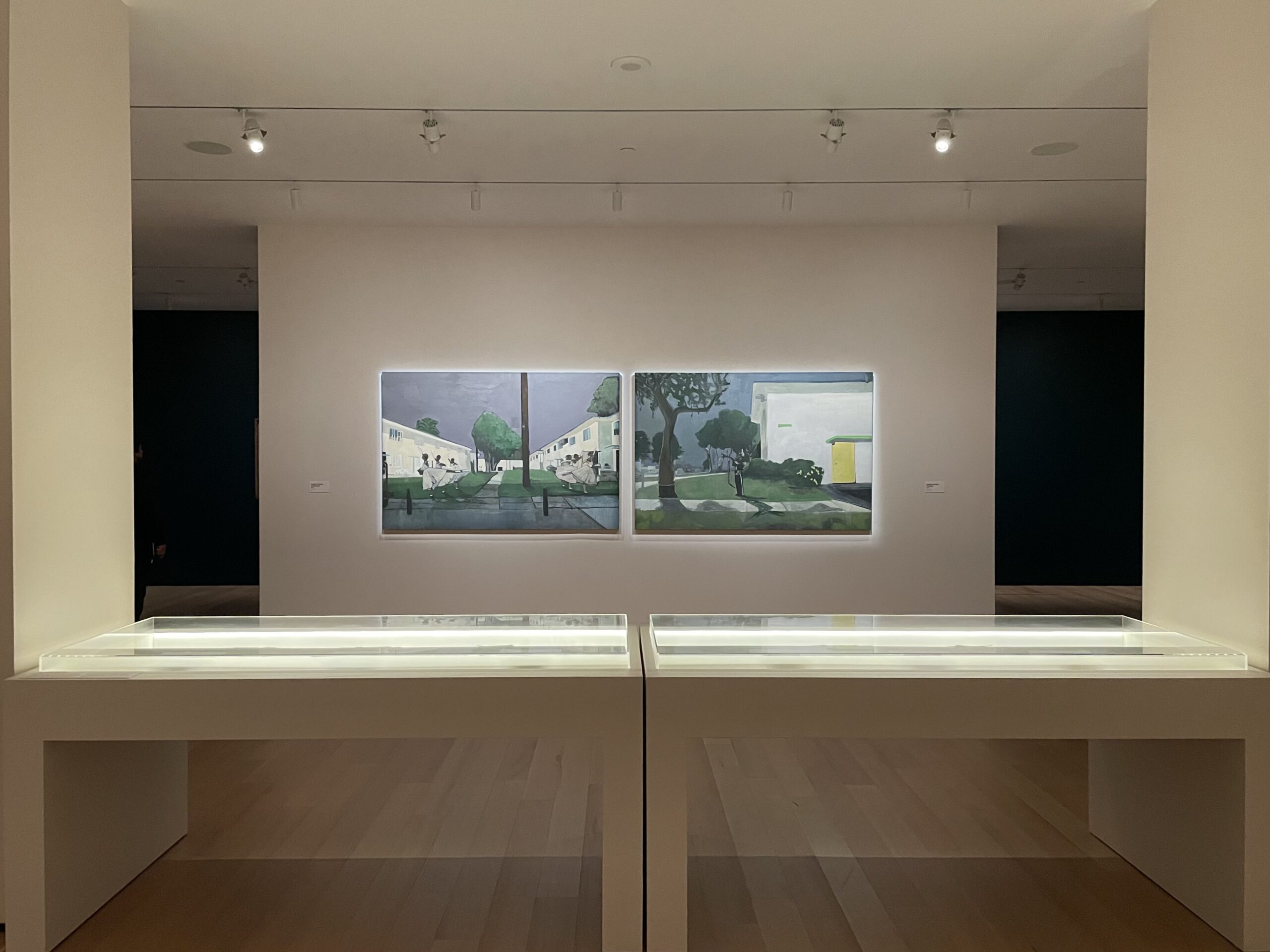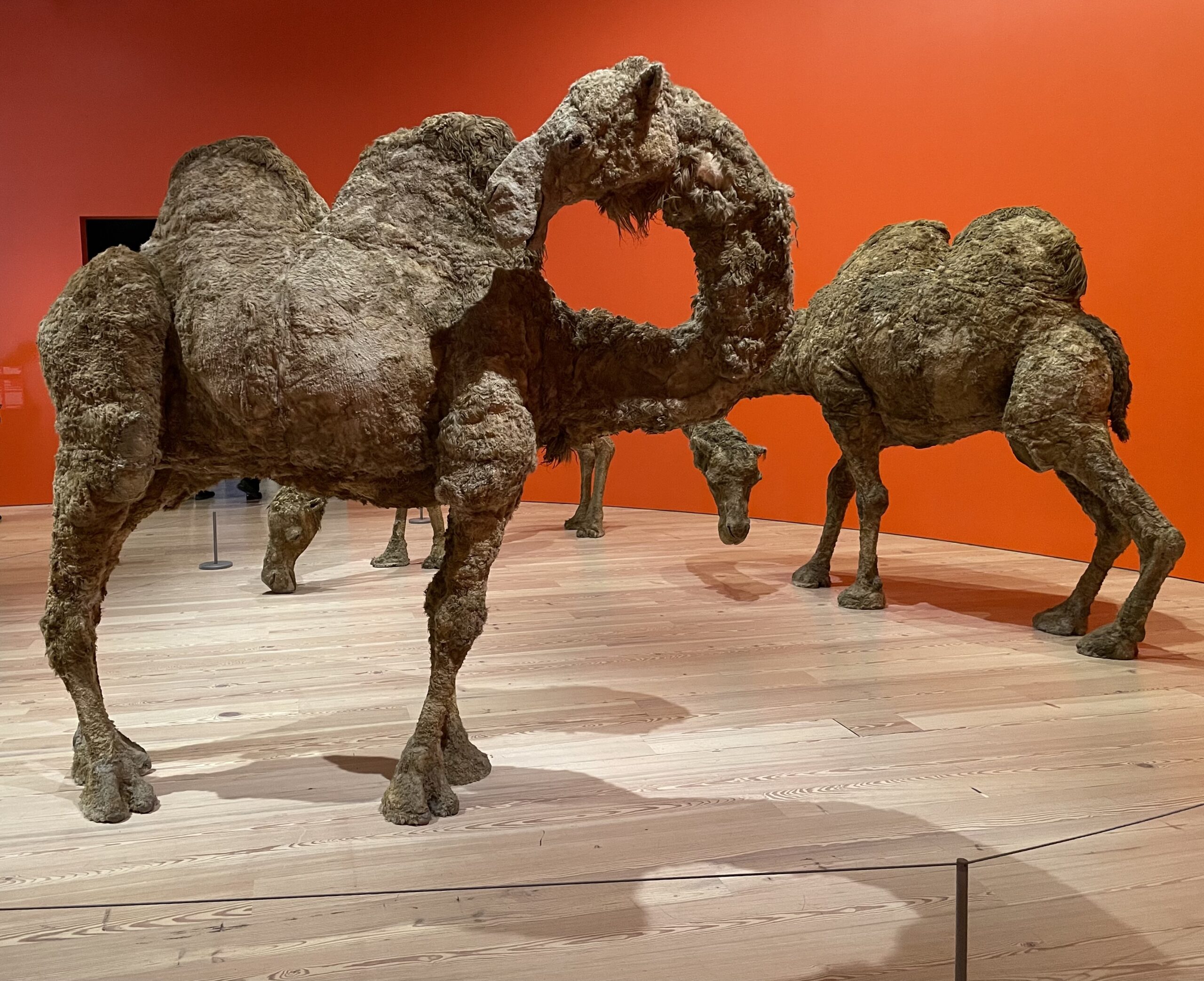
Americans like to believe that they exist in a world of individualism — that the United States is a paragon of distinctiveness.
The Whitney Biennial 2026 argues that this could not be further from the truth.
Featuring the work of 56 artists, duos, and collectives — most of whom have never been included in the Whitney Biennial before — the eighty-second edition of this storied survey catches America at a moment of evolution. What it is evolving into is up for debate, and you’ll get a wildly different answer depending on who you ask. And artists always have an answer for these types of questions. It is practically in the job description for them to dig deeper and answer the queries that society has been asking or that it hasn’t thought to consider just yet.
This biennial doesn’t seek to give viewers a decisive answer to any questions pondering American purpose or what we are evolving into as a people. Rather, it looks to engage all of the human senses and nudge you to come up with your own.
For the most part, the common thread that the biennial had was one of both disquiet and anxiety. It holds up a mirror, reflecting back a nation where people are becoming more untrusting of each other by the second. The irony is that Americans have arguably never needed each other more than they do now. And regardless of whether they realize that now or at some unspecified point in the future, relationality as a state of existence is still occurring on a daily basis in countless forms.
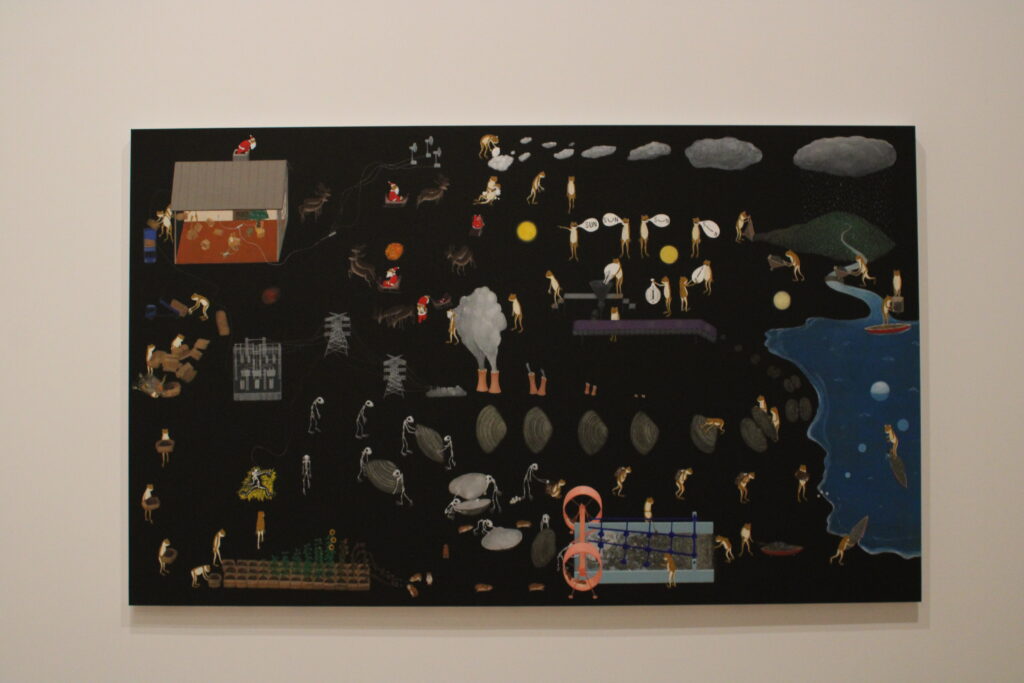
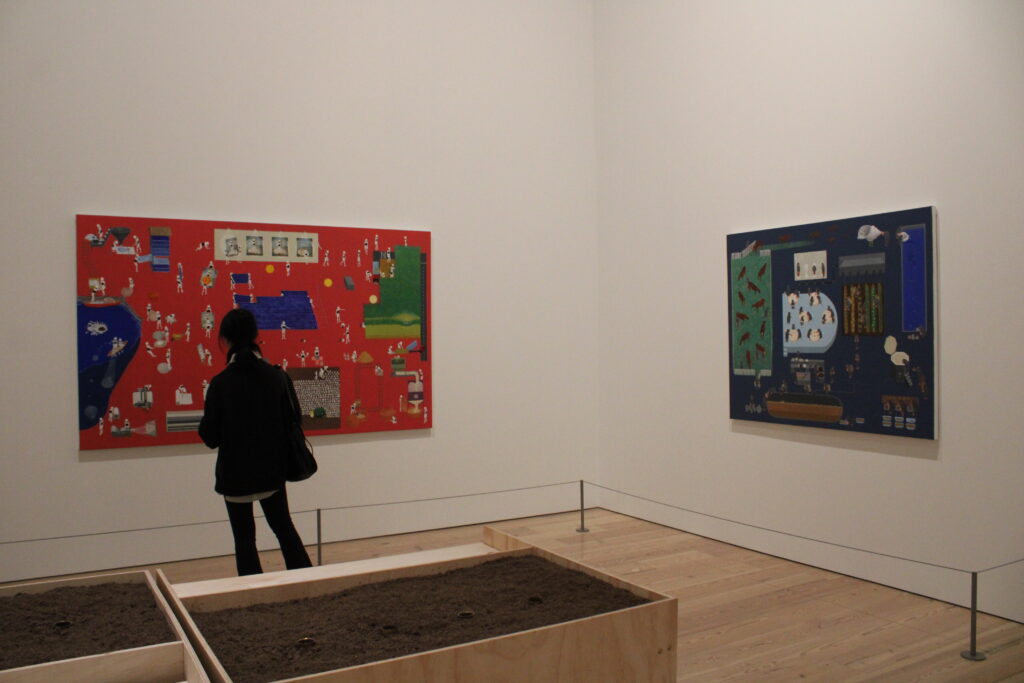
Akira Ikezoe’s works above swap out human beings for other creatures like frogs, moles, and robots, using them to show how our extraction of energy to power the world around us depends strongly on our environment. We power things as varied as conveyor belts, Christmas trees, stoves, toilets, and art spotlights. Sometimes we do fun things like surfing, painting, kayaking, and talking to our families over a nice dinner.
But we overuse our natural resources at our peril. Depending on what form of power that we are extracting, it could pollute our air. We could get electrocuted. We could die from proximity to some of the factories that produce our power.
We do not have much without the realization that while nature exists to help us, we cannot overuse its resources or we will face consequences. We are connected; humankind came from nature, after all.
And if we continue to not realize this, well, there are always robots to take our place in activities such as creating art.
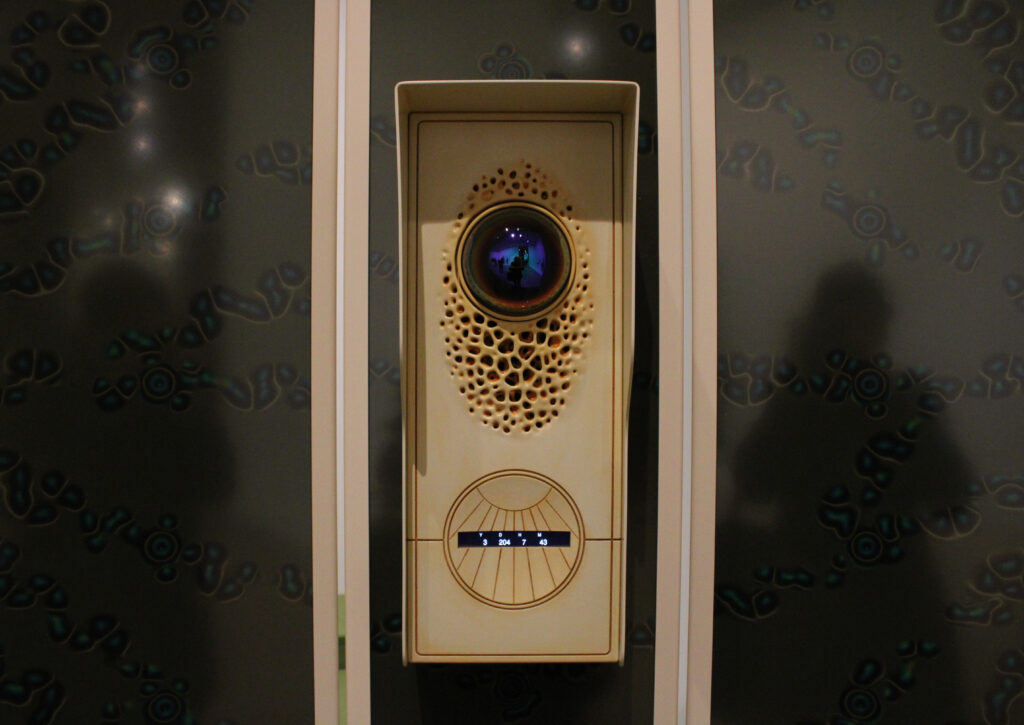
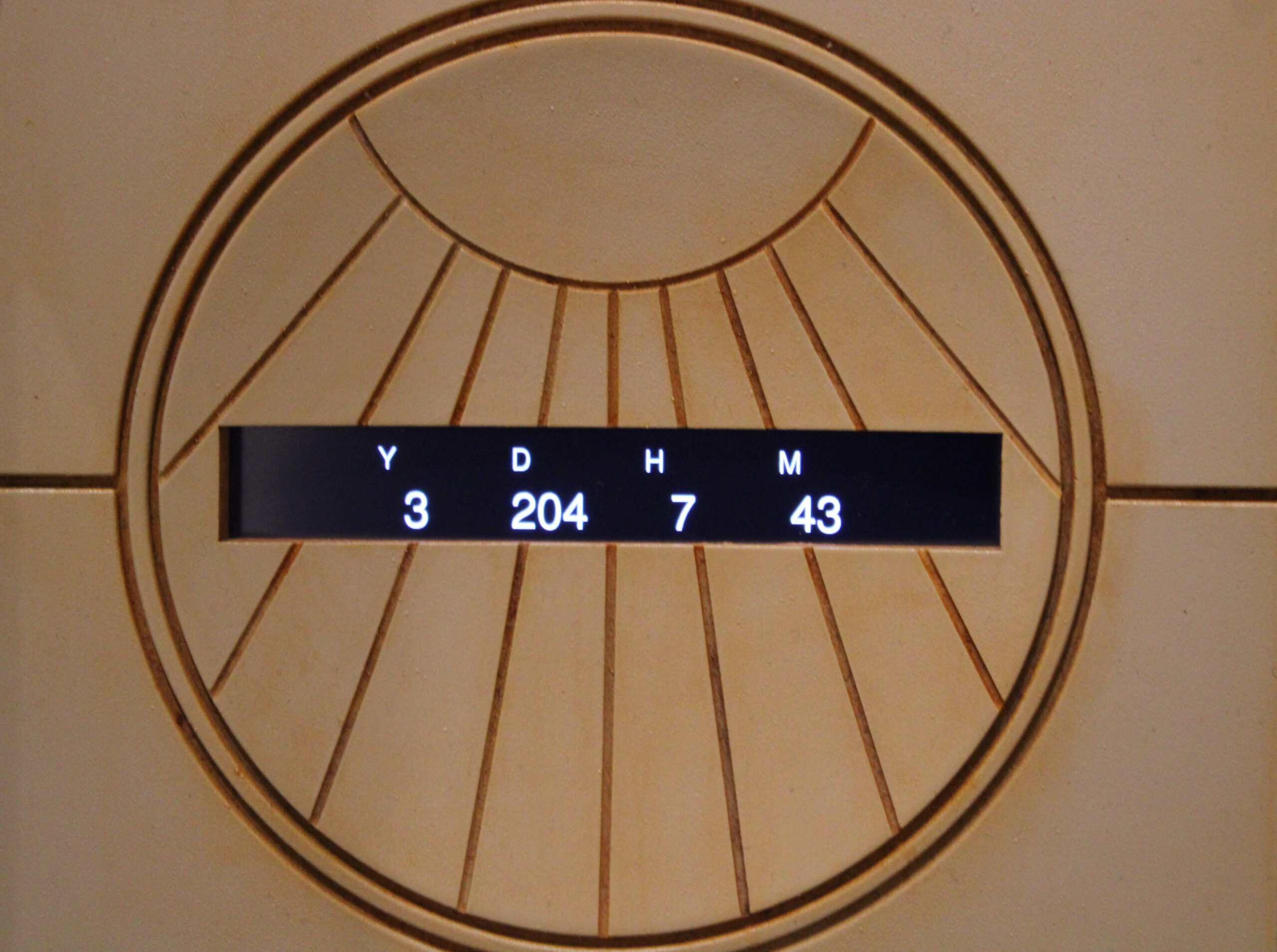
Speaking of robots, another biennial artist approaching questions of this strain is Cooper Jacoby. His work above, “Estate (July 10, 2022)” (2026), is a door intercom with a camera inside. He trained this work (along with others like it) on an AI model that speaks as if it were now-deceased creative people whose voices he pulled from social media. The AI doorbell also has a screen that counts the years, days, hours, and minutes since the person whose voice it is died. If that isn’t a situation of surveillance nightmares, I don’t know what is.
If you’ve ever wanted to live forever, I guess this is your shot. Only, it isn’t really you. It is an AI’s simulation of your voice, which has been released from the shackles of your human form in order to achieve immortality.
What Jacoby’s work elucidates is a way in which relationality can be taken to its extreme: sharing everything online only to have your last vestiges of humanity ripped and remixed by an artificially-intelligent being in order to become part of a major art exhibit in New York.
In an ethically warped way, that might actually appeal to some out there in our fame-obsessed society.
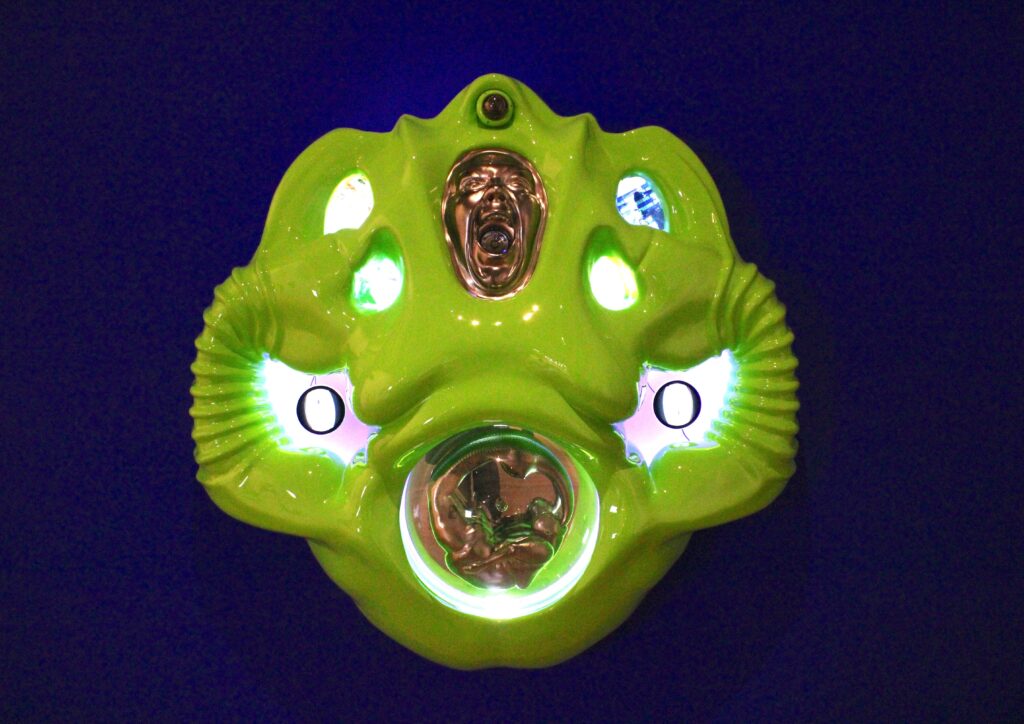
Gabriela Ruiz’s “Homo Machina” (2026) offers another take on surveillance. It views humans as machines, which is a readily apparent trait that many of us display in some form during this technological age. Ruiz herself has this to say:
“For me, the machine is never neutral. It is…..a tool through which violence is enacted. Surveillance, policing, extraction, and control are not side effects of technology; they are among its central functions. They shape who is seen, who is tracked, who is disciplined, who is allowed to move freely.”
Though there has always been a level of surveillance activity within our capitalism-fueled culture, that activity has been ramped up over the past year and weaponized against American citizens and others who would decide to come to our country.
That artists in the Whitney Biennial are approaching surveillance as an issue of importance this year is crucial — and it just might get more citizens to pay attention to the seriousness of the matter.
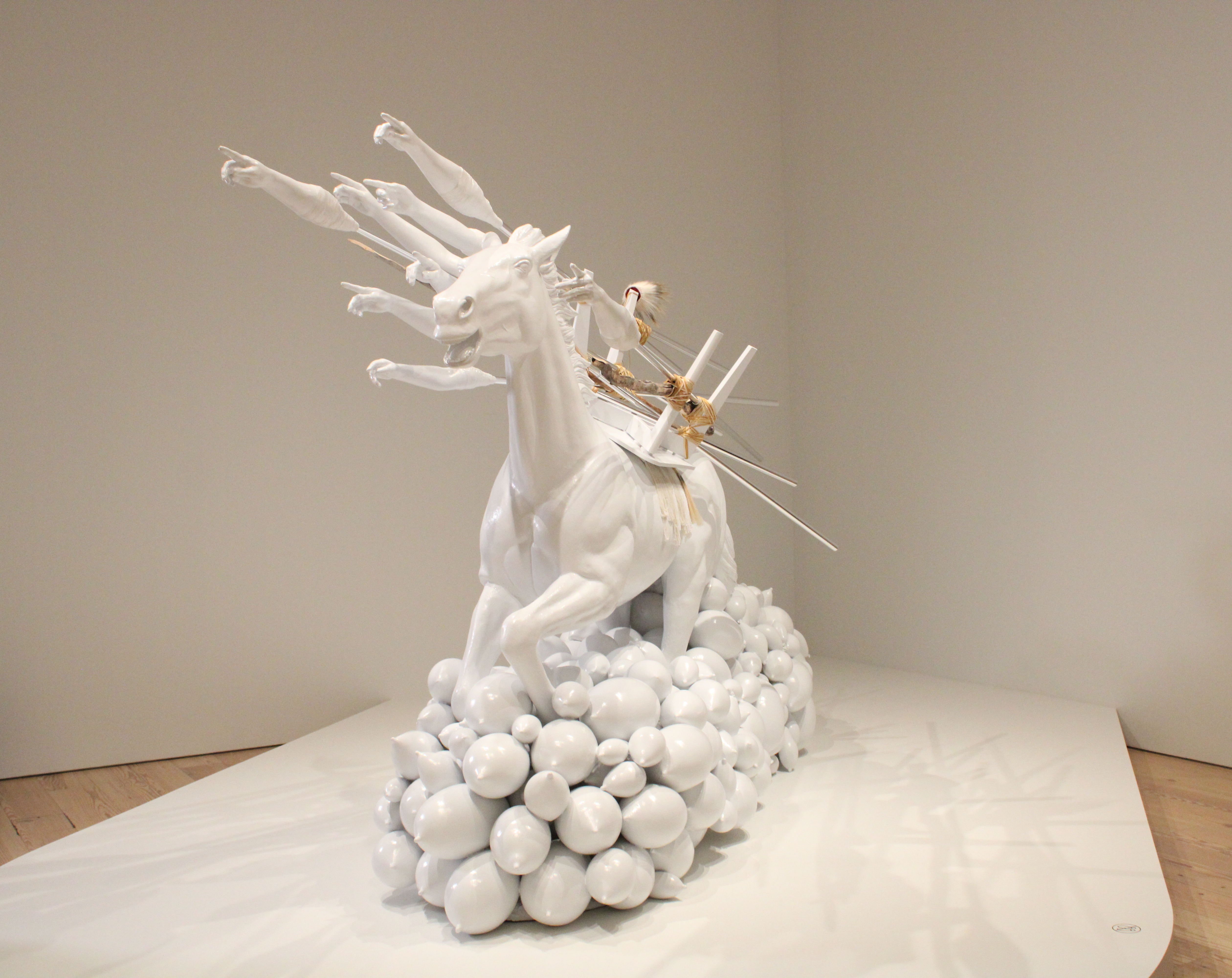
Native American artist Anna Tsouhlarakis, currently serving a residency at Temple University’s Tyler School of Art and Architecture in Philadelphia, created “SHE MUST BE A MATRIARCH” back in 2023 as a vision of women’s empowerment and embrace of the matriarchy. What you see at the bottom of the photo above are not simple balloons — they are inflated condoms. Also included are menstrual cups, an overturned chair, and other symbols offering the viewer an alternative vision of who women can be — strong, authoritative, and in need of no one’s permission.
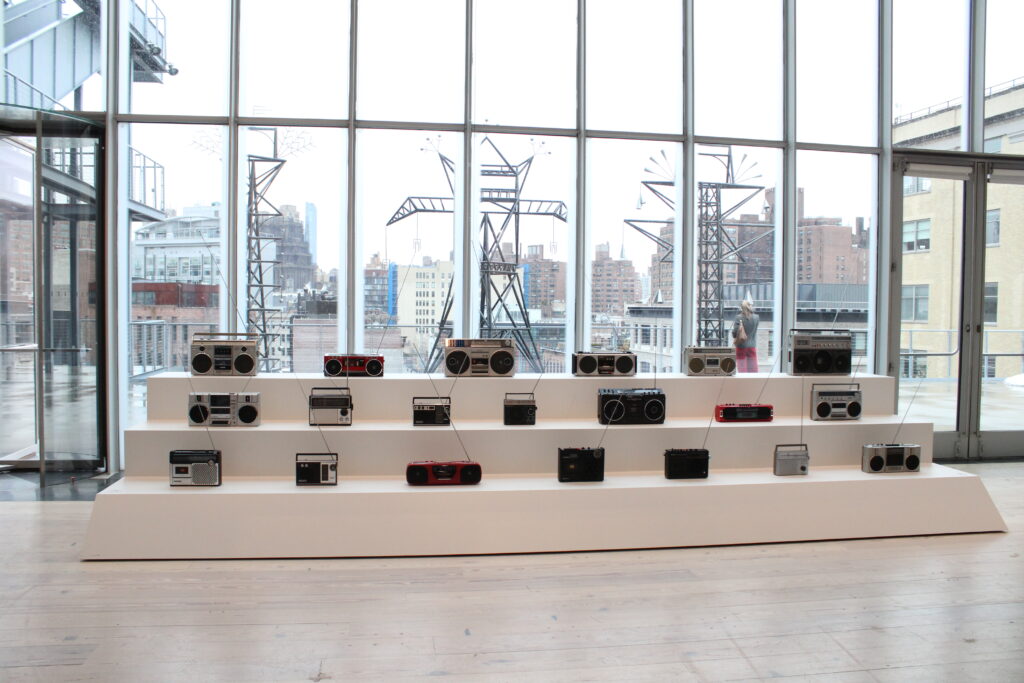
Part of the Whitney Museum’s take on this 2026 biennial was also to include artists from countries who are (or were) formerly under the tentacles of US imperialism.
Composer José Maceda, from the Phillippines, has one of his major works featured, with Japanese artist and composer Aki Onda presenting Maceda’s “Ugnayan” — a fifty-one-page score created by Maceda in which he combined recordings of musicians and singers playing gongs and bamboo instruments native to the Phillippines and collaborated with Manila radio stations to play the recordings at the same time.
To be able to bring together an entire city to play music alongside each other is a phenomenal feat, and to have done it during a time of political strife makes it even more impressive to look back on over half a century later.
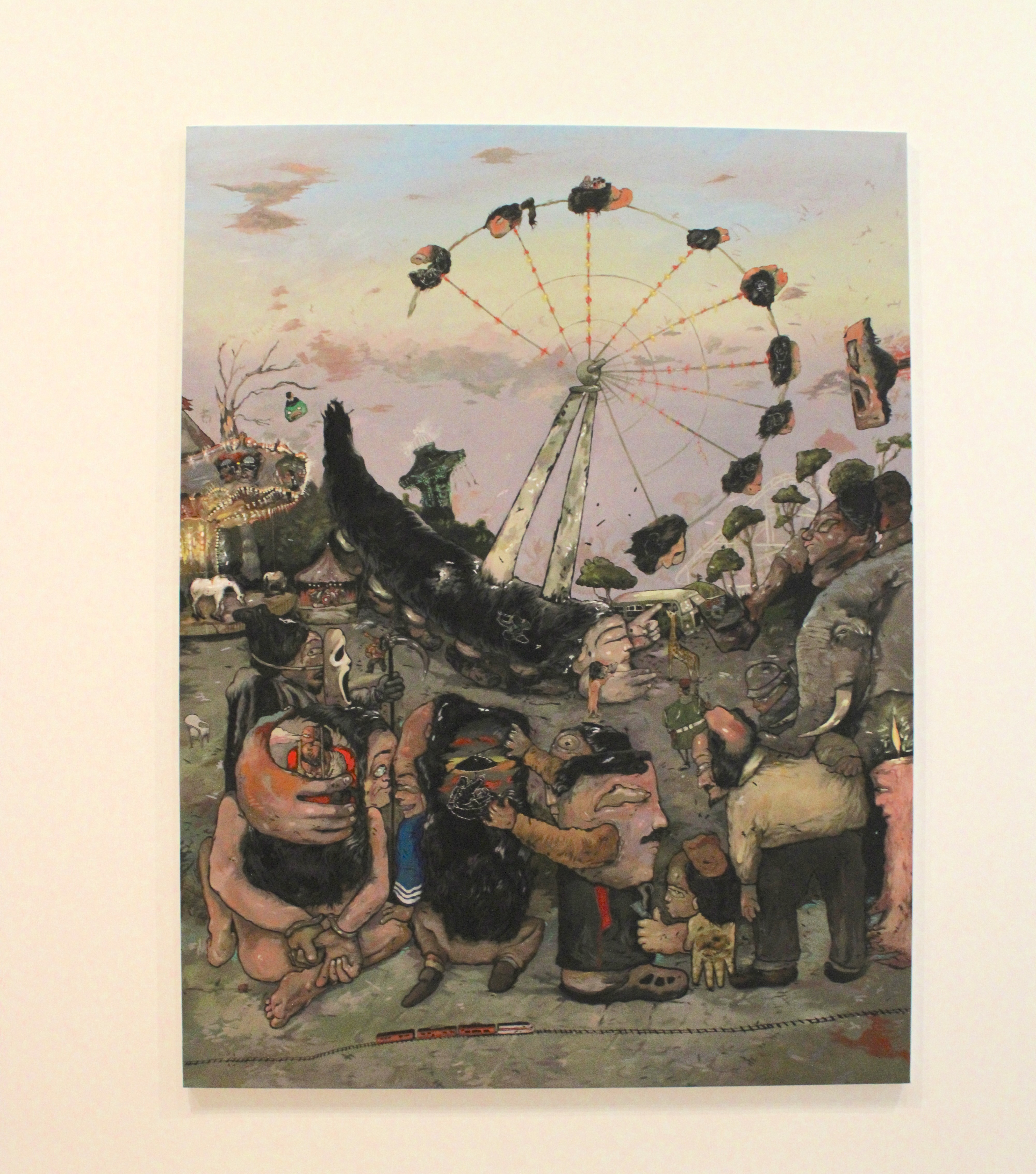
Iraqi artist Ali Eyal presents “Look Where I Took You” (2026), created from a childhood memory of the time just before the war against Iraq started. Eyal’s mom decided that since Baghdad would likely never look the same again that she would take him and his sisters to an amusement park to get to experience the city one last time before they left the country.
Not many of us can imagine what we would do if we suddenly had to leave our homes for any reason — especially if that reason was violence being brought by foreign powers. Surely, many of us would panic and our anxiety would go through the roof. But what would we want to see if there was one last shot before our homeland was to be irreparably changed? Eyal’s mother had to respond that question; it is one that none of us would envy having to answer.
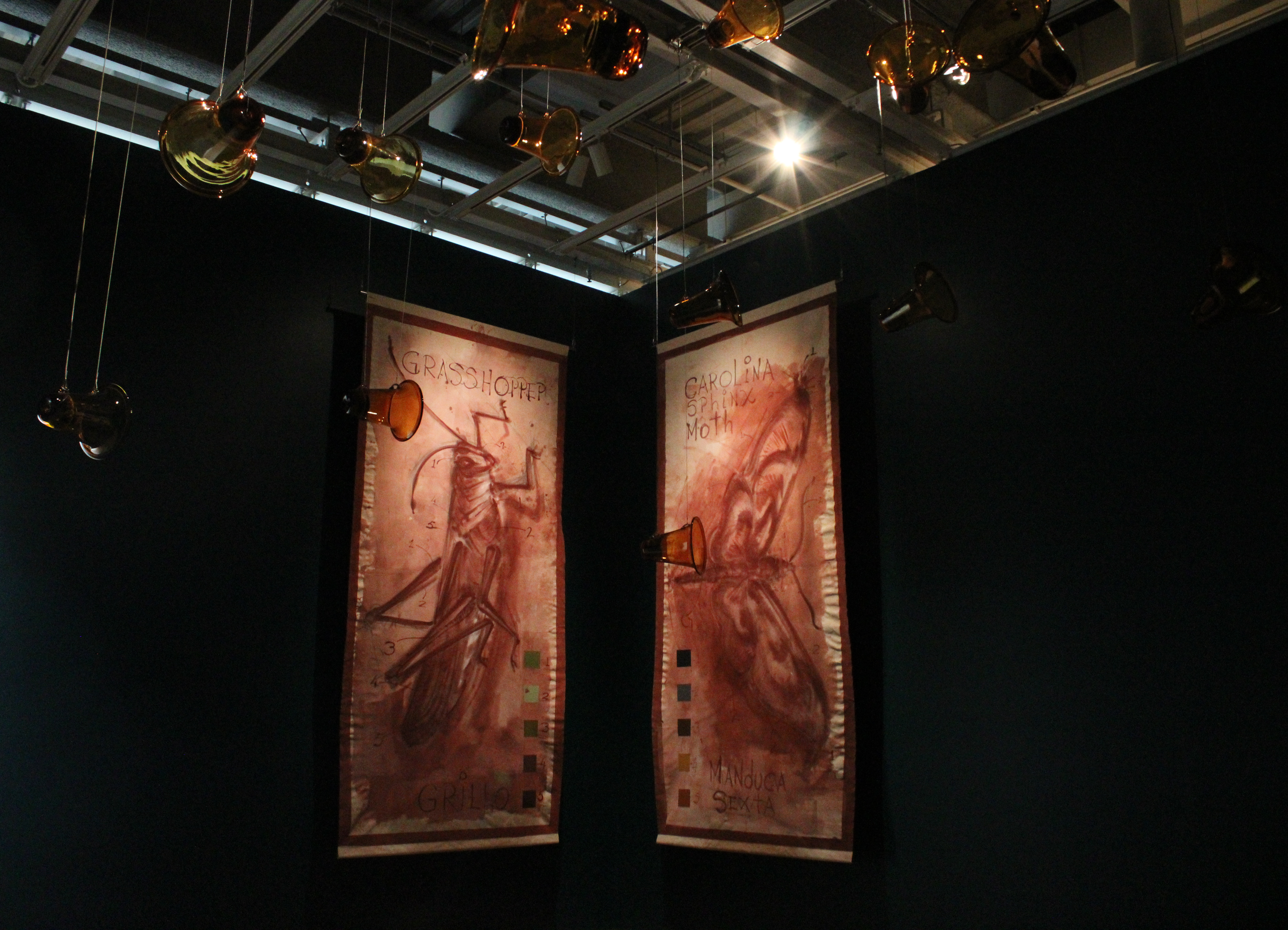
To return to an earlier part of this writing, there’s not much that we have without the realization that nature exists to help us, but we will face consequences if we overuse its resources. Colombian artist Oswaldo Maciá understands this all too well. In “Requiem for the Insects” (2026), he dedicates his work to the disappearance of insects from our ecosystems. Many of your senses are engaged in order to get you to viscerally feel the impending loss of these necessary beings. You hear their chirps. You smell their scents. You see them (though I didn’t spot any live ones). Our ecological systems could potentially collapse if insects, who (according to Maciá) are “80% of the living animals on the planet”, were to suddenly not exist. Truly, our survival depends on one another — and that goes for all beings on this planet.
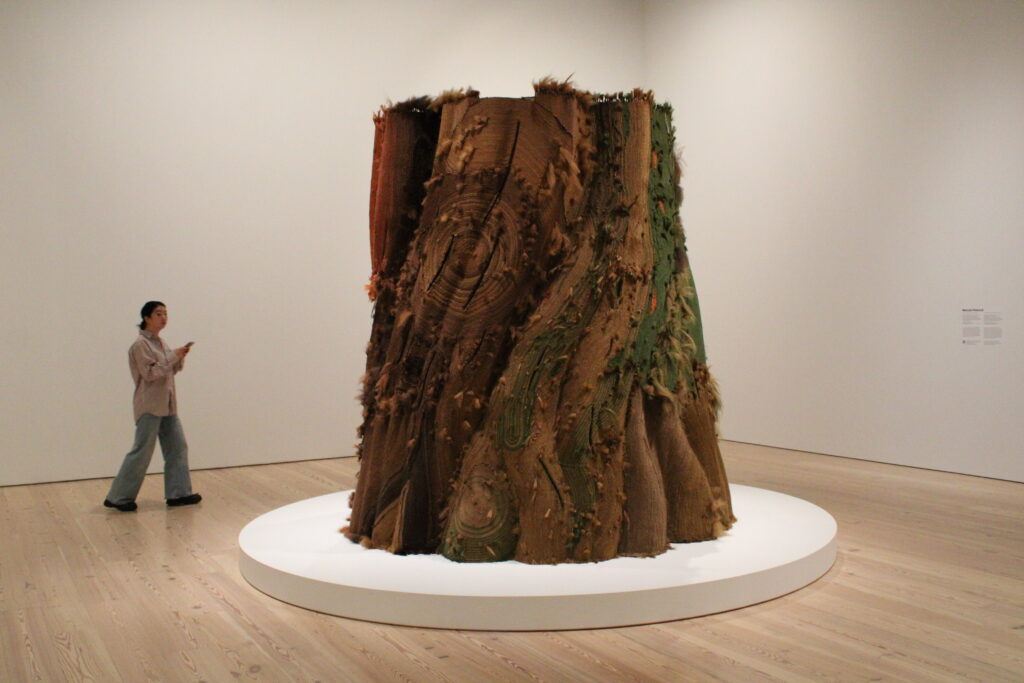
Malcolm Peacock’s “Five of them were hers and she carved shelters with windows into the backs of their skulls” (2024) is a artistic feat that you really have to see up close and in person in order to appreciate just how much intricate work went into its creation. At first glance, it looks like a tree stump; perhaps it is made out of some sort of fabric. When you notice upon closer inspection that what you thought was fabric is actually synthetic hair and that Peacock braided over 3,000 braids into an entire eight foot tall tree trunk, your mind will short-circuit. But then you’ll realize that he grew up as the son of a hairdresser and that his mom has probably blown well past 3,000 braids over the course of her life.
Notice the massive scale of the trunk in the photo above. Then, think of what braids represent in the Black community — a way to build community with one another. They are extremely time-consuming to do, so you have to be devoted to people to give them this hairstyle. Hair braiding promotes relationality. There’s that word again.
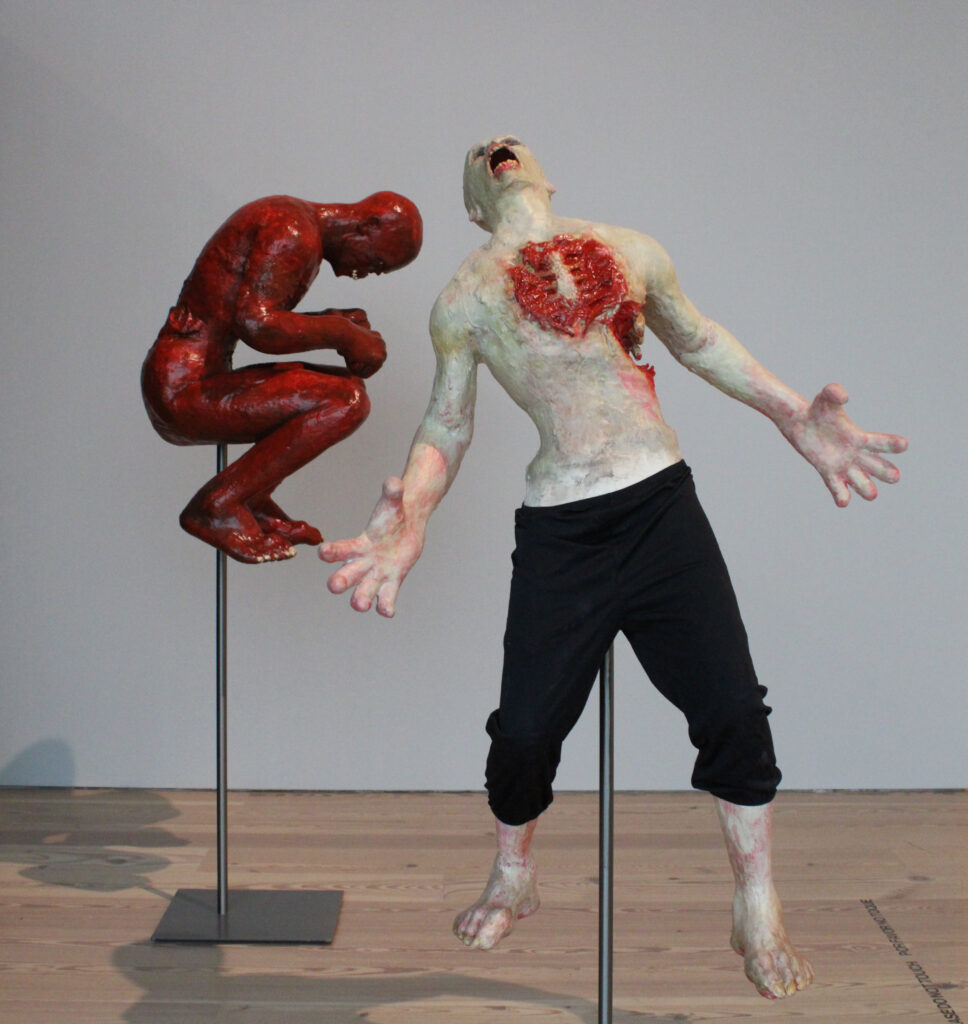
Demons mean many things for many people, but the easiest way to understand Isabelle Francis McGuire’s works above is to simply look at their names and don’t overcomplicate it. Of course, they aren’t talking about Satan in the most literal sense; Satan is being used metaphorically here. From the standpoint of mentioning Satan and “Other Invisible Evils”, though, this is showing America what it is descending into. In operating from a paranoia of hidden evil, we miss the evil in front of our eyes. And in our continual missing of the mark when it comes to noticing the evil happening around us, we risk becoming evil ourselves. In these sculptures, we see our own reflection.
All humans have the capacity for good and evil; we choose which one to display at any given point. In normal times, many of us would understand how to properly interface with the public without allowing ourselves to ’splay’. But, these are not normal times and they haven’t been for at least a decade. We wake up, and everything that we see on the news is awful. We go outside, and someone is getting abducted by authorities. We try to sit with ourselves to have one quiet moment, but technological devices beckon us with their siren calls. We try to sleep, but are restless due to all of the above. Is it any wonder that many Americans are hysterical to some degree?
The only thing that will help to get us out of the morass that we are in is a realization that we exist in a spectrum of relationality.
The Whitney Biennial 2026 will be open to the public for viewing from March 8, 2026 through August 23, 2026 at the Whitney Museum of American Art in New York City.
To subscribe to Manic Metallic‘s Substack newsletter, click here.