This exhibit is “not a surrealist show, per se”.
Scott Rothkopf, the Alice Pratt Brown Director of the Whitney Museum, was sure to hammer home this point in yesterday’s press preview of “Sixties Surreal”, the museum’s latest showing.
The exhibit, surveying American art from 1958-1972, dispenses with the notion that American art was solely characterized by Pop Art, Conceptualism, and Minimalism and argues that the sixties was a period of time encompassing Surrealism on multiple fronts.
It defines Surrealism not as the Europeans did four decades before, but as a movement that gave a means of expression to artists in a country experiencing violence, oppression, transformation, and change on an almost daily scale. To American artists, living through this time was to produce work within the context of, in Rothkopf’s words, “a world, that to them, had become surreal.”
To live life during this moment in history was to exist within a Surrealist environment at all times.
And how did the work of over 110 artists convey this point?
Well, starting off the exhibit, attendees are met with a set of three camel sculptures (pictured above) created by artist Nancy Graves. Originally shown at the Whitney Museum in 1969 at its Breuer Building location, these serve to set a tone conveying the strangeness of our world and that all is not as it seems.
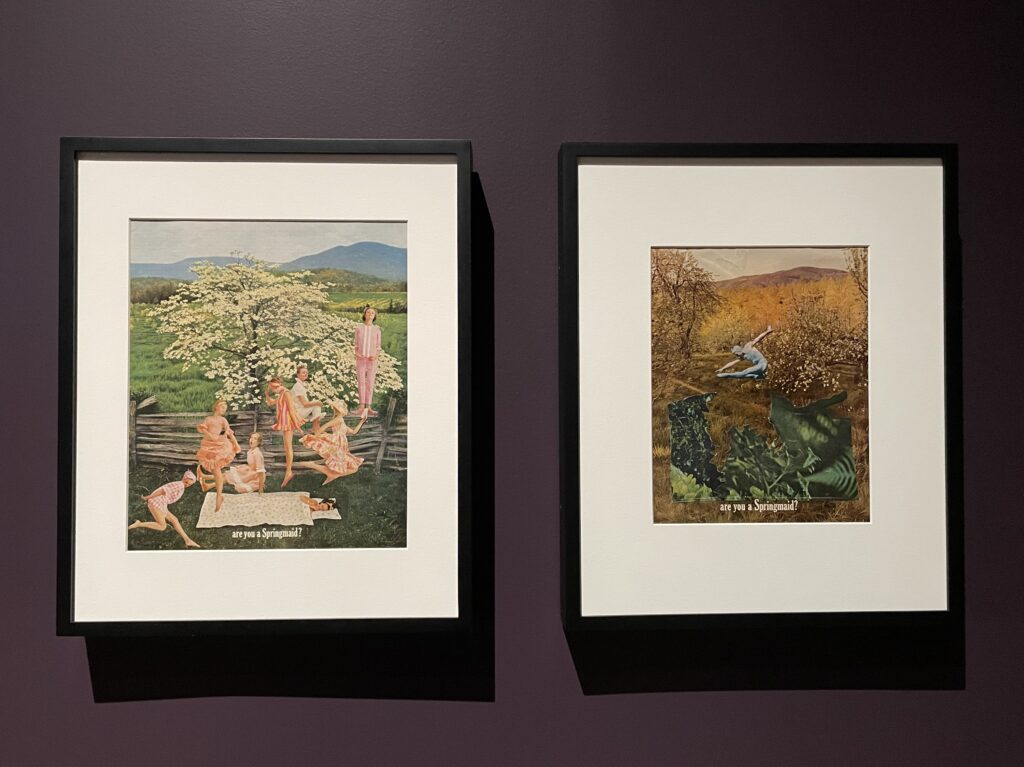
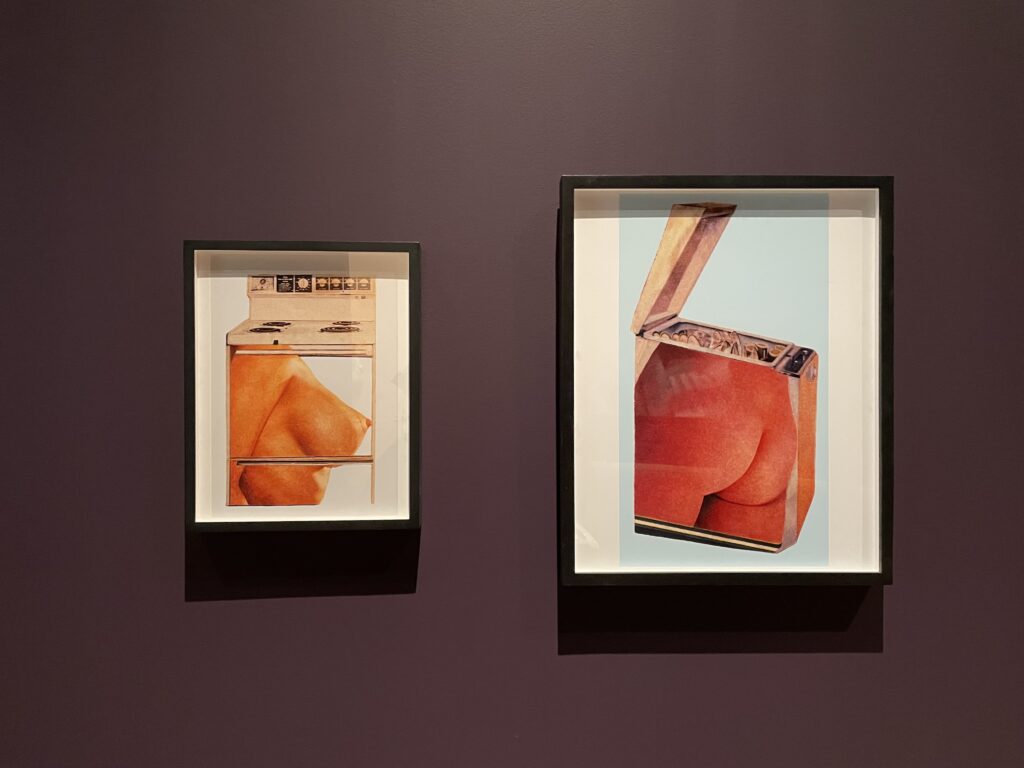
The exhibition is broken into different themes, starting with An Other Pop, which explored the alienation beneath the surface of the American Dream.
The four above works by artists Jean Conner and Martha Rosler depict the targeting by consumer culture of women. In Jean Conner’s works, you see a level of femininity portrayed that has — while created in 1960 as a challenge to traditional views on femininity — become idealized in our more conservative time period. One could see the tradwives of today — or those looking to embrace a “soft life” in general — aspiring to the vibe of this imagery.
Martha Rosler’s works seem to nod toward the identity of women as belonging in the kitchen — this consumer good being a symbol of woman’s place in society. Perhaps a more dystopian possibility is the merging of the feminine body with a consumer good. Women are seen as making the majority of household purchasing decisions, so women’s bodies becoming synonymous with things that can be bought at a store is the next logical step. Surreal, indeed.

The next section, titled Body Ego, shows artists converting their feelings of what it means to be a being tied to a physical form. Yayoi Kusama’s “Accumulation” (c. 1963) and Louise Bourgeois’s “Fée Couturière” (1963) — seen respectively in the center and second from the right — are both seemingly abstract creations, yet manage to remain ingrained with an implicit intimacy.
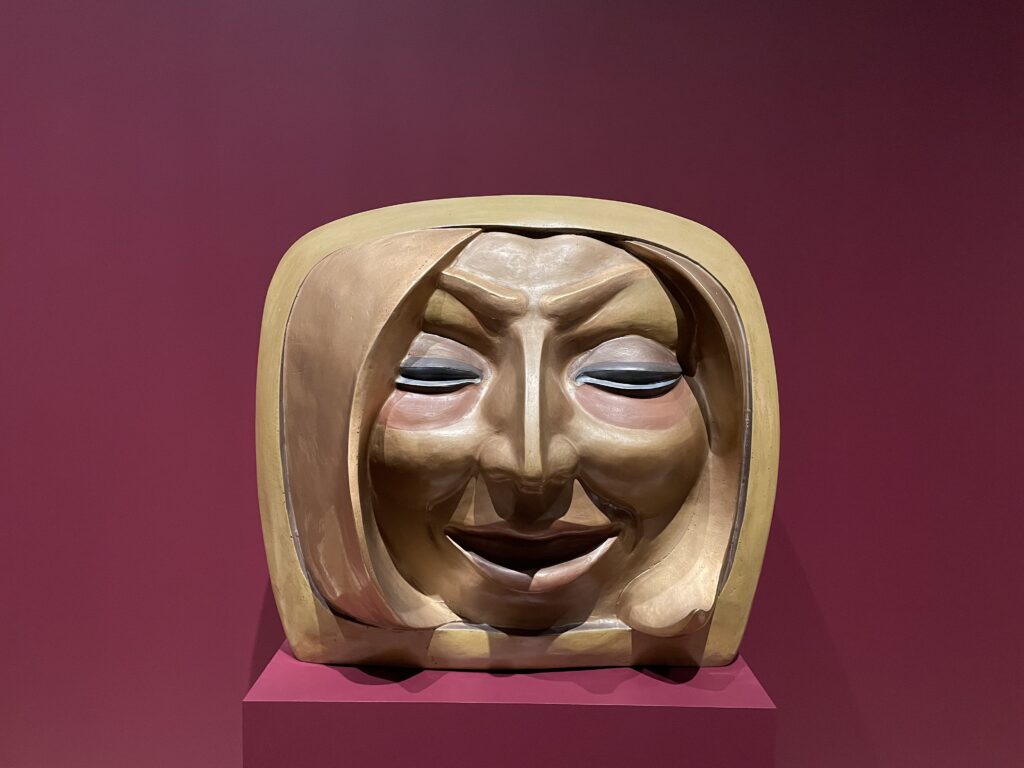
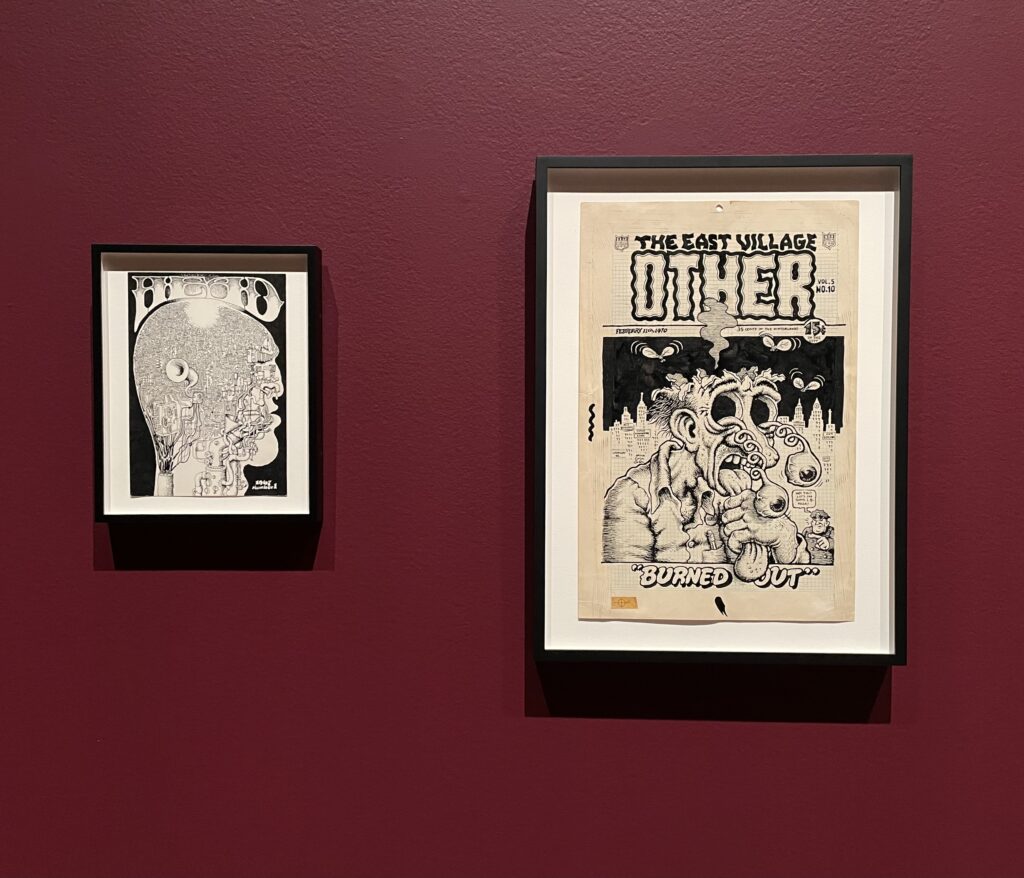
1970; photo © 2025 Manic Metallic
Social Surreal, the next section, dives deeper into the unique strangeness of life in American society — and the modes in which that life was being transmitted to the public. The images and videos, being shown in the way that they were back then, were both new and strange. Photographers were using their skills to capture life from different angles with their lens. But television was the strangest of them all. This one box — this one piece of technology — could show you a cartoon one moment and civilians being bombed in Vietnam the next.
Daily American life for the average citizen was just as surreal as any fiction that an artist could come up with — a fact not lost on the artists of the era. Above, you’ll see a work by artist Luis Jimenez — “Blond TV Image” (1967) which relays the feeling that he and many of his contemporaries had at the time about television. In this piece, a blond haired woman is emerging from the TV screen. An unknown television figure is invading his personal space for unknown reasons, and that is a scary thing.
In Robert Crumb’s “Burned Out”, the artist created an illustration for the counterculture newspaper The East Village Other representing what he called “the end of the 1960s”: the widespread progressivism and counterculture of that era ran into a conservative brick wall, and now it was stuck with its drugs, free love, and inner panic.
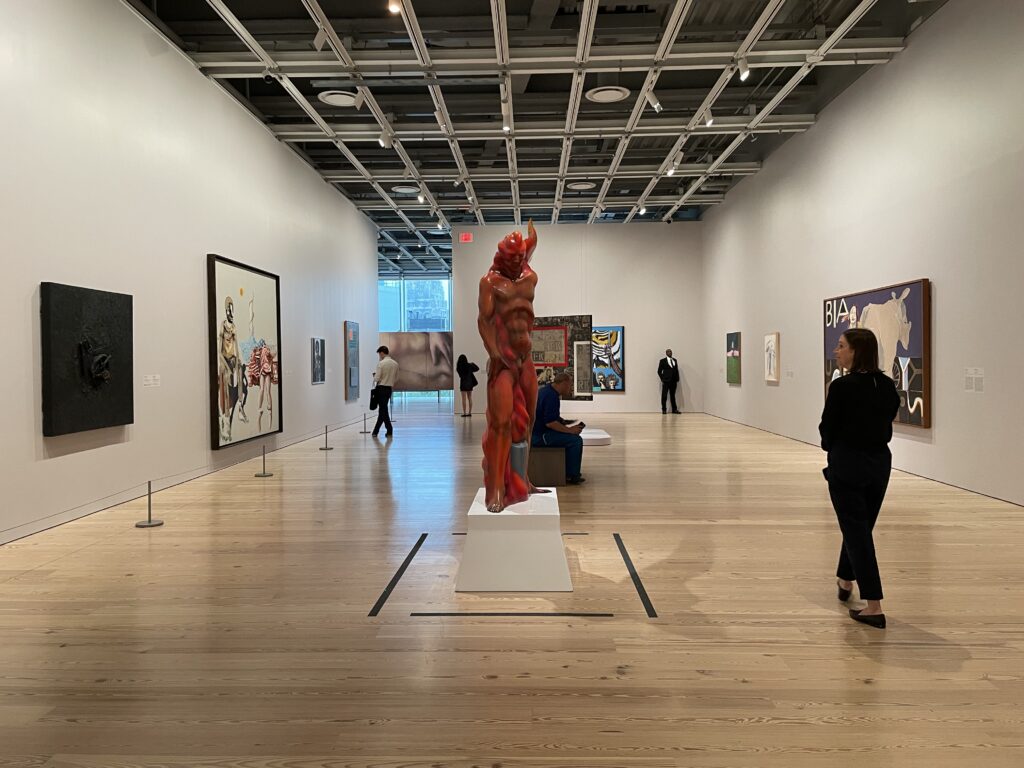
The next section, Show of Force, captures the violence, the assassinations, the protests, and the war of the time period. For those who did not live through that time, it is often hard to imagine the horror that you must have expected to hear upon waking from sleep every day.
Artists of the era took those unspeakable tragedies to which they bore witness and transmuted them into poignant artwork by using the historic qualities of Surrealism and expressing their feelings toward a collapsing social order and the change aggressively forcing its way through the barricades. Luis Jimenez’s Man on Fire (1969-70), seen above in the center of the frame, embodies this well — making a statement on racial violence and standing tall in a show of resistance despite it all.
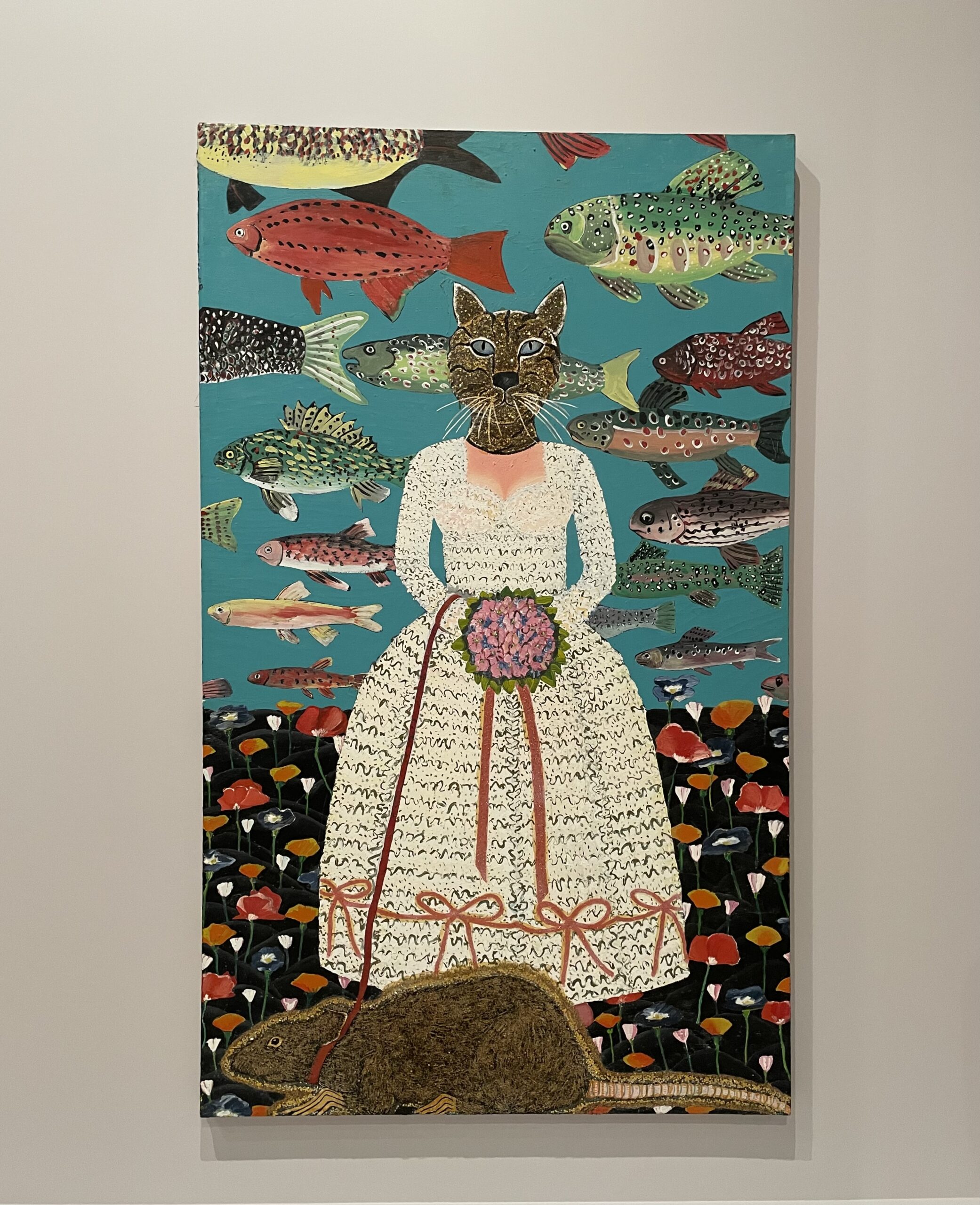
Assembling shows works that artists created using found objects. With those objects, unlike the surrealists of the 1920s who used this technique for reasons related to the subconscious, the artists of the sixties used assembling to express their social and political viewpoints (surely, you’re seeing a pattern as you make your way through this article).
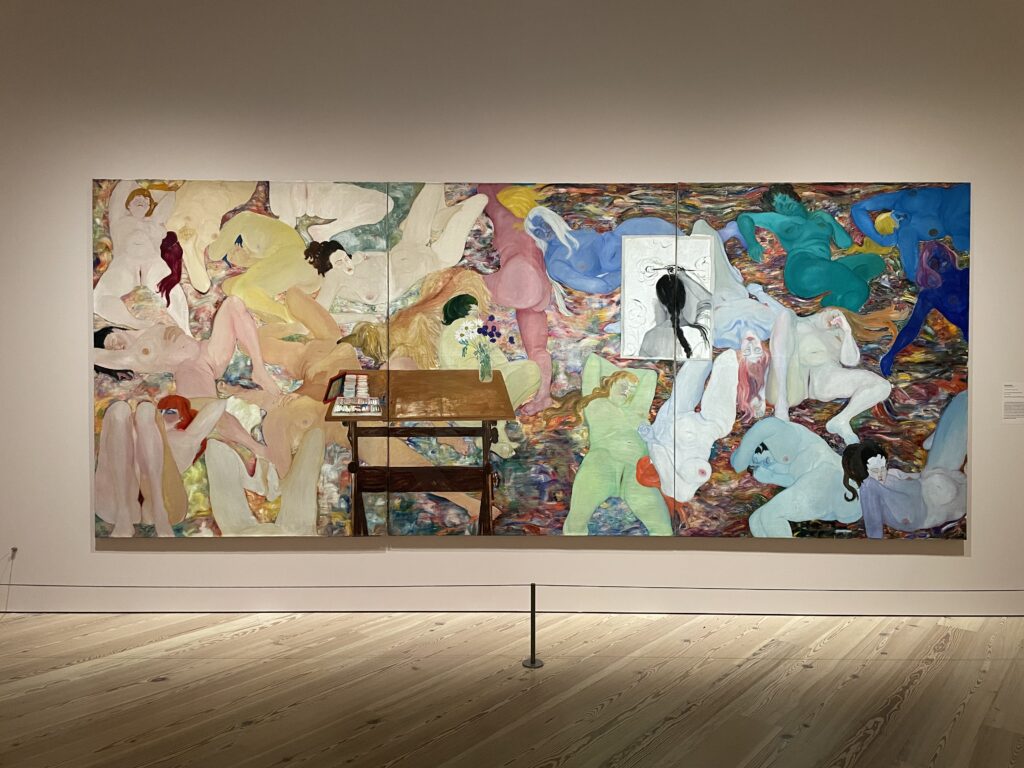
The Big Rip-Up displays works by artists who wanted to show the expectations put on women by society: political, social, and psychological. Women artists were inspired by the new possibilities coming for them as artists and as people via the changing cultural winds. After so many years of being treated as second-class citizens, they were finally ready to take their rightful place as equals to men.
Martha Edelheit’s “Flesh Wall with Table” shows women lounging together with no clothes — and no care of who might be watching them. These women are free.
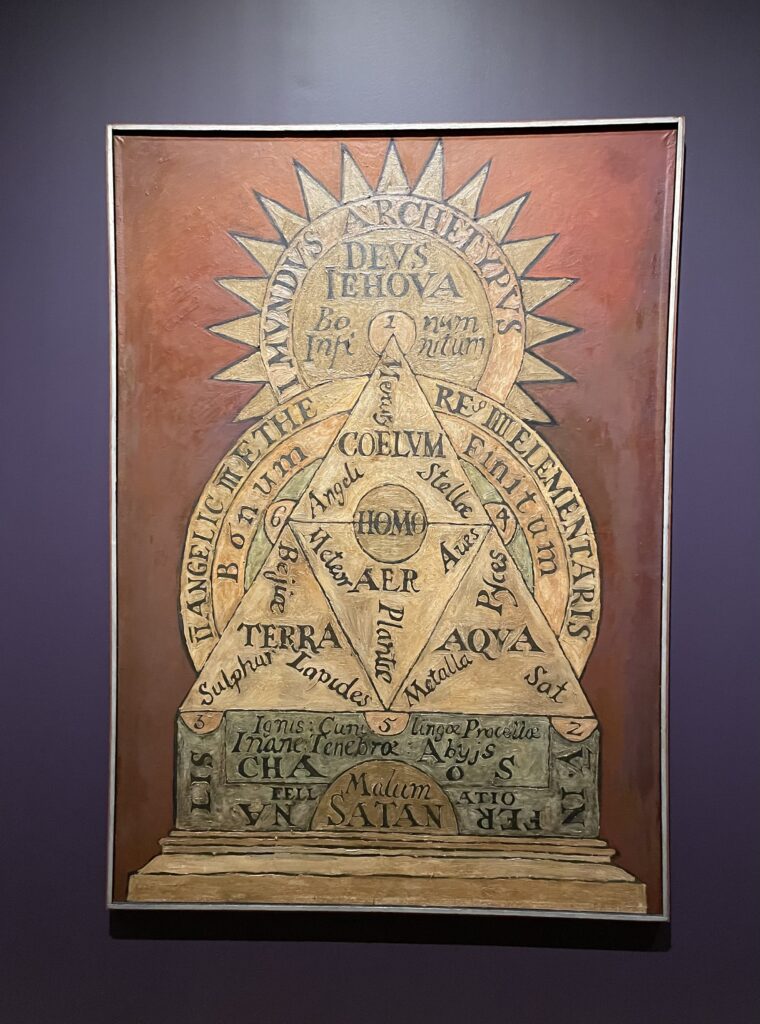
“Sixties Surreal” concludes with Mojo Secrets, which explored artists’ desires during that time to critique organized religion (along with family and state structures) and seek alternative spiritual means of worship. Astrology, tarot, and other forms of esotericism were on the agenda here. This is one area in which the artists featured in this show followed the same train of thought as the Surrealist artists of the 1920s.
This exhibition proves that Americans don’t need outside sources of surrealism when it is at our doorstep every day. As a country, we are about as close to the turmoil of the sixties as we have gotten for a long time.
The artists included in this show were able to tap into the concept of Surrealism to express the horror and the sheer absurdity of their moment.
The time might be coming for our artists today to either do the same — or find another path of inspiration to convey just how much turbulence and upheaval that we face in the year 2025.
“Sixties Surreal” will be open to the public for viewing from September 24, 2025 through January 19, 2026 at the Whitney Museum of American Art in New York City.
To subscribe to Manic Metallic‘s Substack newsletter, click here.