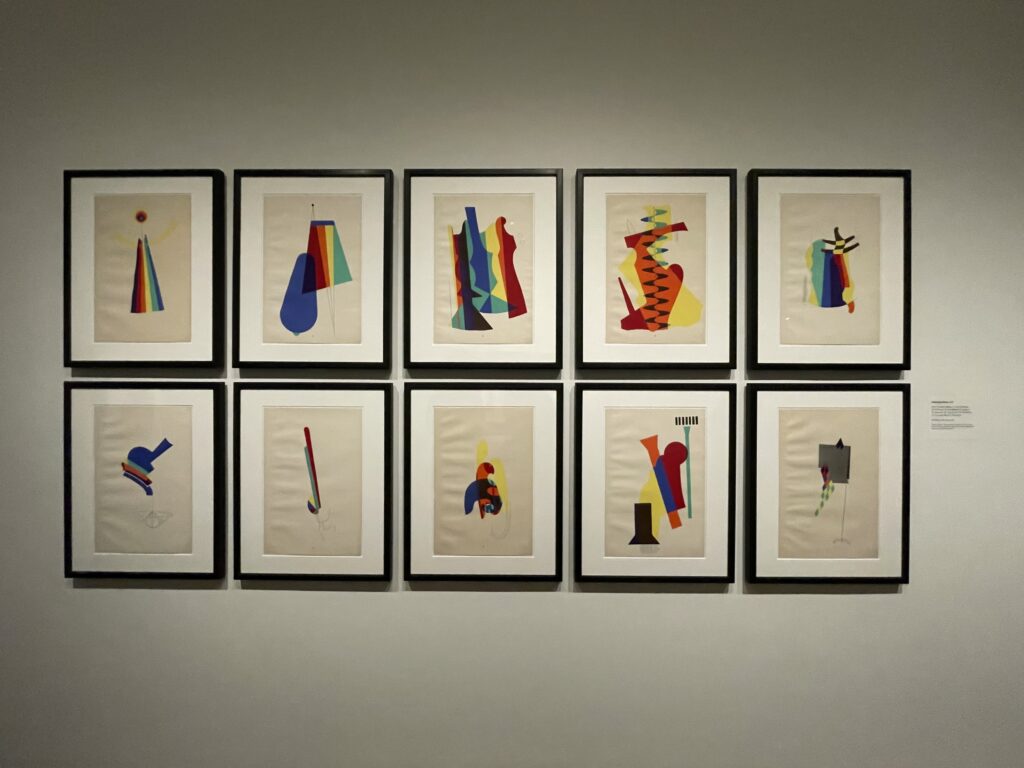
Man Ray, the multidisciplinary artist whose name is closely associated with the Dada and Surrealist artistic movements, finally gets his due at the Metropolitan Museum of Art in New York.
The show, which primarily focuses on Ray’s work from the 1910s and 1920s, is the first solo exhibition that the museum has dedicated exclusively to the artist’s work.
The exhibit centers around the lead-up to Man Ray’s obsessive adoption in 1921 of what he called “rayographs”. In essence, these were his style of creating photographs without a camera that involved setting objects on or near sensitized paper and exposing it to light.
Before the South Philadelphia-born, New York-raised artist began working in the photographic medium, he was a painter who created his works with palette knives and other tools as opposed to brushes; he’d only pick up a camera for the first time in 1915 while preparing for his first solo showing for his paintings.
His artistic worldview was notably changed from discovering photography; he privately released a printed pamphlet in 1916 titled A Primer of the New Art of Two Dimensions, in it discussing his theory about a new art for the modern era and drawing from his photographic experiences.
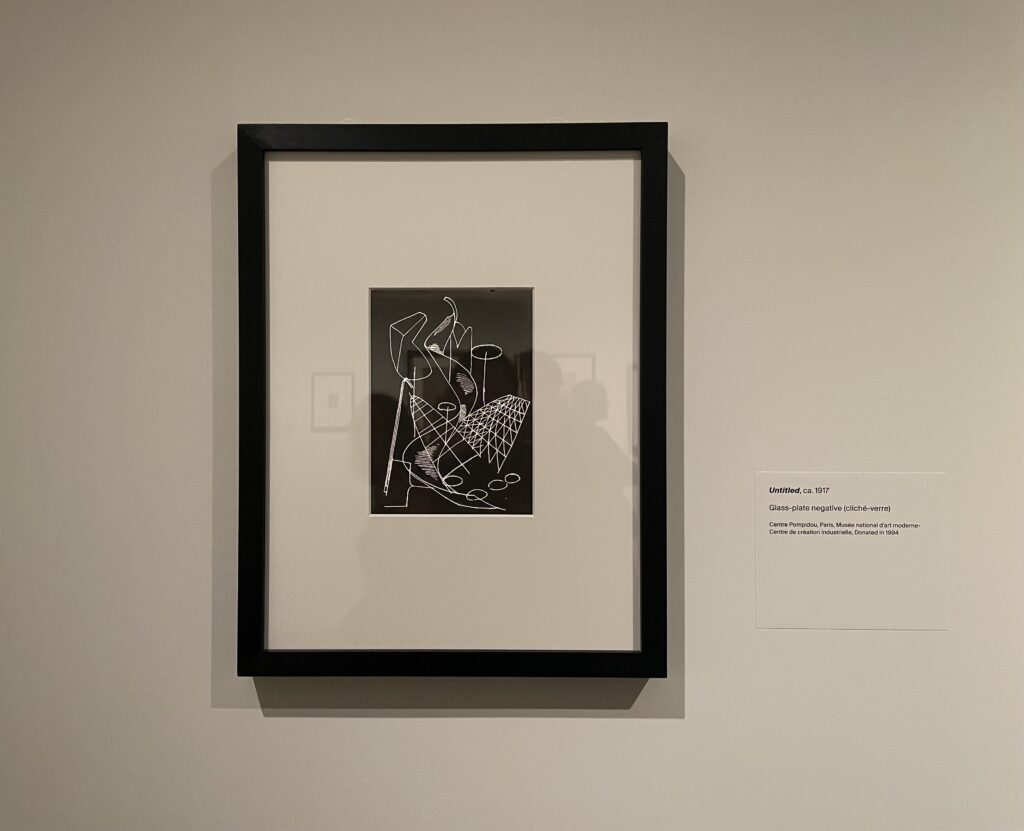
Man Ray’s first experience with photography that didn’t involve a camera was his period of creating “clichés-verres” — a reproductive process involving glass-plate prints originating in the 19th century.
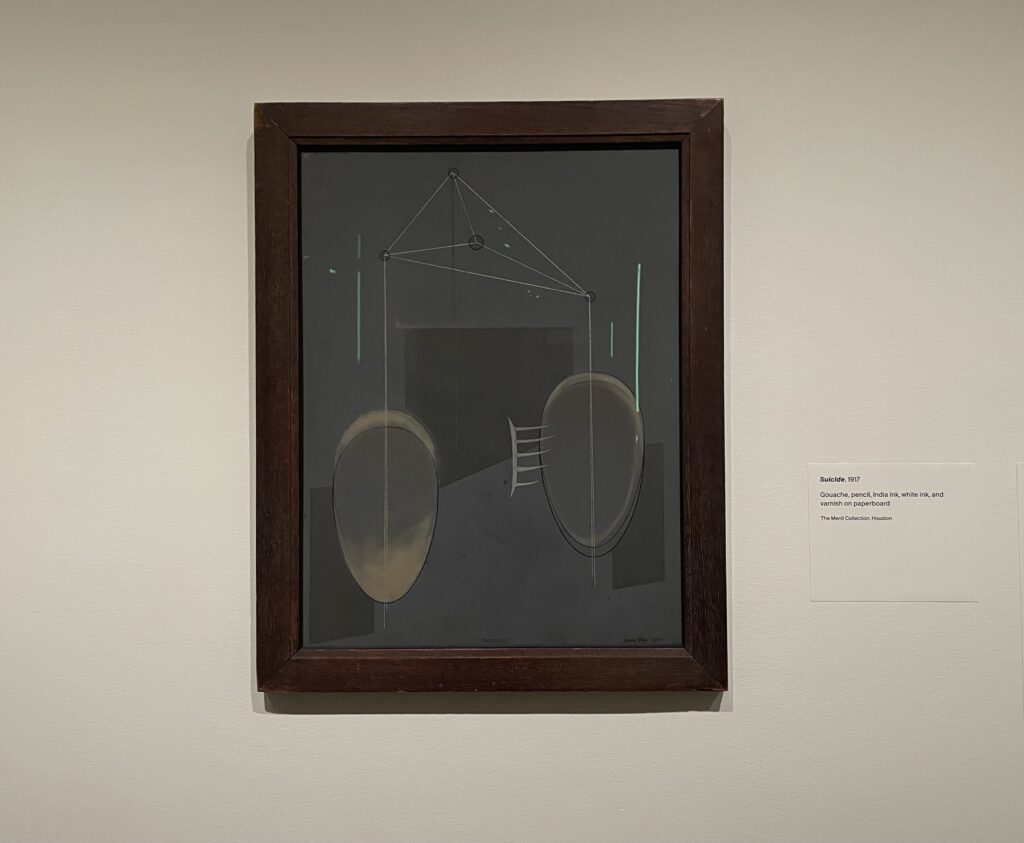
Through his day job at an advertising agency, he was introduced to an airbrush, which he then began using in his personal art by creating “aerographs”. To do this, he used an air compressor and directed pigment through stencils and around masked areas and objects. He then rested those on the composition board and repositioned them as he worked.
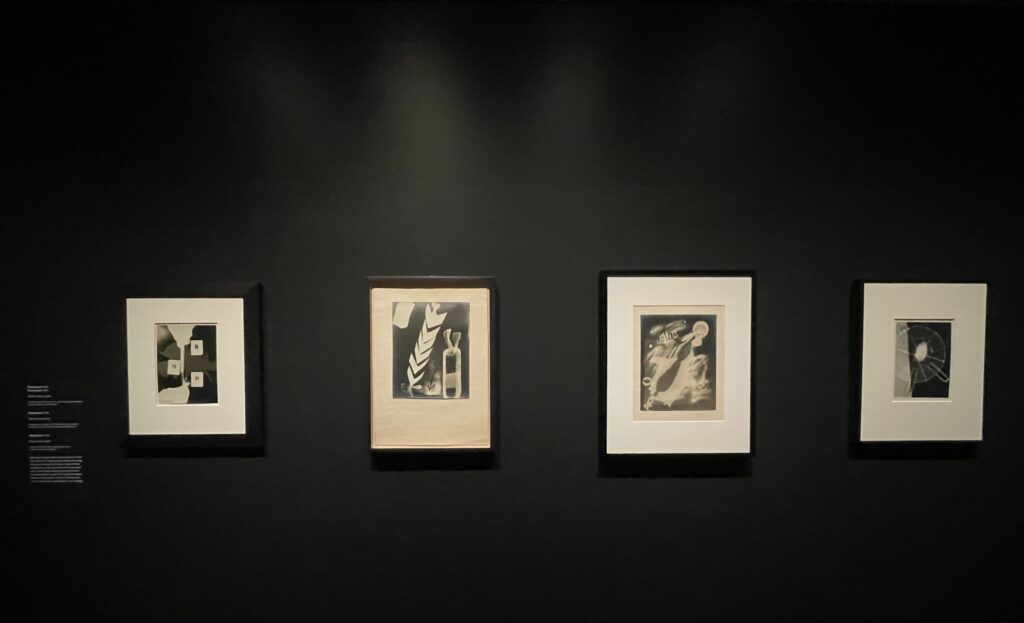
Man Ray spent the majority of the 1920s devoting his time to his rayographs, four of which can be seen above. He became so well-respected for the technique — critics took to calling his rayograph work “chemical paintings” — that he declared that he had cut himself free from painting. (Spoiler alert: he did not quit painting; he just changed the way he did it.) Placing both objects and people in his rayograph work, he did not differentiate between one and the other when posing his subjects, according to Surrealism movement co-founder André Breton. Breton had this to say about his friend’s working process:
“The very elegant, very beautiful women who expose their tresses night and day to the fierce lights in Man Ray’s studios are certainly not aware that they are taking part in any kind of demonstration. How astonished they would be if I told them that they are participating for exactly the same reasons as a quartz gun, a bunch of keys, hoar-frost or fern!”
“Man Ray: When Objects Dream” gives exhibition visitors around 60 rayographs and 100 paintings, objects, prints, drawings, films, and photographs that contribute to the exploration of Man Ray’s early creative inspirations.
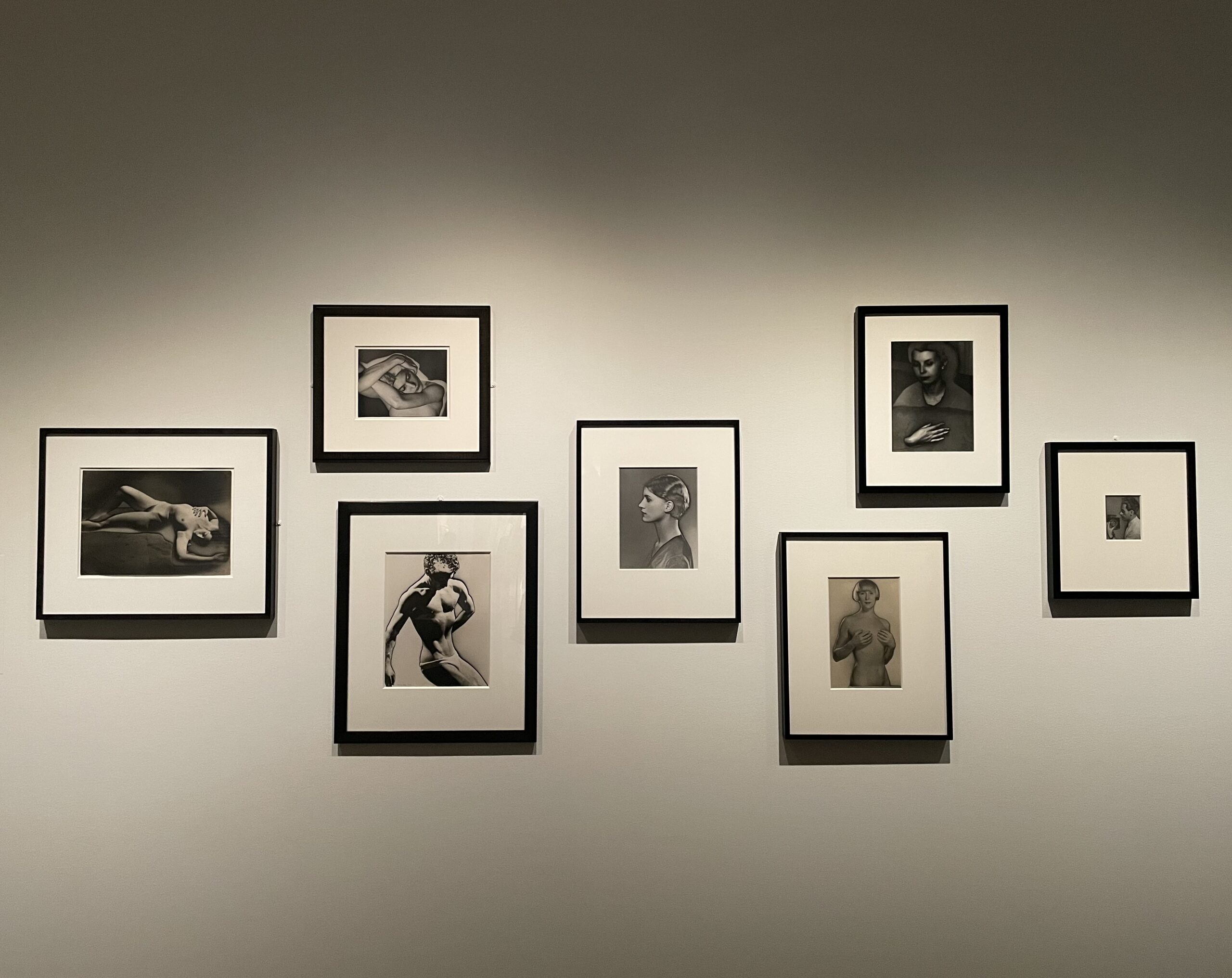
Spanning from his early years in New York to the time that he lived as an American expat in Paris, the exhibit showed that Man Ray displayed a level of innovation and a willingness to experiment that is arguably not seen in today’s modern creative landscape. Consider the artistic techniques that Man Ray was known for using in his creative practice (at least, the ones mentioned in this exhibit):
- Cliché-verres
- Aerographs
- Rayographs
- The use of readymades
- Blurred photography (“flou”)
- Solarization (created with photographer Lee Miller)
And then, consider how he took those techniques and combined them to create completely unique works of art — works that cemented his status as a multidisciplinary modern artist with a historic impact on creative life.
We live in a time where it seems that people from every walk of professional life — including those in creative fields — have given up on taking inspired chances as Man Ray did in so many different arenas. This is especially a threat to artistically-inclined fields, where part of the unspoken job description — and part of the fun — is to do exactly that.
Indeed, the 20th-century rate of creative innovation has, as of yet, been unmatched by its 21st century counterpart.
We have not yet run out of creative ideas as a society — and we are not at the end of time creatively as some articles have alluded to in recent years – but creativity is having to contend with the harsh winds of a changing world.
That should be no excuse, because during the time of Man Ray’s artistic flourishing, the world experienced World War I – and creatives did as creatives are wont to do: they made the best out of a tough situation and channeled their emotions into their art, resulting in one of the most fertile times for artistic and creative expression that we’ve seen in at least a couple of centuries.
Could our 21st century artists take a page out of their book?
“Man Ray: When Objects Dream” is open to the public for viewing through February 1, 2026 at The Metropolitan Museum of Art in New York City.
To subscribe to Manic Metallic‘s Substack newsletter, click here.